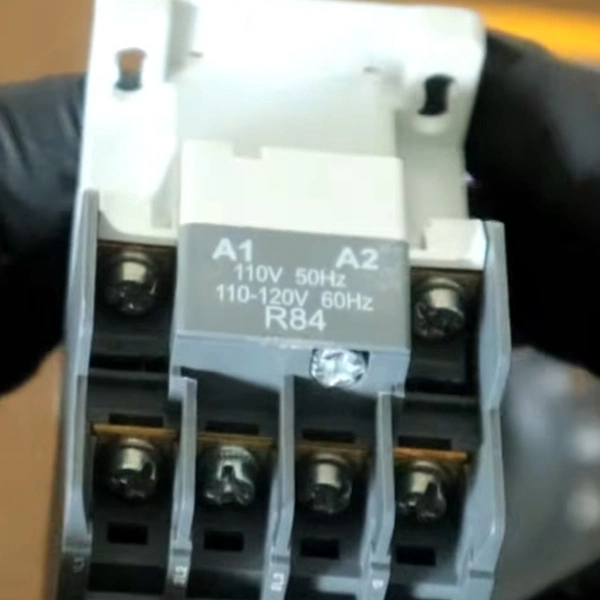
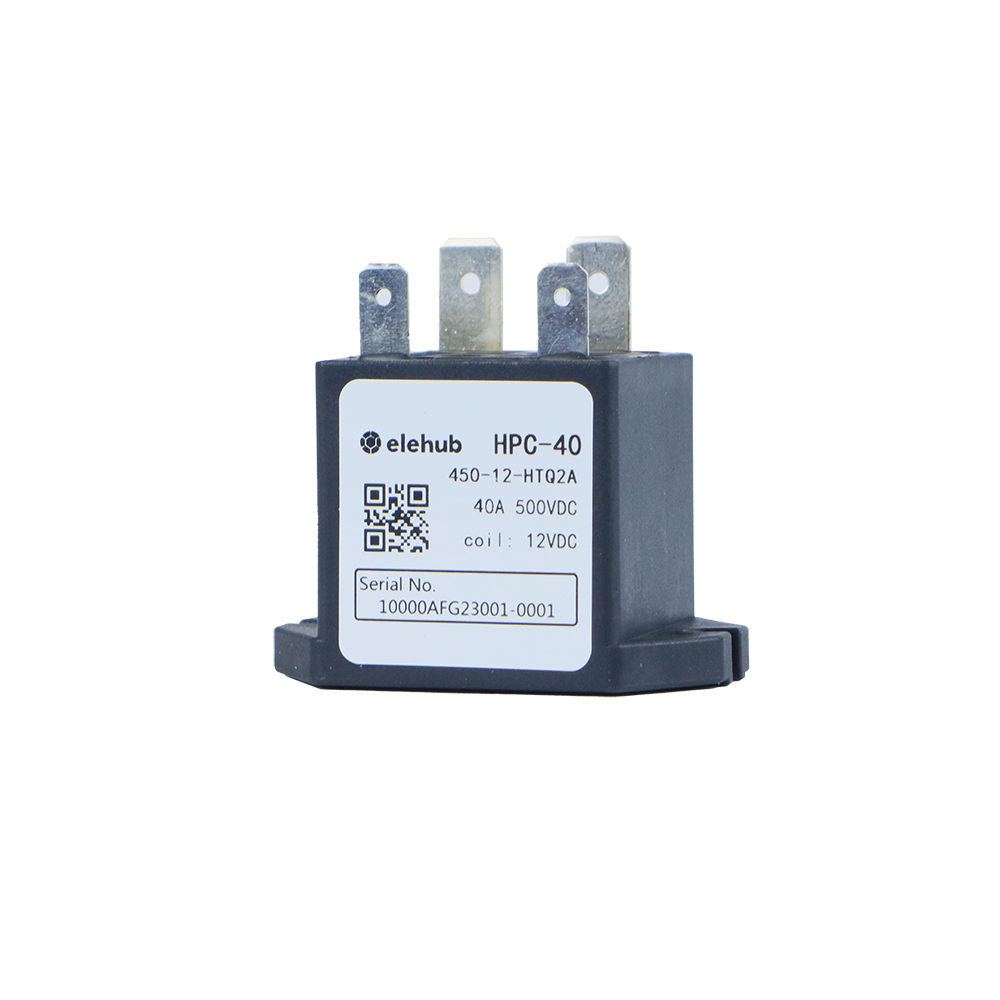
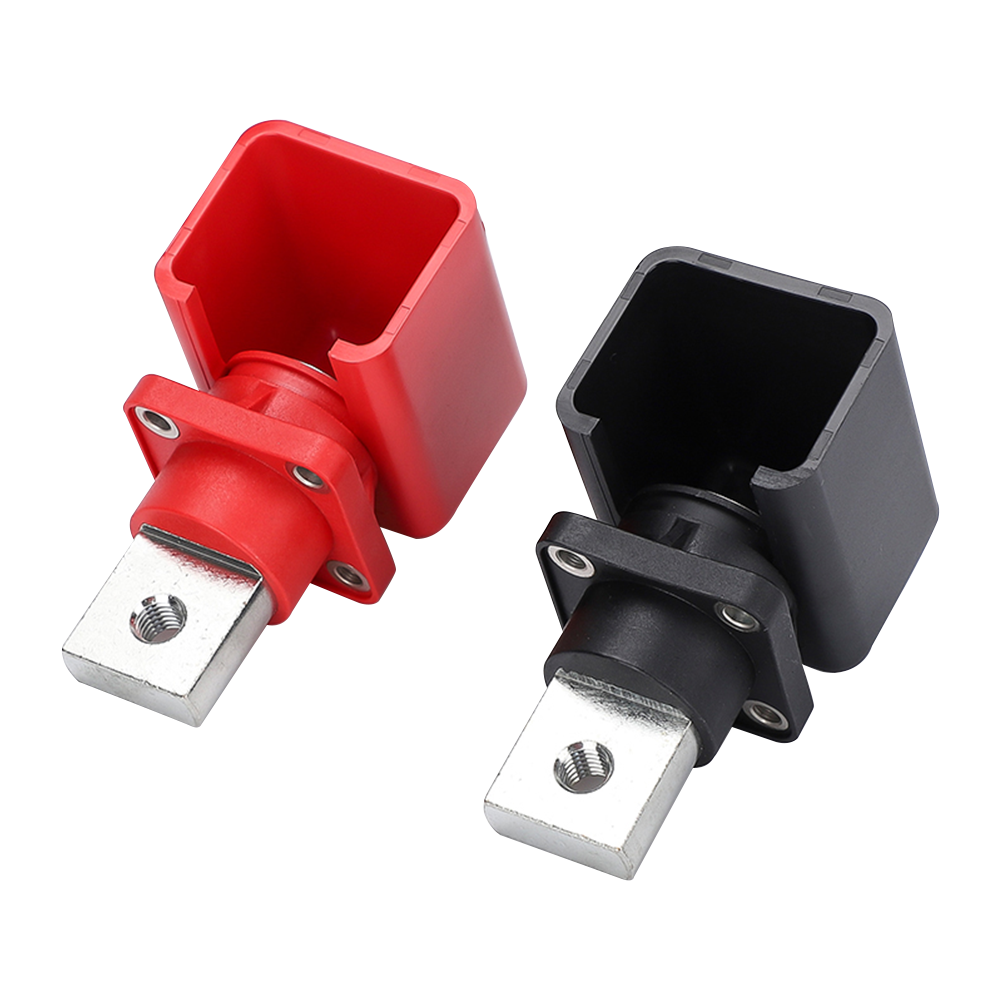
In modern electrical power systems—ranging from EV charging infrastructure and battery energy storage systems (BESS) to industrial automation and HVAC drives—contactors are one of the most critical switching components in the entire power control chain.
Among the most frequently misunderstood distinctions is the difference between a reversing contactor and a non-reversing contactor. While both serve as electromechanical switching devices, their internal architecture, control logic, and application scope are fundamentally different.
This guide provides a complete engineering breakdown of reversing vs non-reversing contactors, including working principles, selection criteria, and real-world applications in high-voltage AC and DC systems.

📍 Quick Answer:
If your system only needs to switch power on and off, choose a non-reversing contactor.
If your application requires a motor or actuator to move in both forward and reverse directions, use a reversing contactor, which consists of two interlocked contactors to safely reverse current direction or AC phase sequence.
The table below summarizes the major differences.
Understanding the Role of Contactors in Modern Power Systems
A contactor is an electrically controlled switch used for switching an electrical power circuit, typically with high current or voltage levels.
Unlike standard relays, contactors are designed for:
- High current switching (tens to thousands of amps)
- Frequent operation cycles
- Industrial-grade durability
- Integration into control systems (PLC, BMS, EMS)
Core functions of a contactor include:
- Circuit ON/OFF switching
- Motor starting and stopping
- Load isolation under fault conditions
- Directional control (in reversing systems)
In high-power DC systems such as EV charging stations operating at 800V–1500V DC, contactors must also manage arc suppression and rapid current interruption, making their selection even more critical.
What Is a Non-Reversing Contactor?
A non-reversing contactor is an electromagnetic switching device that provides single-direction ON/OFF control of electrical loads without any capability for phase or polarity reversal.
It is the simplest and most widely used type of contactor.

Working Principle
- Coil energized → contacts close → current flows
- Coil de-energized → spring opens contacts → circuit breaks
No directional change occurs in the electrical path.
Key Characteristics
- Simple internal structure with fewer moving parts
- Lower cost compared to reversing contactor systems
- High reliability and long electrical life
- Easy wiring and straightforward control logic
Typical Applications
Non-reversing contactors are used in systems where directional control is unnecessary:
- EV fast charging systems
- Solar PV string switching
- Battery energy storage systems (BESS)
- HVAC compressors and fans
- Pumps and compressors
- Industrial DC power distribution
What Is a Reversing Contactor?
A reversing contactor is an electrical switching assembly designed to enable forward and reverse motor operation, polarity reversal in DC systems, and directional control of mechanical systems.
It is typically composed of two interlocked contactors working together to reverse direction safely.
Working Principle
In AC motors:
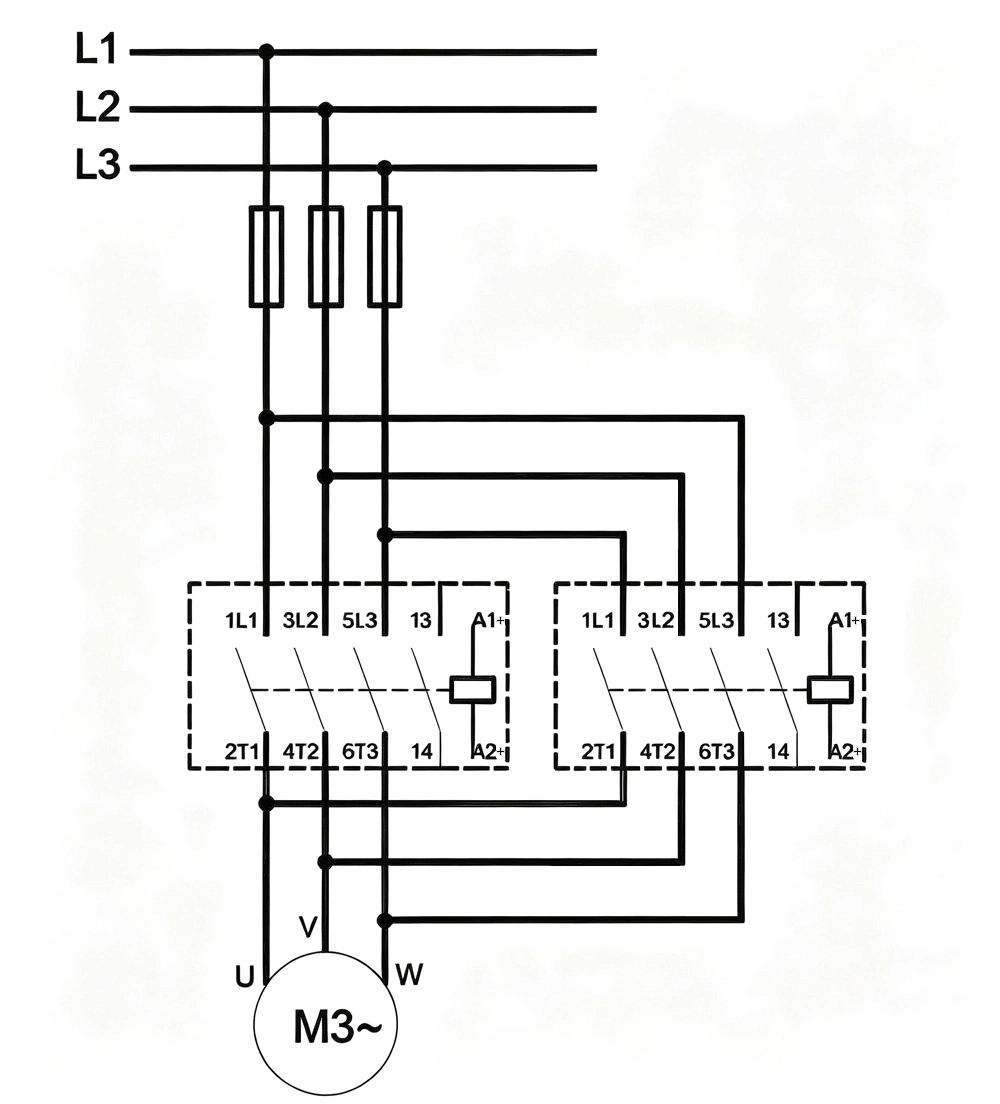
A reversing contactor changes the motor’s direction by swapping any two phases of a three-phase power supply, which reverses the direction of the rotating magnetic field.
- Forward operation: The motor receives the normal phase sequence (L1–L2–L3) and rotates forward.
- Reverse operation: Two phases are interchanged (e.g., L1 and L3), reversing the magnetic field and motor direction.
Forward and reverse selection is controlled through electrical interlocking and control circuits to prevent both contactors from closing at the same time.
In DC systems:
Reversing is achieved by switching the polarity of the power supply to the load, which reverses the current flow direction and consequently the motor rotation.
Interlocking Mechanism
Reversing contactors use two safety layers:
- Mechanical Interlock: Physically prevents both contactors from closing at the same time.
- Electrical Interlock: Control circuit logic ensures only one coil is energized.
Without these safeguards, a direct short circuit would occur.
Typical Applications
Reversing contactors are used in systems requiring directional movement:
- Cranes and hoists
- Winches and lifts
- Automated conveyors
- Robotics and positioning systems
- Marine mechanical systems
Reversing vs Non-Reversing Contactor: Core Differences
The difference is best understood across electrical, mechanical, and system-level parameters.
| Feature | Non-Reversing Contactor | Reversing Contactor |
| Primary Function | Connects and disconnects power in one fixed direction | Reverses motor rotation by changing phase sequence or DC polarity |
| Operating Principle | Uses a single contactor to switch the circuit on or off | Uses two mechanically and electrically interlocked contactors |
| Number of Contactors | One contactor | Two contactors with an interlock mechanism |
| Current Flow Direction | Unidirectional (fixed direction) | Bidirectional (forward and reverse) |
| Mechanical Interlock | Not required | Required to prevent simultaneous operation |
| Electrical Interlock | Not required | Required for additional safety |
| Control Circuit Complexity | Simpler | More complex |
| Installation Space | More compact | Larger due to dual contactors and interlock |
| Wiring Complexity | Minimal wiring | More wiring and auxiliary contacts |
| Cost | Lower initial cost | Higher initial cost |
| Maintenance | Fewer components and lower maintenance | More components to inspect and maintain |
| Switching Speed | Faster on/off switching | Slightly slower because of interlocking sequence |
| Reliability | Very reliable due to simpler construction | Highly reliable when properly interlocked, but more components increase maintenance requirements |
| Typical Applications | Static power switching, including EV chargers, battery energy storage systems (BESS), photovoltaic (PV) systems, pumps, compressors, HVAC equipment, and industrial heating | Motion control systems requiring directional change, including conveyors, hoists, elevators, cranes, machine tools, winches, and AGVs |
| Suitable Load Types | Loads requiring simple power switching or isolation | Motors requiring forward/reverse rotation |
Electrical Design Considerations
Selecting and integrating contactors requires deep understanding of system electrical behavior, especially in high-voltage DC systems.
AC vs DC Switching Behavior
- AC systems: current crosses zero → easier arc extinction
- DC systems: no zero crossing → stronger arc persistence
In EV charging systems (800V–1500V DC), arc energy becomes a critical design factor.
Arc Suppression Design
High-performance contactors must include:
- Arc chambers
- Magnetic blowout systems
- Silver alloy contact materials
- Fast separation mechanisms
This is essential for protecting systems during fault conditions such as short circuits, sudden load disconnection, and emergency shutdown events.
Load Direction Requirements
System engineers must first determine:
- Does current flow in only one direction? → Non-reversing
- Does load require bidirectional motion? → Reversing
In most DC power systems (solar, EV charging, BESS), energy flow is unidirectional, making non-reversing contactors the default choice.
Thermal and Electrical Stress
Contactors must be evaluated for:
- Continuous current rating
- Inrush current handling
- Thermal rise under load
- Duty cycle (operations per hour)
High-frequency systems like EV chargers require high-endurance contactors with low contact resistance.
How to Choose the Right Contactor
Selecting the wrong contactor can result in:
- Arc faults
- Contact welding
- System downtime
- Fire risk in high-voltage DC systems
Choose Non-Reversing When:
- Load direction is fixed
- System requires simple ON/OFF switching
- Cost efficiency is important
- High-voltage DC distribution is involved
- Battery or solar systems are used
Choose Reversing When:
- Motor direction must change
- Bidirectional mechanical movement is required
- Automation systems require positional control
- Robotics or lifting systems are involved
Selection Checklist
Before selecting, engineers should evaluate:
- Voltage level (AC/DC)
- Current rating
- Switching frequency
- Duty cycle
- Environmental conditions
- Safety requirements
- Control system architecture (PLC/BMS/EMS)
Application-Based Selection
Understanding real-world system architecture helps clarify selection decisions.
Renewable & Solar Power
✅ Recommended: Non-reversing contactors

Renewable energy systems focus on controlled power conversion rather than mechanical direction switching.
Key requirements:
- High DC voltage isolation capability
- Low power loss under continuous operation
- Reliable switching under variable environmental conditions
- Arc suppression in high-voltage DC circuits
Since power flow is managed by inverters and MPPT controllers, contactors are mainly used for DC isolation, fault protection, and maintenance disconnection. Non-reversing contactors are therefore the standard choice.
EV Charging Infrastructure
✅ Recommended: Non-reversing contactors

EV charging systems (typically 800–1500 VDC) require:
- High-speed switching capability
- Strong arc resistance under DC load
- High reliability for frequent operation cycles
- Safe isolation during fault conditions
In these systems, bidirectional power flow is managed by power electronics (inverters/converters), not mechanical switching. Therefore, contactors are used only for isolation and protection, making non-reversing contactors the preferred choice.
Battery Energy Storage Systems (BESS)
✅ Recommended: Non-reversing contactors in DC protection layers
Source: By Ysc usc – Own work, CC BY 4.0, https://commons.wikimedia.org/w/index.php?curid=64315693
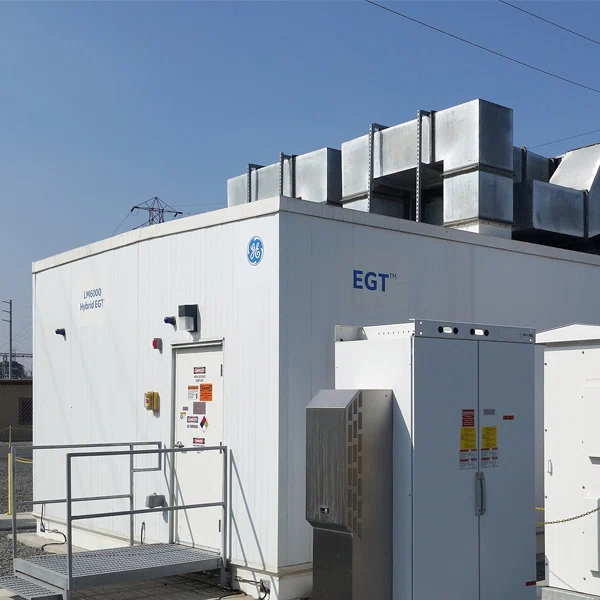
BESS operates in both charging and discharging modes, but current direction is controlled electronically via power conversion systems.
Key requirements:
- DC isolation and fault protection
- High endurance under frequent cycling
- Stable performance under bidirectional energy flow (electronically managed)
Contactors are not responsible for reversing current flow, so non-reversing designs are sufficient and widely used.
HVAC Systems
✅ Typical configuration: Non-reversing contactors

HVAC systems typically prioritize energy efficiency and stable compressor operation.
- Compressors → single-direction operation
- Fans → usually non-reversing control
- Heat pump systems → may require directional switching for mode changes
Industrial Power Systems
✅ Recommended: Application-dependent (primarily non-reversing contactors)

Industrial power systems include a wide range of AC and DC distribution environments, such as:
- Telecom DC power systems
- Data center power distribution systems
- Industrial DC microgrids
- UPS and backup power systems
Key system requirements:
- High reliability under continuous load
- Safe isolation during maintenance and faults
- Stable operation under frequent switching events
- Integration with protection devices (fuses, breakers, SPDs)
In most cases, directional control is not required, as power flow is regulated by rectifiers, inverters, or power management systems. Therefore, non-reversing contactors are widely used for switching, isolation, and protection functions.
Industrial Motor Systems
➡️ One-direction systems → Non-reversing
- Pumps — maintain continuous fluid flow in fixed direction
- Fans — provide steady airflow for ventilation or cooling
- Compressors — compress gases with single rotational direction
- Simple conveyors — transport materials along fixed linear paths
↔️ Bidirectional systems → Reversing
- Cranes — enable forward/backward load positioning control
- Hoists — lift and lower loads via directional motor reversal
- Winches — wind and unwind cables for pulling operations
- Bidirectional conveyors — support reversible material transport workflows
- CNC machines and machine tools — require precise directional axis control
- Marine winch system — used in mooring, anchoring, and offshore deck operations
Robotics & Automation
✅ Recommended: Reversing contactors or electronic drive-based directional control

Source: By Carmenter – Own work, CC BY-SA 4.0, https://commons.wikimedia.org/w/index.php?curid=7838942
Robotics and automated production lines require dynamic, PLC-driven motion control with real-time feedback and safety interlocking.
Directional control is needed in:
- Robotic arms
- Automated assembly systems
- Material handling equipment
- Multi-axis positioning systems
These systems rely on coordinated forward/reverse motion and precise sequencing, where reversing contactor configurations or equivalent electronic drive control is used to enable flexible motion and operational safety.
Common Misconceptions
Misconception 1: Reversing contactors handle higher power
False. Power rating is determined by the contactor’s design, not by its reversing function. Reversing capability does not increase current or voltage handling.
Misconception 2: Non-reversing contactors are “basic”
False. Non-reversing contactors are widely used in high-power systems, including EV charging and HVDC distribution. Their simplicity often makes them more reliable in demanding applications.
Misconception 3: Reversing contactors improve efficiency
False. Reversing contactors do not improve system efficiency and instead introduce additional components and control complexity. They are only used when directional control is required.
Misconception 4: Reversing is only needed for large motors.
False. The need for reversing depends on the application, not motor size. Even small motors in automation, robotics, positioning systems, and compact conveyors often require forward and reverse operation.
Misconception 5: Both types are interchangeable
Not safe. Reversing and non-reversing contactors are designed for different control architectures. Using them interchangeably can lead to wiring errors or unsafe operation.
Standards and Compliance
Contactors used in industrial systems must comply with:
- IEC 60947 (Low-voltage switchgear standards)
- UL 508 (Industrial control equipment)
- IEC 60364 (Electrical installation safety)
For DC systems:
- Arc interruption capability is a critical certification factor
- Thermal endurance must be validated under real load conditions
Conclusion
The difference between reversing and non-reversing contactors is not about power level—it is about functional system design requirements.
Key Takeaways
- Use non-reversing contactors when only ON/OFF switching is required.
- Use reversing contactors whenever motor direction must change.
- Always verify current rating, voltage rating, duty cycle, and applicable IEC/UL standards before selecting a contactor.
- For modern EV charging and BESS systems, non-reversing DC contactors remain the preferred solution due to their reliability and simpler architecture.
In advanced power systems—especially high-voltage DC architectures—proper contactor selection is critical for ensuring both operational safety and system efficiency.
As electrification expands across transportation, energy, and industry, engineering-grade switching solutions from providers like ELEHUB play an increasingly important role in delivering stable, safe, and high-performance electrical infrastructure.
FAQs
Can a reversing contactor be used as a non-reversing contactor?
Yes. A reversing contactor can operate as a non-reversing contactor by using only one contactor, but it increases cost, wiring complexity, and installation space without providing additional benefits.
Can a non-reversing contactor reverse motor direction?
No. A non-reversing contactor only switches power on and off. Reversing motor direction requires changing the AC phase sequence or DC polarity using a dedicated reversing contactor.
Why do reversing contactors need interlocks?
Interlocks prevent both contactors from closing simultaneously, avoiding phase-to-phase short circuits or polarity conflicts. Mechanical and electrical interlocks ensure safe, reliable forward and reverse operation.
Are reversing contactors more expensive?
Yes. Reversing contactors generally cost more because they use two contactors, mechanical interlocks, auxiliary contacts, and more complex control wiring than non-reversing contactor systems.
Which contactor is better for EV charging?
Non-reversing contactors are the preferred choice for EV charging systems because they provide reliable DC switching, arc isolation, and circuit protection without requiring directional control.
Which contactor is better for BESS?
Non-reversing contactors are typically used in battery energy storage systems (BESS). Bidirectional energy flow is controlled by power electronics, while contactors provide safe isolation and protection.
Can DC contactors be reversing?
Yes. DC reversing contactors reverse current direction by switching supply polarity. They are commonly used in DC motor applications requiring forward and reverse movement.
How long do reversing contactors last?
Service life depends on load, switching frequency, and operating conditions. Properly selected reversing contactors typically provide hundreds of thousands to millions of mechanical operations with regular maintenance.