

Perfect for Electric Vehicles, Renewable Energy, Telecommunications, and Battery Solutions


DC Contactors from ELEHUB is a pivotal component for managing direct current (DC) in advanced energy systems. Built to handle substantial currents efficiently and safely, ELEHUB’s DC contactors are integral to applications like electric vehicles, renewable energy systems, and telecommunications infrastructure.
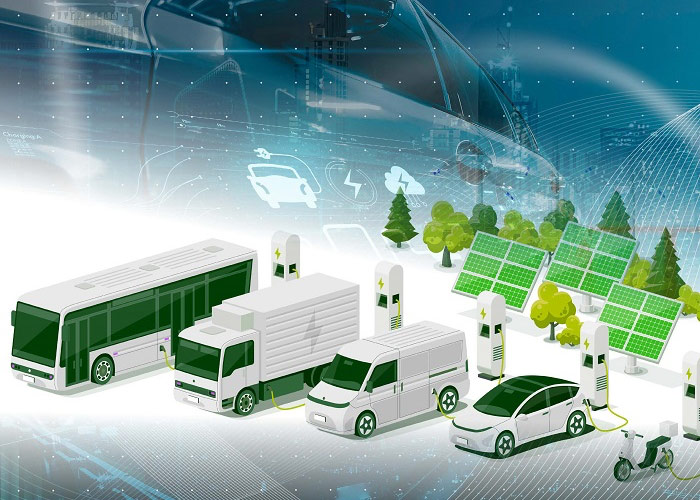

Constructed with high-quality materials, ensuring long-lasting and dependable operation in demanding applications and environments.

Utilizes a coil mechanism to control electric flow, efficiently switching currents from moderate to high amperages.

Space-optimized design, ensuring a smaller footprint while maintaining high operational efficiency and easy integration into various systems.

Ideal for use in battery management systems, electric vehicles (EVs), and golf carts, supporting the reliability and effectiveness of DC-powered technologies.


ELEHUB DC contactors manage electric flow, enabling efficient power control and safety in electric vehicles’ battery and motor systems.

Used in solar inverters and wind turbines, ensuring reliable DC power management for efficient renewable energy generation and distribution.

Vital in telecom systems for reliable DC power switching, enhancing system stability and performance in remote or critical applications.

Integrated into battery management systems to regulate current flow, ensuring the safe and efficient operation of energy storage devices.

Support energy storage systems by efficiently managing DC power flow between batteries, inverters, and electrical grids for optimized performance.

ELEHUB contactors provide reliable control of DC power in electric forklifts, boosting performance and safety in industrial environments.

Used in DC-AC power conversion systems, helping to switch and control high currents for optimal power flow and conversion efficiency.

Essential in controlling power flow for automated systems, ensuring smooth operation and reducing the risk of equipment failure in industries.

A DC contactor is an essential electrical component used in various applications. It functions similarly to a relay but is to handle direct current (DC) rather than alternating current (AC). A DC contactor usually controls the electric flow in a circuit by opening and closing contacts. This makes it crucial for switching high currents safely and efficiently, ranging from a few amperes to several hundred amperes or more.
DC contactors typically consist of a coil, which when energized, generates a magnetic field that pulls in a set of contacts, thereby closing the circuit. They are used in various systems such as battery-powered vehicles (electric and hybrid), solar power systems, industrial machinery, and telecommunications equipment. Their reliability, compact size, and ability to withstand high currents and voltages make them indispensable in modern electrical systems.
Read more in DC Contactors: Everything You Need to Know.
A DC contactor is like the switch for the DC motor. It has a coil connected to a power source and contacts that are connected to the DC motor. Turn on the switch, electricity flows through the coil and creates a magnetic field.
The magnetic field pulls the contacts together, allowing electricity to flow to the motor. When the switch turned off, the magnetic field disappears, the contacts disconnect, and the motor stops.
Read more in DC Contactor Working Principle: How Do DC Contactors Work?
Read more in What’s the Difference Between AC and DC Contactors? A Detailed Guide.
Giu******ano
Italy
Mig******uez
Spain
Taw******chai
Thailand
Inquire Now for Innovative Wholesale Solutions!
Stay updated on the latest innovations and trends in DC electrical components.

Creepage and clearance are two fundamental measurements used in electrical insulation design. Both define the…

A conventional transformer does one job well. It changes voltage through electromagnetic induction. Yet it…

There is a possibility that a battery pack may pass its voltage tests but still…
WhatsApp us
