

Ideal for Battery Systems, Solar Installations, and Industrial Applications


As a trusted wholesale DC fuse manufacturer, ELEHUB’s DC fuse provides essential protection for DC circuits by safely interrupting overcurrent conditions.
As all ELEHUB fuses are high rupturing capacity (HRC) fuses, they safely interrupt high fault currents, helping protect system integrity and enhance performance in electric vehicles, energy storage, and renewable energy applications.
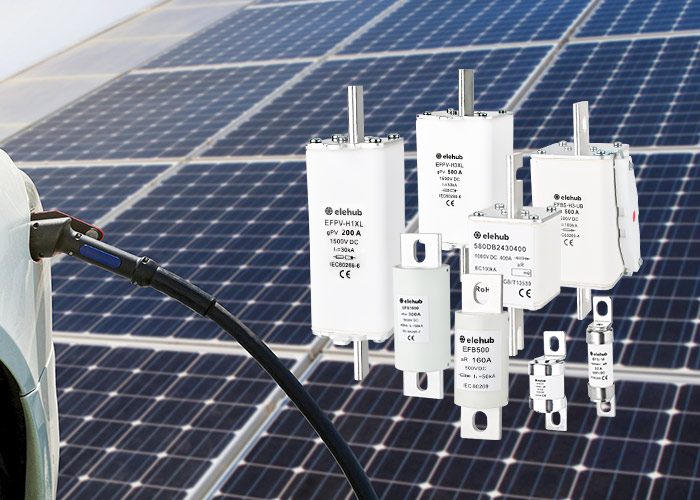

ELEHUB DC fuses provide reliable protection against overcurrent conditions, ensuring the safety of electrical systems and preventing damage to critical components.

Our DC fuses feature rapid response capabilities, quickly disconnecting circuits during fault conditions to minimize potential damage and enhance system safety.

ELEHUB offers a wide range of DC fuses designed for various applications, including solar power systems, EVs, and energy storage solutions, ensuring optimal performance across different environments.

Made from high-quality materials, ELEHUB DC fuses withstand harsh conditions while maintaining reliability. The robust design ensures longevity and consistent performance in demanding applications.
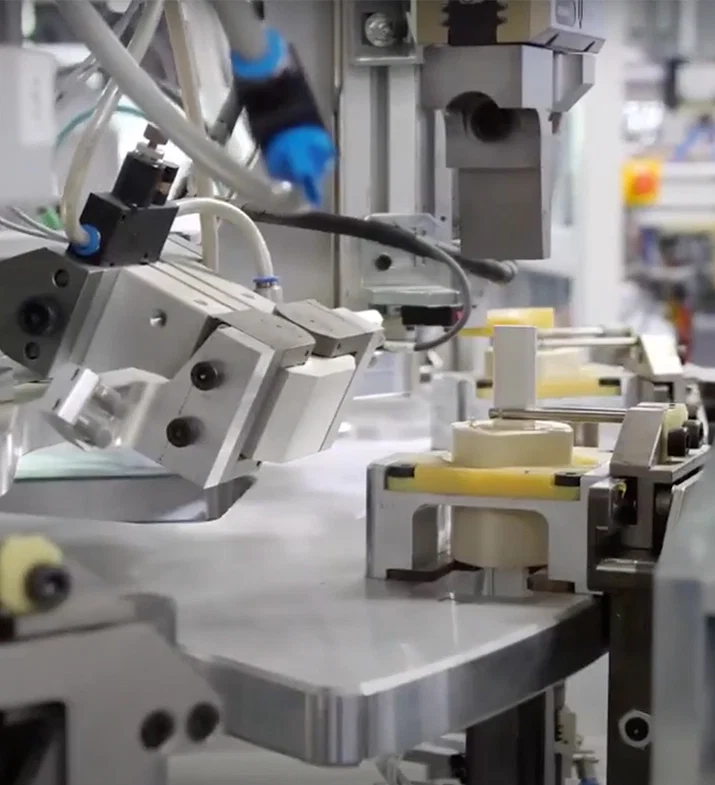

DC fuses protect solar panels and inverters from overcurrent conditions, ensuring safe and efficient operation in photovoltaic installations.

Safeguards batteries and power electronics from overcurrent and short circuits, preventing potential damage and enhancing system reliability with our DC high-rupturing capacity HRC fuses.

Provides essential protection for high-voltage battery packs, motor controllers, and charging systems, ensuring safety and longevity for EVs.

Protects sensitive communication devices from overcurrent and short circuits, maintaining system stability in high-tech environments.

Used in industrial settings to protect electrical circuits from overloads, ensuring safe operation in power distribution systems.

Safeguards electrical circuits in trains and other transportation systems, ensuring continuous operation and safety.

Vital for managing electricity flow during EV charging, ensures safety, offers overcurrent protection, and enables multiple charging modes.

Ensures protection against electrical faults in wind energy systems, improving efficiency and safety across renewable energy applications.
Matt******R
France
Pa*** ***r
UK
Ric******z
Spain

HRC fuses are classified into Cartridge, Blade, Liquid, Expulsion, NH, and DIN types, all designed to interrupt overcurrents with varying modes of operation.
An HRC (High Rupturing Capacity) fuse protects circuits by interrupting excessive current safely.
Inside the fuse, a metal element melts when current exceeds its rated limit, breaking the circuit and stopping the flow.
The fuse’s arc is suppressed by sand, liquid, or other materials, preventing fire or equipment damage.
HRC fuses respond quickly to short circuits while tolerating temporary overloads, providing reliable, precise protection for motors, transformers, switchgear, and other industrial or residential electrical systems.
Their high interrupting capacity ensures safety under extreme fault conditions.
A fuse contains a metal wire that melts under excessive current, breaking the circuit to prevent damage. Once a fuse blows, it must be replaced. Fuses, such as ELEHUB fast acting fuses, act quickly and are cost-effective but can be inconvenient for replacement.
In contrast, circuit breakers use an electromechanical mechanism to open the circuit when detecting overloads or short circuits. They can be reset after tripping, which allows for quicker recovery without replacement. Although more expensive initially, circuit breakers are versatile and suitable for residential and industrial environments.
Using a DC fuse on an AC circuit is not recommended due to differences in how the fuse handles current interruptions in AC versus DC applications. Here’s why:
Stay updated on the latest innovations and trends in DC electrical components.

Creepage and clearance are two fundamental measurements used in electrical insulation design. Both define the…

A conventional transformer does one job well. It changes voltage through electromagnetic induction. Yet it…

There is a possibility that a battery pack may pass its voltage tests but still…
Inquire Now for Innovative Wholesale Solutions!
WhatsApp us


