Are you struggling to choose the right surge protection device for your electrical system? Confused about whether your solar panels, battery systems, or electrical equipment need AC or DC surge protection? Understanding the difference between AC SPD and DC SPD is crucial for proper electrical protection, yet many professionals and property owners make costly mistakes by selecting the wrong type.
The difference between AC and DC SPDs lies fundamentally in their design and application: AC SPDs are designed to protect alternating current systems where voltage and current continuously change direction, while DC SPDs protect direct current systems where electrical flow moves in one constant direction.
This fundamental electrical difference necessitates distinct protection technologies and installation approaches.
Understanding these differences isn’t just technical knowledge—it’s essential for protecting expensive equipment, ensuring safety compliance, and preventing electrical failures that could cost thousands in repairs and downtime.
Key Takeaways
- Application determines choice: AC systems need AC SPDs, DC systems need DC SPDs.
- Technical requirements differ: DC SPDs require enhanced arc extinction and higher ratings.
- Installation complexity varies: DC SPDs often require specialized installation expertise.
- Cost considerations: DC SPDs typically cost more due to advanced technology requirements.
- Code compliance: Different electrical codes apply to AC and DC surge protection.
Understanding AC vs DC Electrical Systems
AC (Alternating Current) Systems Fundamentals
Alternating current systems form the backbone of most electrical infrastructure. In AC systems, electrical current periodically reverses direction, typically 50-60 times per second (50-60 Hz). This creates unique challenges and characteristics that impact surge protection design:
AC System Characteristics
- Voltage variation: Continuously changes from positive to negative.
- Current direction: Reverses periodically based on frequency.
- Power distribution: Efficient for long-distance transmission.
- Standard applications: Residential and commercial electrical systems.
Common AC Applications
- Main electrical panels and distribution systems.
- Household appliances and electronics.
- Commercial HVAC and lighting systems.
- Industrial motors and machinery.
DC (Direct Current) Systems Fundamentals
Direct current systems maintain constant voltage polarity and current direction. The steady-state nature of DC power creates different electrical behaviors that require specialized surge protection approaches:
DC System Characteristics
- Constant polarity: Positive and negative terminals remain fixed.
- Steady current flow: Electrical flow maintains a consistent direction.
- Energy storage compatibility: Essential for battery and capacitor systems.
- Electronic device preference: Many modern electronics operate internally on DC.
Common DC Applications
- Solar photovoltaic (PV) systems.
- Battery energy storage systems.
- Electric vehicle charging stations.
- Telecommunications and data centers.
- LED lighting systems.
Technical Differences Between AC SPD and DC SPD
Voltage Handling and Arc Extinction

Source: https://www.eaton.com/us/en-us/products/backup-power-ups-surge-it-power-distribution/surge-protection/surge-protection-explained.html
The most critical difference between AC SPD and DC SPD relates to how each handles electrical arcs during surge events:
AC SPD Arc Management: AC systems naturally reach zero voltage twice per cycle (50-60 times per second), which helps extinguish electrical arcs.
This natural arc extinction allows AC SPDs to use simpler protection components like:
- Metal Oxide Varistors (MOVs) with standard specifications
- Gas Discharge Tubes (GDTs) are designed for AC applications
- Standard thermal protection is adequate for AC arc characteristics
DC SPD Arc Management: DC systems maintain constant voltage, making arc extinction significantly more challenging. DC arcs can sustain themselves indefinitely without the natural zero-crossing points found in AC systems. This requires specialized protection:
- Enhanced arc extinction chambers to forcibly interrupt DC arcs.
- Specialized breaking mechanisms are designed for constant voltage.
- Higher-rated thermal protection to handle prolonged arc energy.
- Advanced disconnection systems for safety isolation.
AC SPDs
- Varistors rated for AC voltage: Designed for sinusoidal voltage waveforms.
- Standard GDT technology: Optimized for AC frequency characteristics.
- Conventional thermal fuses: Adequate for AC thermal cycling.
- AC-rated disconnectors: Designed for standard electrical panels.
DC SPDs
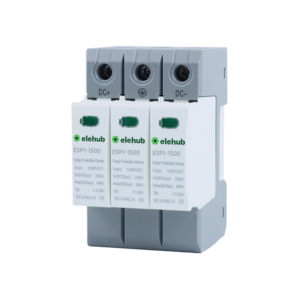
- DC-specific varistors: Engineered for constant voltage stress.
- Enhanced GDT designs: Built to handle DC arc extinction challenges.
- Heavy-duty thermal protection: Designed for sustained DC energy.
- DC circuit breakers: Capable of interrupting DC current safely.
Current Interruption Capabilities
The difference between AC SPD and DC SPD becomes most apparent in their current interruption capabilities:
AC Current Interruption
- Natural zero-crossing points facilitate current interruption.
- Standard electrical contacts can safely break AC circuits.
- Conventional protection devices work effectively.
- Lower-cost components provide adequate protection.
DC Current Interruption
- Constant current requires forced interruption mechanisms.
- Specialized contacts designed for DC applications.
- Enhanced protection components are necessary.
- Higher-cost components are required for safe operation.
Application-Specific Requirements
Solar Photovoltaic (PV) Systems

Solar installations demonstrate clear differences between AC SPD and DC SPD applications:
DC Side Protection (Solar Panels to Inverter): Solar panels generate DC electricity that requires specialized DC SPD protection:
- String-level protection: DC SPDs protect individual solar panel strings.
- Array-level protection: Larger DC SPDs protect entire solar arrays.
- High voltage ratings: DC SPDs must handle up to 1,500V DC systems.
- Weather resistance: Outdoor-rated enclosures for rooftop installations.
AC Side Protection (Inverter to Grid): The AC output from solar inverters requires standard AC SPD protection:
- Grid integration protection: AC SPDs protect the utility interconnection.
- Standard residential ratings: Typically 120V/240V AC applications.
- Conventional installation: Standard electrical panel mounting.
- Utility compliance: Must meet grid interconnection standards.
Battery Energy Storage Systems (BESS)

Energy storage systems showcase why understanding the difference between AC SPD and DC SPD is critical:
DC Battery Protection
- High-current DC protection: Battery systems can deliver massive DC currents.
- Voltage range considerations: Protection must cover the full charge/discharge range.
- Thermal management: DC SPDs must handle high-energy battery surge events.
- Safety disconnection: Critical for preventing battery thermal runaway.
AC Grid Interface Protection
- Inverter output protection: AC SPDs protect grid-tie inverter outputs.
- Load center protection: Standard AC protection for connected loads.
- Utility interconnection: AC SPDs ensure grid compliance and safety.
Electric Vehicle (EV) Charging Infrastructure

EV charging systems require both AC and DC surge protection:
Level 1 & 2 AC Charging
- Residential charging: Standard AC SPDs protect home charging equipment.
- Commercial charging: Enhanced AC SPDs for public charging stations.
- Grid connection protection: AC SPDs protect utility interconnections.
DC Fast Charging
- High-voltage DC protection: DC SPDs protect 400V-800V DC charging systems.
- High-current applications: DC SPDs must handle 200+ amp charging currents.
- Communication system protection: Specialized protection for charging protocols.
Installation and Safety Considerations
AC SPD Installation Requirements
Standard Electrical Panel Installation
- Main panel mounting: Installation in residential and commercial load centers.
- Branch circuit protection: Individual circuit protection for sensitive equipment.
- Standard grounding: Conventional electrical grounding systems are adequate.
- Code compliance: Standard electrical codes (NEC, local codes) apply.
Safety Considerations
- Standard lockout/tagout: Conventional electrical safety procedures.
- AC voltage safety: Standard electrical safety precautions.
- Testing procedures: Standard electrical testing equipment is applicable.
DC SPD Installation Requirements
Specialized Installation Needs
- DC-rated enclosures: Weather-resistant and fire-rated for outdoor applications.
- Enhanced grounding: Specialized grounding systems for DC applications.
- String-level installation: Individual protection for each DC circuit.
- Arc fault compliance: Must meet DC arc fault interruption requirements.
Enhanced Safety Protocols
- DC isolation procedures: Specialized safety procedures for DC systems.
- High-voltage precautions: Enhanced safety for high-voltage DC systems.
- Arc flash protection: Special consideration for DC arc flash hazards.
- Testing requirements: DC-specific testing equipment and procedures.
Performance Characteristics and Ratings
AC SPD Performance Specifications
| Voltage ratings | 120V, 240V, 480V standard configurations. |
| Current ratings | Based on standard electrical service sizes. |
| Frequency response | Designed for 50-60 Hz operation. |
| Temperature ranges | Standard indoor/outdoor electrical ratings. |
Protection Levels
- Nominal discharge current (In): Typically 5-20 kA.
- Maximum discharge current (Imax): Up to 40-65 kA.
- Voltage protection level (Up): Varies by application requirements.
- Response time: Nanosecond response for fast protection.
DC SPD Performance Specifications
| Higher voltage capabilities | Up to 1,500V DC for solar applications. |
| Sustained voltage stress | Designed for constant DC voltage exposure. |
| Temperature derating | Enhanced specifications for outdoor DC applications. |
| UV resistance | Special materials for solar installation longevity. |
Specialized Protection Levels
- DC-specific current ratings: Enhanced for DC arc extinction requirements.
- Continuous operating voltage: Must handle sustained DC voltage.
- Short-circuit current ratings: Higher ratings for DC fault conditions.
- Isolation capabilities: Enhanced disconnection for DC safety.
Regulatory and Code Compliance
AC SPD Code Requirements
- National Electrical Code (NEC): Article 285 for AC surge protection.
- Local electrical codes: Standard municipal and state requirements.
- UL listing requirements: Standard UL 1449 certification for AC SPDs.
- Installation standards: Conventional electrical installation practices.
DC SPD Code Requirements
- NEC Article 690: Solar photovoltaic system requirements.
- DC arc fault requirements: Enhanced safety for DC systems.
- UL 1741 compliance: Inverter and grid-tie equipment standards.
- Fire safety codes: Enhanced fire protection for DC installations.
Final Thoughts
Understanding the difference between AC SPD and DC SPD is essential for proper electrical system protection.
While AC SPDs serve the traditional electrical infrastructure we’re familiar with, DC SPDs address the growing demand for renewable energy, energy storage, and DC-powered systems.
For more related content, read our blogs: