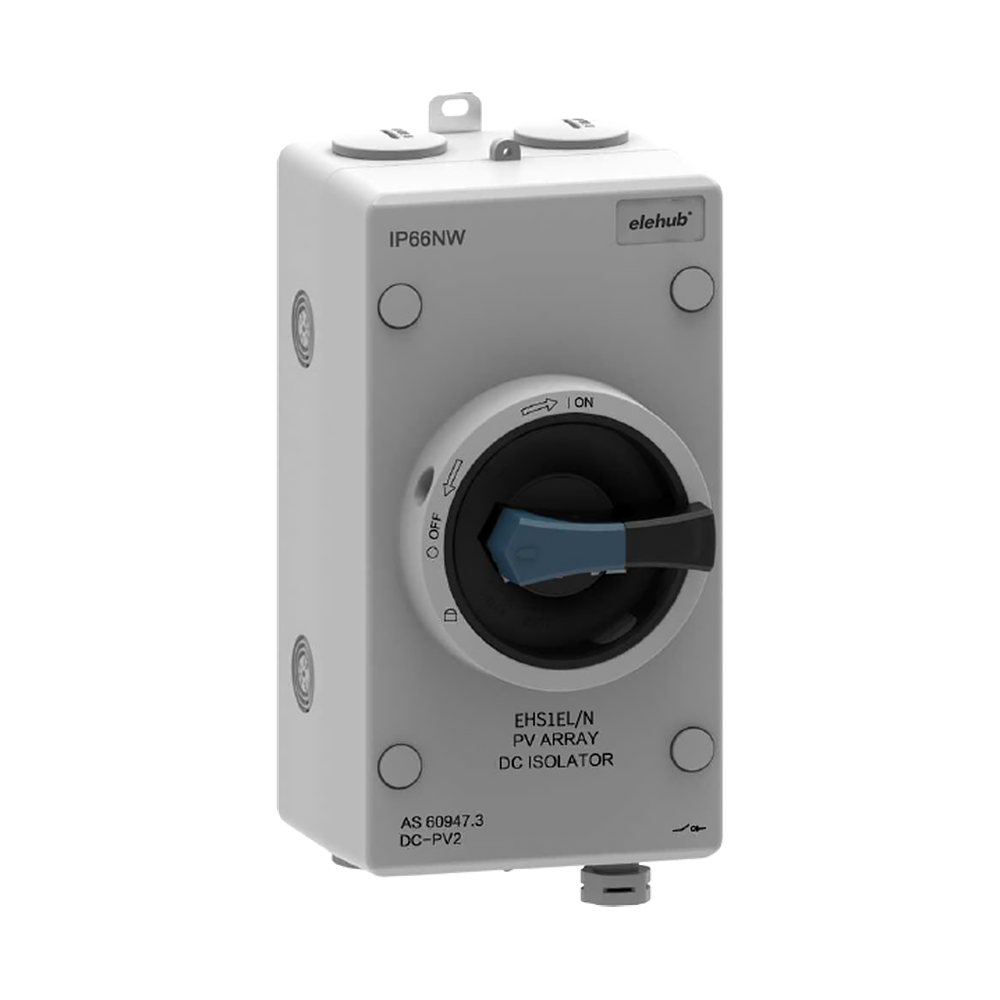
What is an electrical switch? It’s more than just an on/off gadget; the electrical switch is a fundamental part of electric and electronic circuits.
They’re a part of our lives now. Indeed, from the first electricity experiments to the limits of smart technology, the history and development of electric switches have been pivotal in shaping our world.
How Does an Electrical Switch Work?

Source: https://home.howstuffworks.com/three-way1.htm
An electric circuit requires a continuous, closed loop, and an electrical switch represents a deliberate point of connection or break in the loop.
When the switch is in the “off” or open position, it leaves a gap in the path of conduction and impedes the movement of electrons. When the switch is in the “on” or closed position, it bridges this gap, and electrons can move freely and complete the circuit.
The reliability and efficiency of a switch often rely on the type and design. Copper, silver, and gold are often utilized because they possess high conductivity and resistance to corrosion. The rate and pressure are also critical in preventing electrical arcing.
Different Types of Electrical Switches
| Types | Switches |
| Mechanical Switches | Toggle Switch |
| Push-Button Switch | |
| Rocker Switch | |
| Rotary Switch | |
| Slide Switch | |
| Mechanical Switches (Poles and throw) | SPST (Single Pole Single Throw) |
| SPDT (Single Pole Double Throw) | |
| DPDT (Double Pole Double Throw) | |
| Specialty Switches | Limit Switches |
| Proximity Switches | |
| Reed Switches | |
| Electronic and Solid-State Switches | Transistors |
| Relays | |
| MOSFETs |
Mechanical Switches
They utilize the physical displacement of conducting elements to establish or sever an electric contact.
- Toggle Switch: With a lever manually thrown to an “on” or “off” position. They are rugged and have a visual indication of their state.
- Applications: lighting control, power to equipment, and other equipment functions.

- Push-Button Switch: Activated by button press, switches may be momentary (restoring to normal when released, such as on a doorbell) or latching (staying in the pressed position until pressed again, such as on a power switch on most devices).
- Applications: In anything from consumer appliances to industrial control panels.

- Rocker Switch: They are tactile feedback type. Features a rocking actuator pressed down at one end to toggle the state of the circuit.
- Applications: In appliances, power strips, and automotive.

- Rotary Switch: Uses a rotational shaft or knob to move from one set of circuit configurations to another. They are best at selecting from more than two options.
- Applications: Multi-speed fans, channel selectors in outmoded equipment, and range selectors for testing equipment.

- Slide Switch: Use a linearly moving sliding actuator to open or shut the circuit.
- Applications: In little electronic gadgets like portable music players, gaming systems, and some test equipment.

The pole and throw configuration also more precisely defines what a mechanical switch does:
- SPST (Single Pole Single Throw): The most basic type, giving a basic on/off switch for one circuit. It has two terminals.
- SPDT (Single Pole Double Throw): Can switch a single circuit on and off between two different routes. It has three terminals and is often used as a selector switch or in three-way lighting circuits.
- DPDT (Double Pole Double Throw): Two SPDT switches together, which allows two separate circuits to be controlled at the same time, each having two alternative paths. It consists of six terminals and offers greater design flexibility in terms of the circuit.
Specialty Switches
- Limit Switches: To detect the physical presence or position of an object. They are mechanically driven in industrial machinery to prevent over-travel, trigger automatic actions, or act as a safety feature.
- Proximity Switches: Detect the existence of an object without making contact with it. They utilize various sensing technologies such as inductive (detecting metallic objects), capacitive (detecting most materials), optical (utilizing light beams), and ultrasonic (utilizing sound waves).
- Reed Switches: Two thin, flexible ferromagnetic reeds contained in a glass tube. When a magnetic field is brought near the switch, the reeds get attracted towards each other and make the circuit.
Electronic and Solid-State Switches
- Transistors: Semiconductor devices that can serve as electronic switches by controlling the flow of current between two terminals in response to a signal applied to a third terminal.
- Relays: Electromechanical switches that use an electromagnetic coil to operate a set of contacts. When current flows through the coil, it produces a magnetic field that attracts a movable armature. Relays are often used to control high-power circuits with a low-power signal or to provide electrical isolation (like a DC isolator switch) between different parts of a system.
- MOSFETs: A type of transistor used as a switch in power electronics applications due to their low on-resistance, high switching frequencies, and high efficiency.
What Makes a Switch Effective?
The applicability and effectiveness of an electrical switch are determined by several critical properties and specifications.
- Electrical Ratings: Most important for reliable and safe operation. The voltage rating specifies the maximum voltage that can be safely interrupted or passed through the switch. Operating above this can cause arcing and switch failure.
- Longevity: A switch’s lifespan is of major concern in most uses. Contact materials play an important role, with silver offering high conductivity and resistance to oxidation, while gold is in low-voltage applications because of its excellent corrosion resistance.
- Environmental Factors: The operating environment can have a profound effect on switch performance. IP ratings (Ingress Protection) are a standardized way of rating the degree of protection an enclosure provides against the ingress of solid objects (e.g., dust) and liquids (e.g., water). For example, an IP67 rated switch is dust tight and short-time immersion in water.
Applications of Electrical Switches
1. Residential Use

Our homes are surrounded by switches that serve various functions. Simple light switches control light in rooms, with dimmer switches employed for creating gradations of light, often based on electronic switch control.
2. Industrial Applications
Machinery controls utilize switches from push-buttons to initiate and de-energize motors, selector switches utilized to choose between different operating conditions, to emergency stop buttons allowing for immediate power shutdown.
Safety interlocks use limit switches and proximity sensors to avoid unsafe operation by locking out access to hazardous areas when equipment is in operation or by halting operations if guards are improperly fitted.
Automation systems rely heavily on a variety of switches, from sensors that track the position of parts on a manufacturing line to control switches that activate robotic arms and other automated operations.
3. Consumer Electronics
The switch on smartphones, laptops, and TVs all initiates the power-up process. Switches on keyboard beneath each keycap sense keystrokes, normally on the basis of mechanical, membrane, or capacitive switching technologies.
Smart home technology has introduced a new class of remotely controlled, wirelessly controlled switches, remotely activated by smartphone apps or through voice commands to manage lights, appliances, and other home systems.
4. Automotive and Aerospace

The ignition switch serves to ignite the engine and control other electric functions. Additional switches control headlights, turn signals, windshield wipers, and power windows.
5. RV
In recreational vehicles (RVs), RV battery disconnect switches play a vital role in managing power systems. These switches allow users to safely cut off the battery from the electrical system when the vehicle is not in use, preventing parasitic drain and extending battery life. They also enhance safety during maintenance by isolating power and reducing the risk of electrical faults.
6. Solar
In solar energy systems, switches such as the solar disconnect switch are essential for safety, allowing complete isolation of solar panels from the electrical system during maintenance or emergencies. Across all applications, switches must be reliable, durable, and resistant to vibration or environmental factors to ensure safe and efficient operation.
In the high-performance aerospace market, cockpit controls utilize highly reliable and typically redundant switch systems to control primary aircraft functions. These switches are designed to withstand heat, vibrations, and other rough environmental conditions.
How to Choose an Electrical Switch?
Choosing the appropriate electrical switch for a given application is necessary for ensuring safety, reliability, and optimum performance.
- Load Type: Carefully consider the kind of load. Resistive loads (e.g., incandescent lamps) tend to be easiest to switch, while inductive loads (e.g., motors and solenoids) induce back electromotive force (back EMF) when turned off, requiring switches with appropriate arc suppression characteristics.
- Environment: If the switch is to be subjected to water or dust, then an IP-rated switch will have to be selected. The nature of the switch desired will be based on the functionality and interface.
- Cost is always a consideration, and it is sensible to compromise between the required features and specifications and cost.
Practical tip: Always choose the switch to match the voltage and current demands of the circuit, keeping in mind the specific characteristics of the load. Consider the intended frequency of use when evaluating lifecycle rating. In thinking about outdoor or damp places, prefer switches with corresponding IP ratings.
About ELEHUB
ELEHUB is one of the major suppliers of advanced electrical solutions for electric vehicles, solar energy, energy storage systems, and other industries.
Having been a DC electrical components manufacturer in the industry for many years, ELEHUB has built a reputation as a valued partner for companies and organizations seeking reliable, high-performance solutions to power system needs.
At ELEHUB, we work hard to offer high-performance and innovative solutions concerning the needs of individual applications. We are one of the top high voltage DC contactor suppliers in China.
Moreover, our portfolio comprises high voltage DC contactors, circuit breakers, and DC protective switches, among other devices, with superior quality and reliability standards to ensure optimum performance even under demanding conditions.
FAQs
What’s the difference between a switch and a relay?
A switch is typically an actuator based on physical movement to change its state.
A relay, on the other hand, is an electromechanical switch actuated by an electric signal. When current flows through a relay’s coil, it creates a magnetic field that opens or closes a pair of contacts and switches another circuit.
Relays are often used to switch high-power circuits based on a low-power signal, to provide electrical isolation between circuits, or in automatic control applications.
Can switches handle DC and AC?
Yes, electric switches can carry both direct current (DC) and alternating current (AC). The specific design and materials of a switch, however, may be more appropriate for one form of current compared to another.
What is a three-way switch?
A three-way switch allows one light source or an electric load to be controlled from two places. This is common in homes for convenience, such as turning a hallway light on from the end of the corridor.
What is the function of a switch in electrical?
A switch is used for making and breaking of electric current in a circuit. When it is “off” (open), it breaks the circuit. When “on” (closed), it completes the circuit.