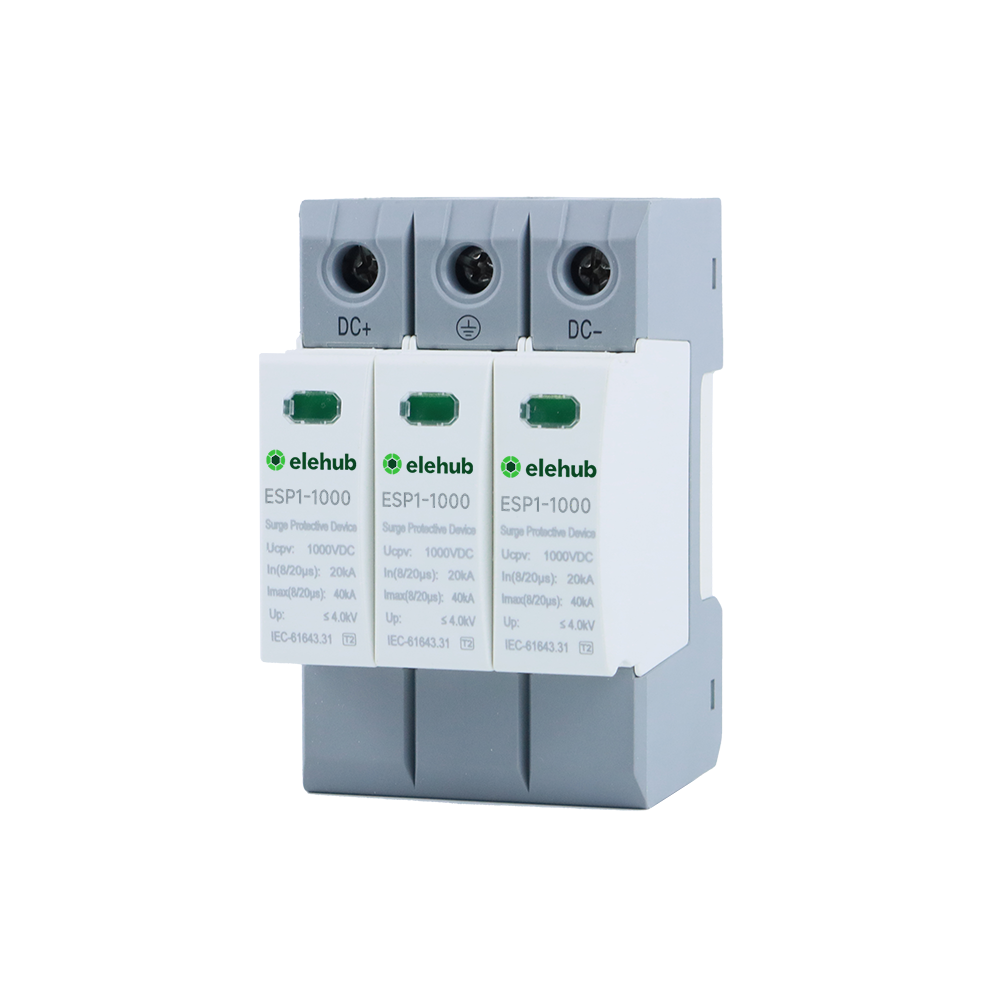
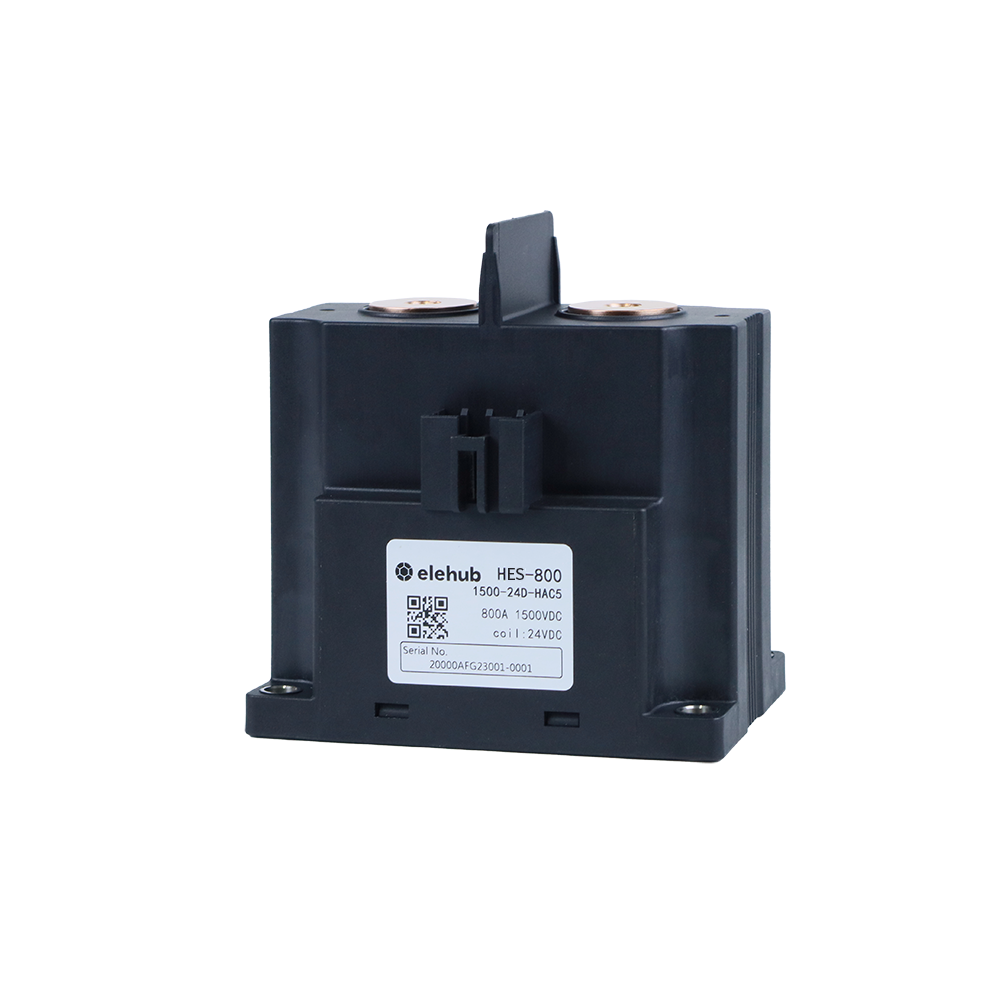
A semiconductor fuse is a high-speed protective device designed to protect sensitive power electronics such as IGBTs, diodes, and thyristors. Unlike ordinary fuses, it reacts in microseconds to overcurrent and short circuits, limiting fault energy and preventing permanent damage to semiconductor components.
Semiconductors are delicate. Even a small overcurrent can damage them permanently. A standard fuse may not act fast enough, which is why semiconductor fuses are critical in modern electronic systems.
In this guide, you’ll learn how semiconductor fuses work, why they are critical for protecting power electronics, how they differ from normal fuses, and how to select the right type for applications such as VFDs, inverters, EV systems, solar installations, and industrial equipment.
This guide is especially useful for electrical engineers, system integrators, EV infrastructure designers, and renewable energy project managers.
TL;DR Table
| Category | Key Points |
| Advantages | Fast response, reliable, low I²t, low voltage drop, compact, high breaking capacity, improves safety |
| Limitations | Higher cost, limited current range, single-use, sensitive to transients, requires maintenance, not always needed |
| Applications | VFDs, inverters/converters, solar systems, industrial machinery, communication equipment, EVs |
Why Semiconductors Need Special Protection
Power semiconductors are fundamentally different from conductors and electromechanical components:
- They have very low thermal mass
- Their junction temperatures rise extremely fast
- They can fail catastrophically within microseconds during short circuits
- Failure is often non-reversible (shorted junctions, package rupture)
A normal fuse may take milliseconds to react, which is too slow for delicate semiconductor devices. By the time it interrupts the current, the semiconductor is already destroyed.

Semiconductor fuses are designed to limit both:
- Peak fault current
- Energy let-through (I²t)
before irreversible damage occurs.
Semiconductor fuses protect devices in:
- Inverters and converters
- Variable frequency drives (VFDs)
- Solar and wind power systems
- Industrial machinery
- Communication equipment
The high-speed protection provided by these fuses prevents costly damage and ensures reliable operation.
Key Technical Terms and Ratings
Before selecting a semiconductor fuse, it is important to understand some key terms:
1. Rated Current
The rated current is the maximum continuous current a fuse can safely carry under normal operating conditions without melting. To avoid nuisance trips from small overloads, semiconductor fuses are typically selected at 125–150% of the normal operating current.
2. Rated Voltage
The rated voltage specifies the maximum system voltage the fuse can safely withstand while interrupting a fault. It is critical that the fuse voltage rating is equal to or higher than the system voltage, as using a lower-rated fuse can cause arcing across the fuse element, potentially leading to catastrophic or explosive failure.
3. Breaking Capacity (Interrupting Rating)
The breaking capacity defines the maximum fault current a fuse can safely interrupt without sustaining damage. Semiconductor fuses are engineered with very high breaking capacities to handle the large short-circuit currents common in power electronic systems.
4. I²t Rating
The I²t rating represents the total energy allowed through the fuse during a fault. It is divided into:
-
Pre-arcing I²t: energy released before the fuse element melts.
-
Total clearing I²t: energy released until the current is fully interrupted.
Since semiconductor devices have limited I²t withstand capabilities, the fuse’s I²t must be lower than the device’s rating to ensure proper protection.
5. Speed / Time–Current Characteristic (TCC)
The time–current characteristic (TCC) shows the operating time of the fuse relative to the overcurrent magnitude. Semiconductor fuses are classified as ultra-fast or very fast, allowing rapid interruption of faults and minimizing damage to sensitive components.
How Semiconductor Fuses Work
High-Speed Melting Element
Semiconductor fuses contain a fusible element inside a protective housing. The element features:
- Reduced cross-sectional areas (notches or perforations)
- Carefully controlled geometry to ensure predictable melting behavior
- Extremely low thermal inertia
When a fault occurs, the current rises rapidly. The fusible element heats up almost instantaneously and melts before the semiconductor junction temperature exceeds its safe operating limit.
Arc Quenching and Current Interruption
Once the element melts, an electrical arc forms. Semiconductor fuses use advanced arc-quenching techniques such as:
- Quartz sand or ceramic filler to absorb energy
- Arc division into multiple small arcs
- Rapid cooling and deionization
This enables the fuse to interrupt very high fault currents—often 50 kA to over 200 kA—within milliseconds or less.
Step-by-step Operation
The working principle of a semiconductor fuse is simple but precise:
- Current flows through the fuse element.
- If the current exceeds the fuse’s rated value, the metal element heats up quickly.
- The element melts, opening the circuit.
- The device downstream is protected from overcurrent damage.
This rapid action is why semiconductor fuses are preferred for high-speed electronics.
Advantages of Semiconductor Fuses
1. High-Speed Protection
The most important characteristic of a semiconductor fuse is its fast response time. These fuses react in microseconds, much faster than normal fuses, which usually react in milliseconds. This high-speed operation ensures that delicate components like IGBTs, thyristors, and power diodes are protected before damage occurs.
High-speed operation is crucial in systems such as:
- Variable frequency drives (VFDs)
- Solar inverters
- EV chargers
- Industrial motor drives
The faster a fuse can operate, the better it protects the semiconductor devices from short circuits or overcurrent conditions.
2. Reliable and Consistent Operation
Semiconductor fuses provide predictable and repeatable performance under different fault conditions. They operate precisely according to their rated current and voltage.
Reliability ensures:
- Effective protection of devices over the fuse’s lifespan
- Reduced downtime in industrial systems
- Enhanced system safety and performance
3. Energy Limitation
Another key benefit is energy limitation. Semiconductor fuses have low I²t ratings, which means they limit the total energy released during a fault. By doing so, they reduce the risk of destroying semiconductors. Devices like power transistors and diodes are protected from thermal damage caused by high fault currents.
4. Wide Application Range
Semiconductor fuses are versatile. They are used in AC and DC systems, industrial machinery, EVs, communication devices, and solar power inverters. Their adaptability makes them suitable for protecting almost any semiconductor-based system.
5. Minimal Voltage Drop
During normal operation, semiconductor fuses cause very low voltage drop across the fuse element. This means:
- Less energy loss in the system
- Improved efficiency in power electronics
- Better performance in sensitive circuits
Low voltage drop is particularly important in DC systems, such as solar energy storage, EV batteries, and communication power supplies, where even a small voltage loss can reduce efficiency.
6. Compact and Lightweight Design
Modern semiconductor fuses are small and lightweight, making them easy to integrate into compact systems.
Benefits include:
- Fits in tight spaces in electronic devices
- Reduces overall system size
- Ideal for applications like EVs, inverters, and industrial automation
Despite their small size, these fuses maintain high-speed operation and high breaking capacity, making them very effective.
7. High Breaking Capacity
Semiconductor fuses can safely interrupt large fault currents. The breaking capacity is the maximum current the fuse can handle without failure.
This characteristic is essential because:
- Short circuits in industrial systems can be extremely high
- Semiconductor fuses prevent damage to both the device and the circuit
- Ensures safety for personnel and equipment
High breaking capacity makes semiconductor fuses ideal for high-power applications like motor drives, solar systems, and EV inverters.
8. Reduced Equipment Downtime
By protecting semiconductors from damage, these fuses prevent equipment failure. This reduces downtime in industrial systems and avoids costly repairs or replacements. Reliable protection ensures smooth operation of critical systems.
9. Enhances Safety
Fast operation and controlled energy release improve safety for personnel and equipment. By preventing overheating, fire, or catastrophic failure, semiconductor fuses make electrical systems safer to operate.
Limitations of Semiconductor Fuses
1. Higher Cost
Semiconductor fuses are more expensive than standard fuses. Their precise construction, high-speed operation, and advanced materials contribute to higher manufacturing costs. For budget-sensitive projects, this may be a consideration.
2. Limited Current Range
While semiconductor fuses are fast and precise, they may not always support very high current applications. Systems with extremely high currents may require larger protection devices such as HRC fuses or circuit breakers.
3. Single-Use Design
Once a semiconductor fuse has blown, it cannot be reused. Replacement must match the original specifications exactly. Using a fuse with different ratings can compromise protection and damage sensitive devices.
4. Sensitivity to Minor Faults
Due to their fast response and low I²t rating, semiconductor fuses can sometimes blow during minor current spikes or transient surges. This can lead to unnecessary downtime if the fuse trips too easily. Proper selection and coordination with other protective devices are important to avoid this issue.
5. Replacement and Maintenance Requirements
Frequent inspection and replacement are necessary for systems prone to surges or overcurrent events. While semiconductor fuses are highly effective, they do require maintenance planning to ensure continuous system protection.
6. Not Suitable for All Systems
Semiconductor fuses are ideal for sensitive devices, but they may not be necessary for simple, low-risk circuits. Using them in unnecessary applications can increase cost without a significant benefit.
7. Limited Standard Availability in Some Regions
Although standards like IEC 60269 and UL 248-14 cover semiconductor fuses, in some areas, specialized types may be harder to source quickly. This can affect maintenance and replacement schedules.
Types of Semiconductor Fuses
Semiconductor fuses can be classified by speed, voltage type, and construction.
By Operating Speed
aR (Back-up Semiconductor Fuse)
aR semiconductor fuses are designed to provide short-circuit protection only and do not protect against overload conditions. Their primary time–current characteristic follows the CC′ curve, which enables extremely fast interruption of high fault currents to protect sensitive semiconductor devices. Because of this limited operating range, an aR fuse must be coordinated with a separate overload protection device, such as a circuit breaker or thermal relay, to ensure complete system protection.

They are most commonly used for the protection of IGBT modules, rectifiers, and other power semiconductor components, where rapid short-circuit interruption is critical.
gR (Full-Range Semiconductor Fuse)
gR semiconductor fuses provide protection against both overload currents and short-circuit faults. Unlike aR fuses, gR fuses are designed to operate across the entire current range, allowing them to interrupt prolonged overloads as well as high-magnitude fault currents.

Because they combine overload and short-circuit protection in a single device, gR semiconductor fuses are less commonly used but are particularly valuable in compact or integrated systems where space is limited or where adding separate overload protection devices is undesirable. Typical applications include densely packed power electronics and specialized semiconductor protection circuits.
By Voltage Type
AC Semiconductor Fuses
AC semiconductor fuses are designed for alternating current systems, where the current naturally passes through zero during each cycle. These natural zero-crossings help extinguish arcs quickly when a fault occurs, reducing stress on the fuse and surrounding components. As a result, AC semiconductor fuses can use relatively smaller arc-quenching structures while still providing effective protection.
They are widely used in industrial motor drives, UPS systems, inverters, and AC power converters, where fast and reliable protection of sensitive semiconductor devices is required.
DC Semiconductor Fuses
DC semiconductor fuses are engineered for direct current applications, where fault currents do not naturally pass through zero. Because there are no natural zero-crossings to help extinguish the arc, DC fuses must rely entirely on their internal design to interrupt the current safely. This typically involves larger contact gaps, robust fuse elements, and arc-quenching materials such as silica sand to absorb energy and suppress arc formation.
DC semiconductor fuses are commonly used in battery energy storage systems (BESS), solar PV installations, EV charging infrastructure, and other high-voltage DC systems, where safe and rapid interruption of DC faults is critical.
By Construction
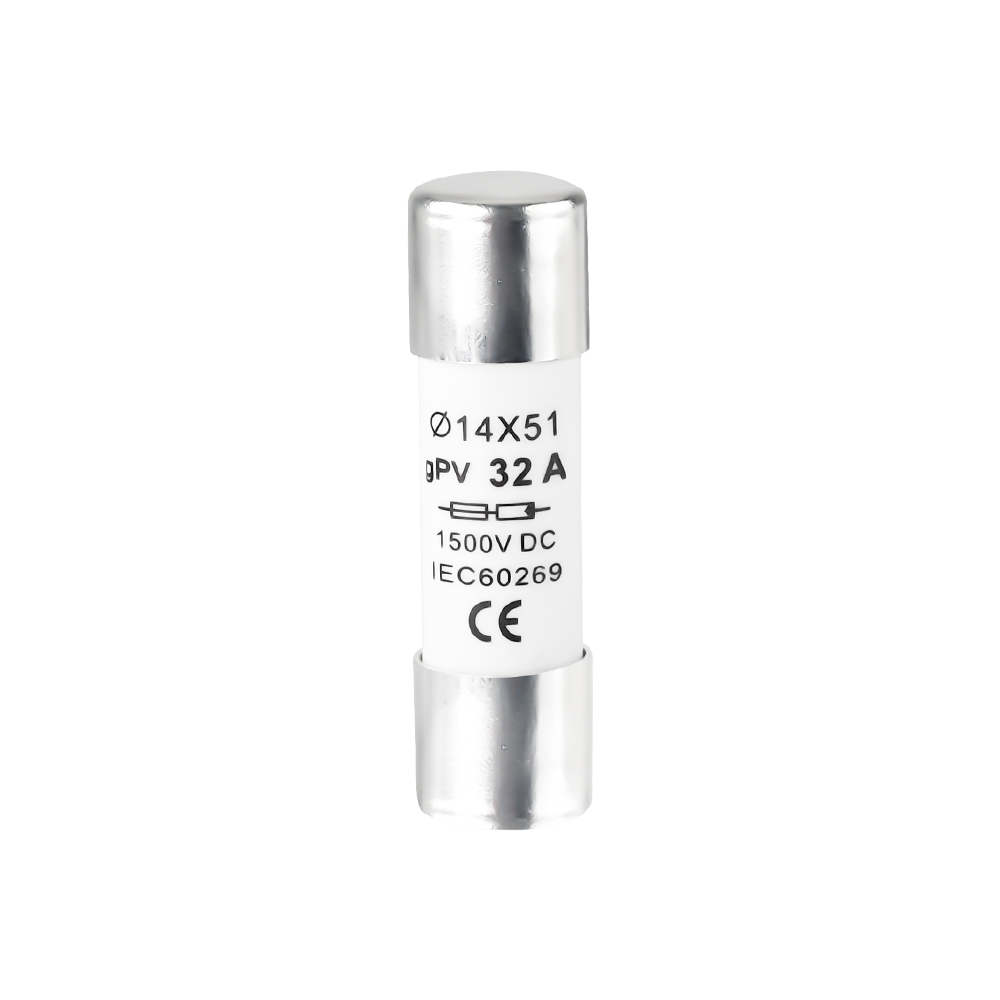
Cartridge Semiconductor Fuses
Cartridge semiconductor fuses are typically cylindrical in shape and widely used in industrial and power electronic applications. They are compact and easy to install in standard fuse holders.
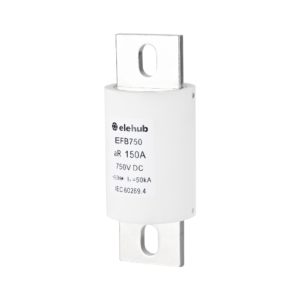
Bolt-On Semiconductor Fuses
Bolt-on semiconductor fuses are securely mounted using bolts, providing excellent mechanical stability and low contact resistance. They are commonly used in high-current and high-vibration environments.
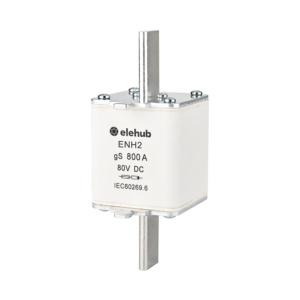
Knife-Blade Semiconductor Fuses
Knife-blade fuses feature flat blade terminals for fast installation and reliable electrical contact. They are often used in high-power distribution and industrial applications.
SMD Semiconductor Fuses
SMD (Surface Mount Device) semiconductor fuses are compact and designed for surface mounting on printed circuit boards. They are ideal for space-constrained electronic circuits and low-power semiconductor protection applications.


ELEHUB offers high-quality semiconductor fuses designed to provide safe, fast, and reliable protection for modern DC power systems.
Why Choose Us:
-
Wide Product Range: ELEHUB offers aR, gPV, and gS semiconductor fuses, providing reliable protection for a wide variety of DC power systems.
-
High Current Capability: Rated up to 800 A, suitable for high-power applications such as EV, photovoltaic, energy storage, and industrial DC systems.
-
Fast and Reliable Protection: Ultra-fast operation with low I²t effectively limits fault energy, ensuring reliable protection of sensitive semiconductor devices.
-
High Breaking Capacity: Capable of interrupting fault currents up to 100 kA, even in demanding DC environments.
-
Flexible Mounting Options: Available in cartridge, bolt-on, and knife-blade designs to accommodate various installation requirements.
-
Standards Compliant: Designed and manufactured in accordance with IEC 60269-6, ensuring safety, reliability, and global compliance.
Semiconductor Fuse vs Normal Fuse
There are significant differences between semiconductor and normal fuses:
|
Feature
|
Semiconductor Fuse
|
Normal Fuse
|
|
Speed
|
Very fast, reacts in microseconds
|
Slower, reacts in milliseconds
|
|
Material
|
Metal alloys, conductive elements
|
Metal (e.g., copper, zinc)
|
|
Energy Limiting
|
Low I²t, protects sensitive devices
|
Higher I²t, may damage semiconductors
|
|
Semiconductor Protection
|
Excellent
|
Poor
|
|
Applications
|
Sensitive electronic devices, such as power electronics, VFDs, inverters
|
General applications, such as general circuits, motors, lighting
|
|
Inductance
|
Low
|
Higher
|
Semiconductor fuses are essential for protecting delicate semiconductors, while normal fuses are used for general protection.
Applications of Semiconductor Fuses
Semiconductor fuses are used in many industries:
Variable Frequency Drives (VFDs)
Variable frequency drives (VFDs) are used to control the speed of motors in industrial systems. They contain IGBTs and power electronics that are sensitive to overcurrent and short circuits.

Source: Youtube @ Clough42
Semiconductor fuses protect VFDs by:
- Quickly interrupting fault currents before they damage IGBTs
- Limiting energy (low I²t) to prevent thermal damage
- Ensuring reliable motor operation without downtime
Without semiconductor fuses, short circuits in VFDs could destroy the drive and connected motors, causing costly repairs and production delays.
Inverters and Converters
Inverters and converters are critical in modern power electronics. They convert AC to DC, DC to AC, or change voltage levels for industrial and renewable energy applications.
Semiconductor fuses safeguard these systems by:
- Protecting IGBTs, diodes, and thyristors from high-current faults
- Reducing voltage spikes and thermal stress
- Maintaining the uninterrupted operation of renewable energy systems, industrial machinery, and UPS systems
In applications like UPS (Uninterruptible Power Supplies) or industrial converters, a fast-acting semiconductor fuse can prevent total system failure during overcurrent events.
Solar Systems
Solar photovoltaic (PV) systems generate DC power from sunlight. PV inverters and DC circuits are sensitive to overcurrent and short circuits.

Semiconductor fuses protect solar systems by:
- Interrupting excessive current caused by short circuits or panel faults
- Protecting sensitive PV inverters and controllers
- Ensuring safe operation and long lifespan of solar installations
In large solar farms, semiconductor protection fuses prevent damage to multiple inverters and minimize downtime, which is critical for consistent energy production.
Communication Equipment
Communication systems, including servers, data centers, and telecommunication devices, rely on sensitive electronics. Overcurrent or short circuits can disrupt operations and damage components.

Semiconductor fuses protect communication equipment by:
- Providing rapid fault interruption
- Preventing overload damage to sensitive transistors and diodes
- Ensuring the continuous operation of critical communication networks
For high-reliability systems like 5G base stations, semiconductor fuses are essential for maintaining uninterrupted service.
Electric Vehicles (EVs)
Electric vehicles use high-power electronics, including inverters, chargers, and battery management systems. These components are sensitive to short circuits and overcurrent conditions.

Semiconductor fuses in EVs:
- Protect battery inverters, chargers, and power electronics from fault currents
- Limit energy to prevent thermal damage
- Improve safety for passengers and system components
In EV applications, using a high-speed semiconductor fuse ensures that sensitive electronics are protected without impacting vehicle performance. This is critical in EVs, where both reliability and safety are paramount.
EV Charging Stations
EV charging stations involve high DC currents and sensitive electronics. Semiconductor fuses:

- Protect chargers from short circuits and overcurrent
- Enhance user safety and prevent system failures
- Ensure reliable operation in commercial and public EV charging networks
Without semiconductor fuses, a fault in a high-power charging station could damage electronics and pose safety risks.
Renewable Energy Systems
Beyond solar, semiconductor fuses are used in wind energy systems, energy storage systems, and hybrid grids.

They:
- Protect inverters, converters, and power modules from short circuits
- Enhance safety in high-voltage DC applications
- Ensure reliability in remote or critical energy installations
By limiting energy and acting fast, semiconductor fuses safeguard expensive equipment and reduce downtime in renewable energy projects.
Industrial Machinery
Industrial machinery often contains complex control systems, motor drives, and automated electronics. Semiconductor devices like IGBTs and power modules control these machines.
Semiconductor fuses in industrial machinery:
- Prevent overcurrent damage to motor drives and control electronics
- Enhance reliability and prevent production loss
- Protect costly semiconductors in automated systems
Without proper protection, a single short circuit can halt production lines and cause significant financial losses. Semiconductor fuses act quickly to prevent such interruptions.
How to Select the Right Semiconductor Fuse
Selecting the correct fuse ensures protection and prevents unnecessary downtime.
- Match the rated current to the normal operating current
- Ensure rated voltage ≥ system voltage
- Verify I²t is below semiconductor tolerance
- Choose the correct AC or DC type
- Confirm operating speed and breaking capacity
Proper selection guarantees effective protection without unnecessary interruptions.
Common Mistakes When Choosing a Semiconductor Fuse
- Selecting based only on current rating
- Ignoring I²t compatibility with IGBTs
- Using AC fuses in DC systems
- Replacing with non-equivalent fuse types
How to Check Semiconductor Fuse with a Multimeter
Checking a semiconductor (high-speed) fuse with a multimeter is straightforward, but it must be done correctly to avoid false conclusions.
Here is a tutorial video from Circuit Digest:
Step 1: Power Off and Isolate the Fuse
Completely disconnect the power and remove the fuse from the circuit or fuse holder. Never test a fuse while it is energized or connected to a live system.
Step 2: Set the Multimeter
Set the multimeter to continuity mode (buzzer symbol) or low-resistance (Ω) mode. Continuity mode is preferred for a quick pass/fail check.
Step 3: Measure Across the Fuse Terminals
Place one probe on each terminal of the fuse. Ensure firm contact, especially for bolt-mounted or knife-blade fuses.
Step 4: Interpret the Reading
- Good fuse: Multimeter beeps (continuity mode) or shows very low resistance (typically < 1 Ω for high-speed fuses).
- Blown fuse: No beep or displays OL / infinite resistance, indicating an open circuit.
Step 5: Check for Abnormal Resistance (Advanced)
If the fuse shows continuity but the resistance is unusually high, the fuse element may be partially damaged. Semiconductor fuses should have stable, very low resistance when healthy.
‼️ Note:
- If the fuse is open, it has blown and must be replaced.
- Inspect for visible damage or overheating signs.
- Replace only with the same type and rating.
Semiconductor Fuse Standards
Semiconductor fuses follow international standards to ensure safety and reliability:
IEC 60269
The International Electrotechnical Commission (IEC) standard defines fuse types, rated currents, voltage ratings, and safety requirements. IEC 60269-4 specifically covers semiconductor fuses, establishing ultra-fast characteristics, breaking capacity, and let-through energy limits to protect sensitive power electronic devices. Compliance ensures the fuse can safely interrupt short-circuit currents without damaging semiconductors.
UL 248
The Underwriters Laboratories (UL) standard applies to North America, specifying performance, testing, and safety requirements for semiconductor fuses. It ensures that fuses meet strict short-circuit protection, interrupting capacity, and thermal performance criteria. UL certification is widely recognized in the U.S. and Canadian markets, often required for industrial and commercial equipment.
Future Trends in Semiconductor Fuse Technology
The importance of semiconductor fuses will continue to grow with advancements in technology. As systems become more compact, powerful, and sensitive, protecting semiconductors will remain critical.

Future trends include:
- Smart Fuse Integration: Real-time monitoring for predictive maintenance.
- Higher Voltage and Current Ratings: Suitable for modern high-power systems.
- Compact and Lightweight Designs: Integration in space-limited electronics.
- Eco-Friendly Materials: Environmentally safe and recyclable fuse designs.
- Ultra-Fast Response Times: Protection for next-generation semiconductors with minimal tolerance for overcurrent.
Conclusion
A semiconductor fuse is an essential component in modern electrical and electronic systems. It provides high-speed protection to sensitive devices like IGBTs, thyristors, and diodes. Unlike normal fuses, semiconductor fuses operate in microseconds and limit energy with low I²t ratings. This ensures that delicate power electronics are not damaged during overcurrent or short circuit events.
These fuses are widely used in industrial machinery, VFDs, inverters, solar systems, EVs, and communication equipment. Their fast operation, reliability, and compact design make them indispensable in systems where even a small delay can cause severe equipment damage.
Selecting the right semiconductor fuse requires understanding key ratings like rated current, rated voltage, operating time, and I²t value. Proper selection ensures effective protection while avoiding unnecessary tripping. Additionally, following international standards like IEC 60269 and UL 248-14 guarantees safety and compliance with industrial regulations.
Semiconductor fuses not only enhance the safety and reliability of modern electronics but also reduce downtime and maintenance costs. By preventing device damage and limiting fault energy, they are vital for any system that relies on high-speed and high-precision electronic components.
In conclusion, whether it is an industrial motor drive, solar inverter, EV charger, or communication system, a semiconductor fuse is the first line of defense against overcurrent. Its fast response, reliability, and precise energy limitation make it indispensable for modern electrical and electronic applications.
🔍 FAQs
What is a semiconductor fuse?
A fuse designed to protect sensitive semiconductor devices from overcurrent and short circuits.
How does a semiconductor fuse work?
It melts its internal element quickly when current exceeds its rating, breaking the circuit to prevent damage.
Why are semiconductor fuses faster than normal fuses?
They have low inductance and minimal arcing, allowing microsecond-level response.
Where are semiconductor fuses used?
Used in VFDs, inverters, converters, solar systems, EVs, industrial machinery, and communication equipment.
What is the difference between a semiconductor fuse and a normal fuse?
Semiconductor fuses react faster, limit energy with low I²t, and protect delicate components better than normal fuses.
How to select the right semiconductor fuse?
Check rated current, rated voltage, I²t value, operating time, and application type (AC/DC).
Can semiconductor fuses be reused?
No, once blown, they must be replaced with the same type and rating.
What are the types of semiconductor fuses?
Types include fast-acting, ultra-fast, AC/DC, cartridge, block, and SMD fuses.
How to check a semiconductor fuse?
Use a multimeter to check continuity and inspect for visible damage.
What is the I²t rating of a semiconductor fuse?
It is the energy the fuse allows to pass before interrupting. Low I²t means better protection for semiconductors.
What causes a semiconductor fuse to blow?
Overcurrent, short circuits, voltage spikes, or improper selection can cause blowing.
What is the difference between HRC fuse and semiconductor fuse?
Semiconductor fuses are a specialized subset of HRC fuses, optimized to protect sensitive electronic components. All semiconductor fuses are HRC fuses, but not all HRC fuses are suitable for semiconductors.
How to test a semiconductor fuse?
Use a continuity test with a multimeter. Ensure the circuit is powered off before testing.
What are advantages of semiconductor fuses?
High-speed operation, reliable protection, low energy release, compact design, and wide applications.
Are there alternatives to semiconductor fuses?
Circuit breakers and electronic protection devices exist, but they may not provide the same fast response needed for semiconductors.
How do semiconductor fuses work in VFDs?
They protect power electronics by quickly interrupting overcurrent, preventing damage to IGBTs and diodes.
What is a high-speed semiconductor fuse?
A fuse designed to operate in microseconds, ideal for fast-reacting protection of power devices.
What is the difference between normal fuse and semiconductor fuse?
Normal fuses are slower and not suitable for delicate electronics. Semiconductor fuses act faster and limit energy to prevent damage.
How is a DC semiconductor fuse different from an AC one?
DC fuses handle direct current with minimal arcing, while AC fuses are designed for alternating current systems.
What is the future of semiconductor fuses?
Trends include smart monitoring, higher voltage ratings, compact designs, faster operating speeds, and eco-friendly materials.