There are not many components more essential and straightforward than fuses in electric safety. Whether it’s safeguarding your home wiring, the electronics in your vehicle, or a solar power system, fuses guard against damage, fires, and costly repairs. But what is a fuse? How does it function, and why are DC fuses so critical in applications?
Follow this article to explore the basics of fuses, and take an in-depth look at DC fuses—vital for systems like automotive circuits and renewable energy setups.
What is a Fuse?
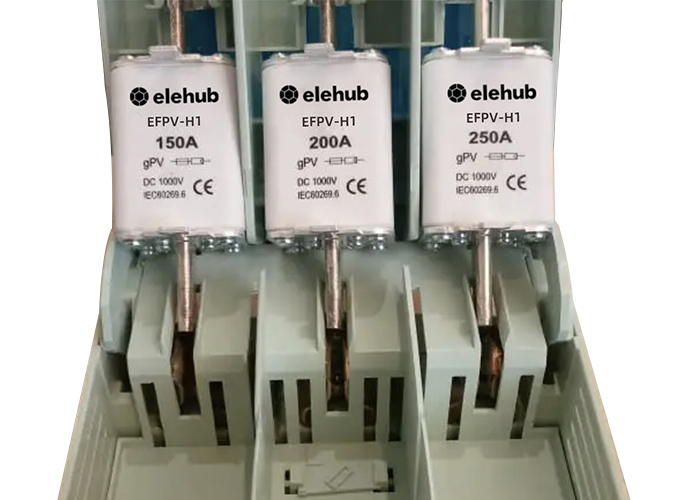
Fuses have a long history dating back to the 19th century. French physicist Louis Clément François Breguet proposed their use in telegraph circuits, and Thomas Edison patented the modern fuse in 1890, establishing its place in electrical engineering.
A fuse is a small, inexpensive safety device to protect electrical circuits from excessive current. When too much electricity flows through a circuit—may cause a short circuit, overload, or equipment failure—a fuse prevents the current from leading to overheating, damage, or fire hazards.
Generally, a fuse consists of a slender metal wire or strip, typically of zinc, copper, silver, or aluminum, enclosed in a heat-resistant body. When the current exceeds the fuse’s rated capacity, this metal element melts and opens the circuit, cutting off the flow of electricity.
How Does a Fuse Work?
A fuse operates in a very simple manner. When electric current passes through the metal element, it generates heat. In normal conditions, this heat is within acceptable limits, and the fuse is intact.
However, if the current spikes beyond the fuse’s threshold—due to a faulty appliance or a wiring issue—the metal heats up rapidly and melts. This melting action creates an open circuit, effectively cutting off the electricity flow. Fuses work in both alternating current (AC) and direct current (DC) systems, though DC circuits pose unique challenges due to the sustained nature of DC arcs.
What Does a Fuse Look Like?
Fuses come in a number of shapes and sizes for specific applications. Knowing their physical characteristics will allow you to select the right fuse or fault find easily. Below is an overview of the most common fuse types:
1. Cartridge Fuses: These are cylindrical fuses with metal end caps and are typically enclosed in ceramic or glass. They’re used widely in both domestic and industrial applications for AC and DC circuits.

2. Blade Fuses: These are rectangular with two metal prongs and are a staple in automotive circuits. They are small and color-coded (indicating amperage). Blade fuses have common applications in DC systems, especially in automobiles.

3. Surface-Mount Fuses: These are small and flat and are soldered onto circuit boards in newer electronics like smartphones and laptops.
4. Plug Fuses: Resembling a light bulb base with a threaded base, these are found in older homes and are less common today.
5. Resettable Fuses (PTCs): Disk-shaped and made of polymer materials. They “trip” on overcurrent but reset when cooled, offering reusable protection in consumer products.
| Fuse Type | Appearance | Common Use | DC-Specific |
| Cartridge Fuse | Cylindrical with metal end caps | Residential and industrial AC/DC circuits | Yes, with DC rating |
| Blade Fuse | Rectangular with two metal prongs | Automotive DC systems (e.g., cars, trucks) | Yes |
| Surface-Mount Fuse | Small, flat, soldered onto boards | Electronic devices (e.g., phones, laptops) | Yes, in DC boards |
| Plug Fuse | Threaded base, resembles a light bulb | Older residential AC systems | Rarely |
| Resettable Fuse (PTC) | Disc-shaped, polymer-based | Consumer electronics (e.g., chargers) | Yes, in DC applications |
What Does a Bad Fuse Look Like?

A blown fuse is usually the reason a device or system abruptly stops working. Being able to recognize one can spare time and aggravation. Here are some signs:
- Visual Clues: For clear fuses (such as glass cartridge fuses), a cracked or melted internal wire is an instant giveaway. Blade fuses might exhibit discoloration, blackened areas, or a deformed plastic body.
- Operational Clues: If a device suddenly stops working with a faint burning smell or popping sound, a blown fuse is a likely culprit. In cars, this would lead to a dead radio or malfunctioning lights.
- Multimeter Testing: For opaque fuses or damage that is not obvious, a multimeter is your best bet. Put it in continuity mode—if there’s no beep or reading, the fuse is blown.
DC Fuses: An In-Depth Look

While fuses defend both AC and DC circuits, DC fuses are designed particularly to handle the special problems of direct current.
Unlike AC, which cycles and crosses zero voltage naturally, DC flows perpetually in one direction. When a DC fuse opens, the created arc—a persistent electrical discharge—can be more challenging to extinguish, calling for fuses with better arc-suppression qualities.
Generally, DC fuses enjoy some outstanding features:
- Arc Suppression: DC fuses employ materials and designs (e.g., sand-filled compartments) to quench recurring arcs, ensuring circuit interruption safely.
- Low Resistance: In DC circuits, where voltage drops may impair performance (especially in long-duration solar applications), fuses are made for low resistance.
- Voltage Ratings: DC fuses typically have dedicated voltage ratings suitable for their application, ranging from low-voltage vehicle systems (12–48 V) to high-voltage solar arrays (up to 1500 V).
Types of DC Fuses
- Blade Fuses: Used in automobiles, these fuses protect low-voltage DC circuits powering anything from headlights to entertainment systems.
- Cartridge Fuses: Available in DC-specific ratings, these are used in industrial equipment and renewable energy systems.
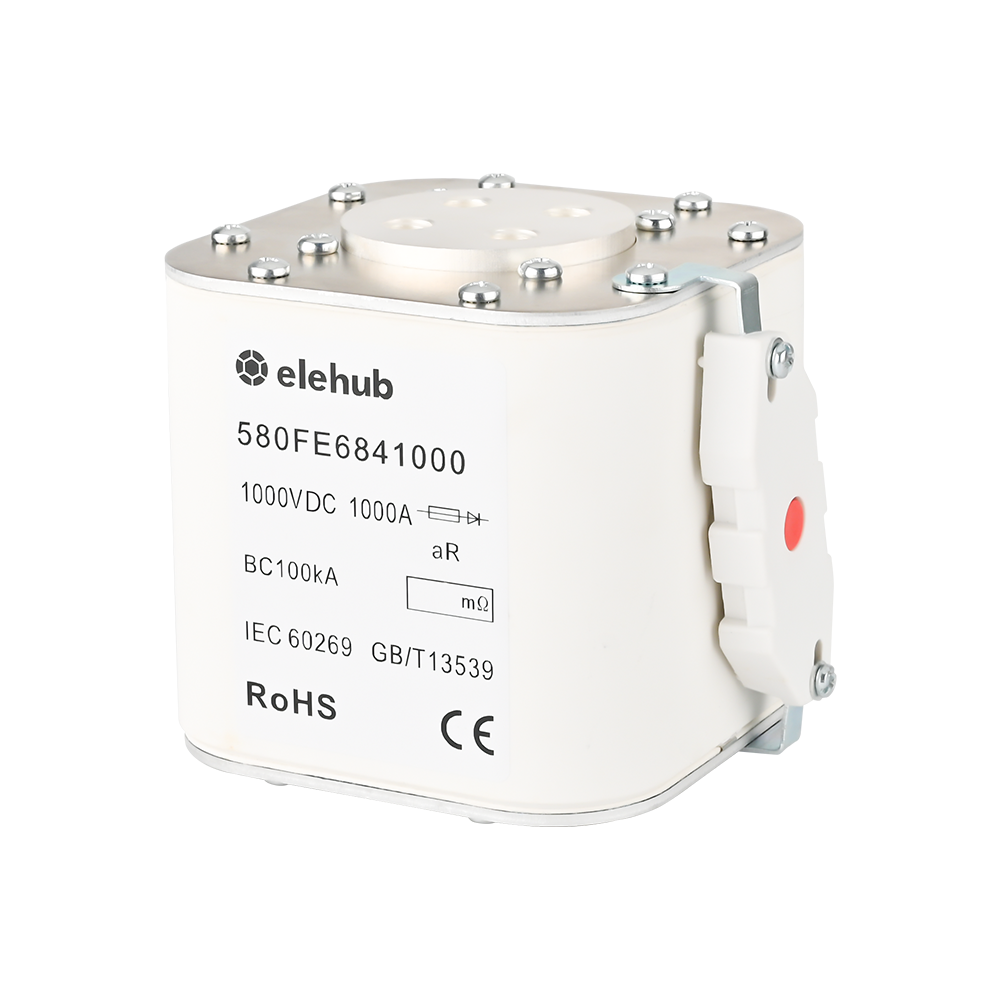
- High-Voltage DC Fuses: Built for solar panels, electric vehicles (EVs), and battery storage, these fuses handle higher voltages and currents with robust safety features.
Further Reading:
Applications of DC Fuses
| Scenarios | DC Fuse Applications |
| Automotive Systems | Blade fuses safeguard automobile electronics from overcurrent, ensuring critical components like starters, alternators, and power windows remain safe. |
| Solar Power Systems | High-voltage DC fuses protect photovoltaic panels, inverters, and battery banks against faults. These solar fuses supply clean and secure renewable energy production. |
| Battery-Powered Devices | DC fuses prevent overcurrent damage to e-scooters, drones, and other portable electronic devices. |
| Telecommunications | DC-driven telecommunications equipment relies on telecommunication fuses for hassle-free service and equipment longevity. |
| Electric Vehicles (EVs) | EV fuses provide essential protection for high-voltage battery packs, motor controllers, and charging systems, ensuring safety and longevity for EVs. |
| EV Charging Stations | Managing electricity flow during EV charging, ensures safety, offers overcurrent protection, and enables multiple charging modes. |
| Railway Systems | Safeguards electrical circuits in trains and other transportation systems, ensuring continuous operation and safety. |
| Energy Storage Systems (ESS) | Safeguards batteries and power electronics from overcurrent and short circuits. These energy storage fuses prevent potential damage and enhance system reliability with our DC fuses. |
Why Are Fuses Important?
Fuses are not only safety devices, but also a front line of defense against electrical disasters. While circuit breakers offer resettable convenience, fuses take the lead in simplicity, dependability, and affordability. Check out detail comparison in Fuse vs Circuit Breaker: Key Differences Explained.
In DC applications, where unbroken current flow multiplies danger, the right fuse can ward off everything from scorched wiring to total system failure. Their one-shot-use nature ensures that any fault is fixed conclusively.
Key Benefits of Fuses
- Economical: Cheap compared to the protected equipment.
- Fast-Acting: Instant response to overcurrent, keeping damage at a minimum.
- Versatile: Exist in infinite configurations for AC as well as DC.
Conclusion
Fuses have been a foundation of electrical safety for so many centuries. Whether you’re replacing a blown blade fuse in your car or choosing a high-voltage DC fuse for a solar array, understanding how fuses work and why they’re necessary provides you with the capability to maintain safe, efficient systems. By learning about their types, detecting failures, and avoiding their DC-specific pitfalls, users are better able to protect their devices and investments.
About ELEHUB
ELEHUB is one of the major suppliers of advanced electrical solutions for electric vehicles, solar energy, energy storage systems, and other industries.
Having been a DC electrical components manufacturer in the industry for many years, ELEHUB has built a reputation as a valued partner for companies and organizations seeking reliable, high-performance solutions to power system needs.
At ELEHUB, we work hard to offer high-performance and innovative solutions concerning the needs of individual applications. We are one of the top high voltage DC contactor suppliers in China.
Moreover, our portfolio comprises high-voltage DC contactors, circuit breakers, and DC protective switches, among other devices, with superior quality and reliability standards to ensure optimum performance even under demanding conditions.
FAQ
Why do electrical systems need fuses?
Fuses offer the initial protection against electrical faults. Fuses respond instantly to overcurrent conditions, protecting wiring and equipment from damage. The single-use aspect of fuses ensures that any fault is definitively indicated, with further examination and repair to prevent future hazard.
How do DC fuses differ from AC fuses?
The most significant difference lies in how they handle arcing. AC fuses are assisted by the natural zero crossing of the current, which helps to deplete arcs.
DC fuses must be specially constructed—through measures like sand-filled cases—to suppress persistent arcs. DC fuses are also constructed with low resistance to minimize voltage drops, particularly vital in long-run or high-demand systems like solar installations.
Learn more about this topic in: AC vs DC Fuse: What’s the Difference?
What role does arc suppression play in DC fuses?
Arc suppression is crucial because, in DC circuits, an arc (a continuous electrical discharge) will persist if not quickly quenched. DC fuses possess material and design properties which de-ionize arcs quickly, avoiding potential damage to wiring or equipment connected.
What voltage ratings can DC fuses handle?
DC fuses have varying voltage ratings to fit various applications. They may be low-voltage fuses (typically 12–48 V) for automotive systems or high-voltage fuses (as much as 1500 V) for application in solar arrays and other industrial or renewable energy systems.
What’s the difference between a time delay and a fast-acting fuse?
A time delay fuse allows temporary current surges (like motor startups) without blowing, while a fast-acting fuse responds instantly to overcurrent, protecting sensitive components. Choosing between them depends on whether your circuit needs surge tolerance or rapid fault protection. If you want a deeper comparison, read our full article on Time Delay vs Fast Acting Fuse.