The decision of UL 489 vs UL 1077 can be a make-or-break moment for an electrical project. These Underwriters Laboratories (UL) standards are used for circuit protection, but their incorrect application can lead to NEC violations or safety issues.
This manual provides in-depth expertise, step-by-step comparisons, and real-world tools for achieving compliance and performance for engineers, electricians, and manufacturers. You can learn What Are UL Standards in our blog.
What Are UL 489 and UL 1077?
UL 489 and UL 1077 have distinct roles in electrical safety that are necessary in order to select the correct protection device.
UL 489: Molded-Case Circuit Breakers
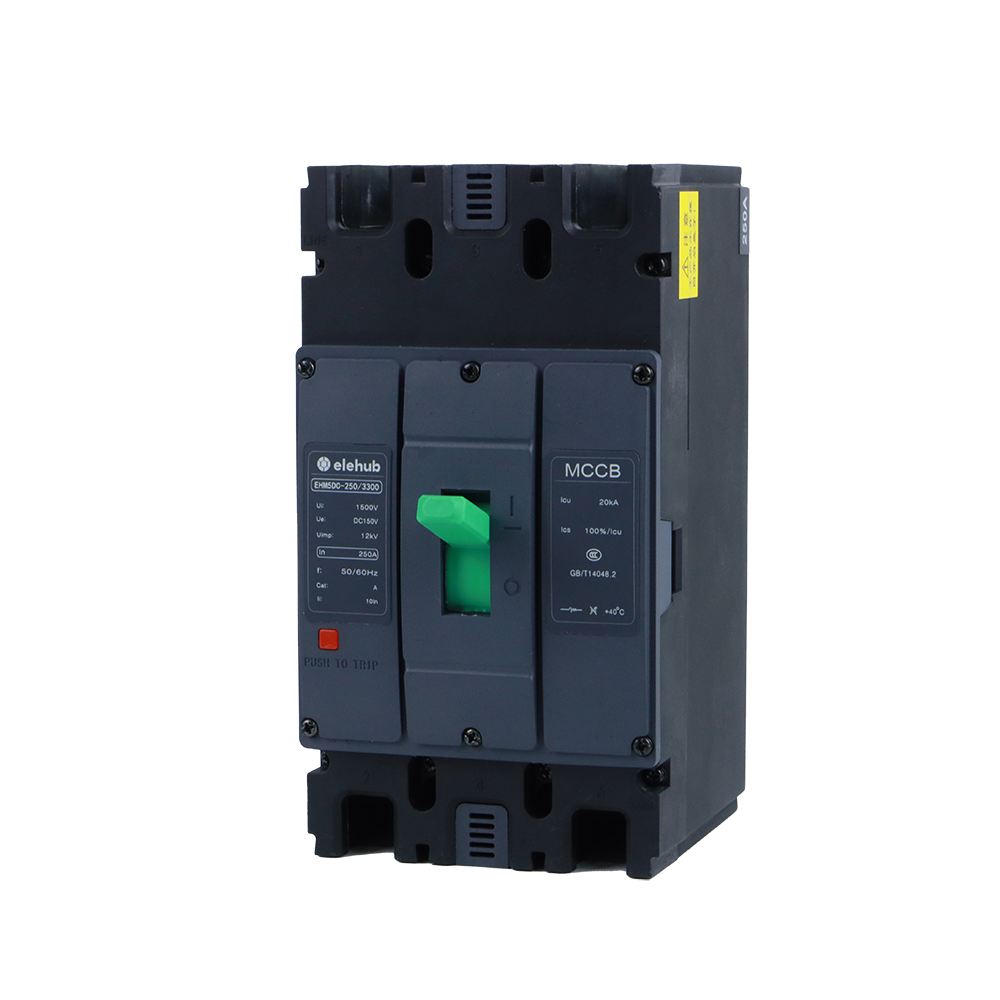
UL 489 addresses molded-case circuit breakers (MCCBs) for branch circuit protection, safeguarding whole circuits—service entrances, feeders, or branch circuits—against overcurrent, short circuits, and ground faults.
These MCCB circuit breakers are “Listed” for use alone, i.e., they’re tested to be used on their own under the National Electrical Code (NEC). They have high-fault current (e.g., 10kA–100kA) handling ability and are built for durability in hostile environments like industrial panels [UL Standard 489, 13th Edition].
UL 1077: Supplementary Protectors
UL 1077 is utilized for accessory protectors for overcurrent protection in equipment, where branch circuit protection is either already available or not required.
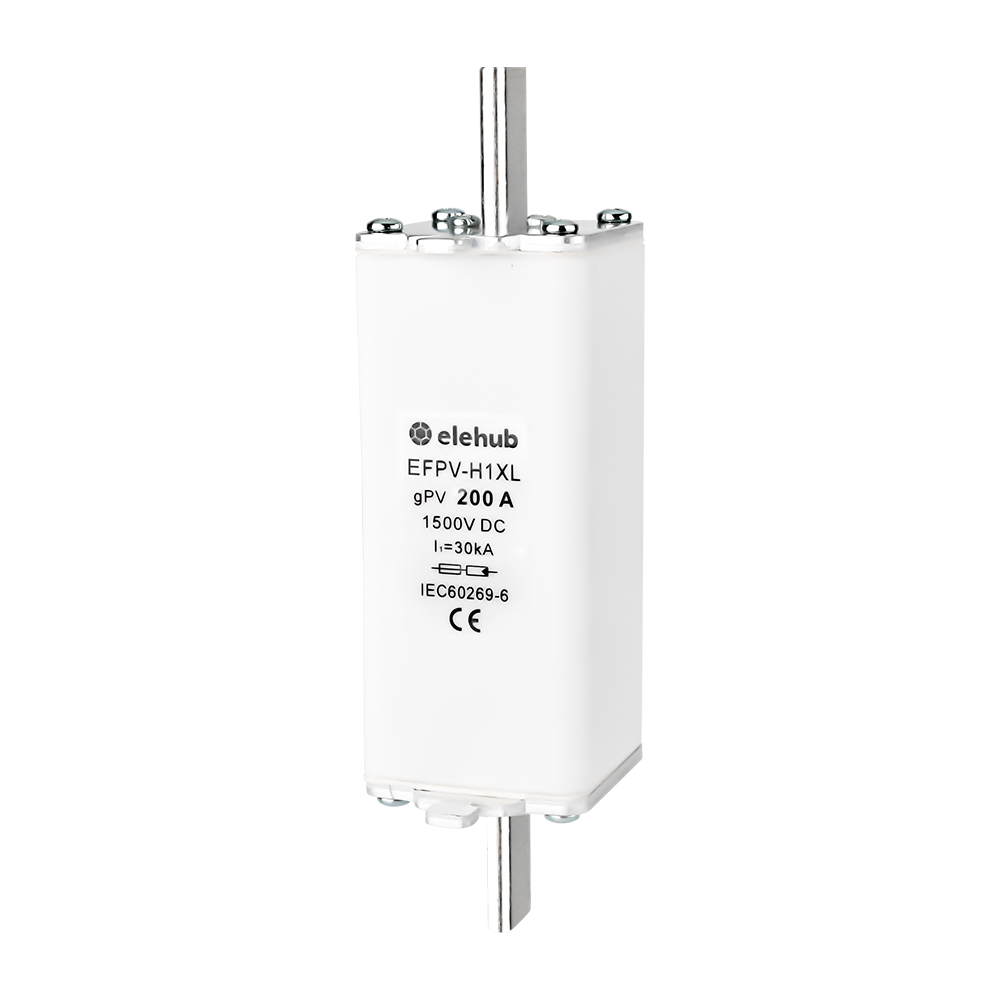
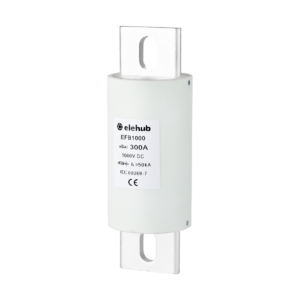
These devices, which can either be miniature breakers or fuses, like DC MCB circuit breakers or DC fuses. They are “Recognized” components, authorized for use inside larger systems like HVAC units or control panels, not individual circuits. Their fault interruption capability is lower, typically less than 5kA [UL Standard 1077, 7th Edition].
| Feature | UL 489 | UL 1077 |
| Purpose | Branch circuit protection | Supplementary protection |
| Certification | Listed (standalone) | Recognized (component) |
| Typical Devices | MCCBs, branch breakers | Miniature protectors, fuses |
| Fault Rating | High (10kA–100kA) | Low (<5kA) |
Differences Between UL 489 and UL 1077
There needs to be an understanding of the technical contrast between UL 489 and UL 1077 for conformity and safety.

Applications
UL 489: Protects primary circuits of main distribution panels, switchboards, motor control centers, renewable energy systems, and electric vehicle charging stations.
For instance, a 600A UL 489 breaker might protect a feeder circuit within a hospital with high inrush current capability from medical equipment. It’s also found in photovoltaic inverters, which require robust fault protection.
UL 1077: Shields equipment components in devices such as automation control circuits, power supplies to computer data centers, or ballasts for office facility lighting.
Here is an instance: A 10A UL 1077 protector for the control board in a CNC device prevents wiring overload following a UL 489 breaker.
Testing Requirements
UL 489 breakers are stringently tested for assured reliability as an ancestral protection:
Endurance: 6,000 cycles at rated current, and also 2,000 at elevated temperatures to simulate decades of service.
Overload: Trips in milliseconds at 6x rated current (e.g., 120A on a 20A breaker).
Short-Circuit: Suppresses faults up to rated capacity (10kA–100kA), exposed to a variety of fault conditions, including phase-to-ground and phase-to-phase faults.
Dielectric: Withstands 2kV surges to preserve insulation integrity [UL Standard 489, Section 7].
UL 1077 protectors are subjected to less severe tests, consistent with their ancillary role:
- Endurance: Typically 1,000 cycles, with no high-temperature requirement.
- Overload: Trips at 1.5x–2x rated current, slower than UL 489.
- Short-Circuit: Limited to low faults (<5kA), often requiring upstream protection.
- Dielectric: Lower surge tolerance, around 1kV [UL Standard 1077, Section 6].
NEC Compliance
The NEC mandates UL 489 breakers for branch circuit protection in Article 240, for panel-to-load circuits. It offers fault isolation and fire protection in lighting or HVAC applications [NFPA 70, 2023 Edition, Article 240.21].
UL 1077 devices are excluded from branch protection specifically because they are not designed to interrupt full circuit faults, leading to arc flashes or equipment damage if misapplied.
Cost and Complexity
UL 489 breakers are $50–$1,000, reflecting their heavy-duty design, higher fault ratings, and UL Listing.
A commercial panel 100A UL 489 breaker is usually over $100. UL 1077 protectors are $5–$150, as they are less complicated in design and involve less testing. A 20A UL 1077 protector for a control circuit is $15, but cannot replace a UL 489 breaker without being code-violating.
| Aspect | UL 489 | UL 1077 |
| Applications | Panels, EV chargers, inverters | Control circuits, appliances |
| Testing | 6,000 cycles, 10kA+ faults | 1,000 cycles, <5kA faults |
| NEC Role | Branch protection | Supplementary only |
| Cost | $40–$1,000 | $5–$150 |
UL 489 vs UL 1077: Make a Decision
The correct standard will vary with your circuit’s application, fault levels, and code requirements. Below is a step-by-step procedure.

When to Use UL 489
- Primary Protection: Essential for branch circuits for main panels, subpanels, or feeders. Application: a 200A breaker for a warehouse’s lighting circuit.
- High-Fault Environments: EV charging stations, data centers, or industrial plants with above 10kA fault currents. A 50kA UL 489 breaker offers protection for a factory switchboard.
- NEC Compliance: Required for Article 240 circuits, including motors, HVAC, or renewable energy systems [NFPA 70, 2023, Article 240].
- Special Cases: Used in transfer switches or generator panels. Example: A UL 489 breaker in a wind turbine’s distribution panel protects against lightning-induced faults.
When to Use UL 1077
- Supplementary Protection: Guards elements such as control wiring, sensors, or relays within equipment. Example: a 5A UL 1077 protector in a robotics controller.
- Low-Fault Circuits: Where fault currents are less than 5kA and a UL 489 breaker provides upstream protection. Common in pre-protected appliance circuits.
- Cost-Sensitive Projects: Saves money in OEM manufacturing, like vending machines or lighting fixtures, where branch protection exists.
- Compact Designs: Fits tight spaces in control boxes due to smaller size. Example: A UL 1077 protector in a server rack’s PDU prevents overloads without duplicating the panel’s UL 489 breaker.
Edge Cases
Even though these seldom happen, there are some special cases like the following:
- UL 489 as UL 1077 Substitute: Permissible but inefficient. A UL 489 breaker in a control box adds $100+ in costs and occupies 2–3x the space of a UL 1077 protector.
- UL 1077 as UL 489 Substitute: Prohibited. UL 1077’s low fault rating (e.g., 2kA) fails under branch circuit faults, risking catastrophic failure. Example: A UL 1077 protector in a 15kA branch circuit melted during a fault, causing $10,000 in damage.
- Mixed Systems: In hybrid panels, UL 489 protects the main circuit, while UL 1077 handles internal sub-circuits, optimizing cost and space.
Example: A UL 489 breaker in a marina’s shore power panel ensures safety, while UL 1077 protectors in onboard chargers save space.
International Standards for Global Projects
UL vs IEC

- UL 489: Mirrors IEC 60947-2 for low-voltage circuit breakers, used in industrial and commercial systems. Both require high-fault interruption (10kA–100kA) and endurance (8,000+ cycles for IEC) [IEC 60947-2, 5th Edition].
- UL 1077: Parallels IEC 60898-1 for miniature circuit breakers, but UL 1077 is stricter on supplementary use, while IEC 60898 allows limited branch protection in Europe or Asia (6kA–10kA ratings) [IEC 60898-1, 2nd Edition].
Key Differences
- Voltage Ratings: UL standards focus on North American systems (120/240V, 277/480V); IEC supports global grids (230/400V, 690V), requiring design adjustments for exports.
- Certification: UL uses “Listed” (UL 489) or “Recognized” (UL 1077) marks; IEC relies on CE marking or CB scheme, verified by third-party labs.
- Testing Scope: IEC 60947-2 includes environmental tests (e.g., humidity, vibration) beyond UL 489’s focus on electrical performance. IEC 60898’s short-circuit tests are broader than UL 1077’s, covering residential use.
- Market Use: UL dominates North America; IEC prevails in Europe, Asia, and Africa, affecting equipment specs.
Implications for Manufacturers
- UL 489 Exports: A UL 489 breaker for a US data center needs IEC 60947-2 certification for European markets, adding about $5,000–$10,000 in testing costs. Example: Siemens re-certifies UL 489 breakers for IEC compliance in Germany.
- UL 1077 Globally: UL 1077 protectors are viable in IEC-compliant equipment (e.g., HVAC exports) if branch protection meets local codes, saving 20–30% vs UL 489.
- Dual Certification: Many OEMs certify UL 489/IEC 60947-2 or UL 1077/IEC 60898 devices to streamline global sales, like Schneider Electric’s multi-standard breakers.
| Standard | UL 489 | IEC 60947-2 | UL 1077 | IEC 60898 |
| Scope | Branch protection | Low-voltage breakers | Supplementary | Miniature breakers |
| Region | North America | Global | North America | Global |
| Fault Rating | 10kA–100kA | 10kA–100kA | <5kA | 6kA–10kA |
| Voltage | 120/240V, 277/480V | 230/400V, 690V | 120/240V | 230/400V |
Common Mistakes and How to Avoid Them
Missteps with UL 489 or UL 1077 can derail projects. Here’s how to avoid them with detailed fixes.

Source: https://library.automationdirect.com/branch-supplementary-circuit-protection/
Mistake 1: Using UL 1077 for Branch Circuit Protection
- Consequence: Violates NEC Article 240, risking arc faults, fires, or $5,000–$50,000 fines per violation. Example: A retail store’s panel failed inspection due to UL 1077 protectors, delaying opening by three months.
- Fix: Map circuits to NEC requirements. Use UL 489 for any branch or feeder circuit, verified by fault current calculations (e.g., 15kA at panel entry).
Mistake 2: Assuming UL 489 Is Always Better
- Consequence: Over-specifying UL 489 adds 50–200% in costs and space. Example: A UL 489 breaker in a low-fault control box costs an OEM $10,000 more than UL 1077.
- Fix: Assess fault levels and protection hierarchy. If a UL 489 breaker exists upstream, UL 1077 suffices for downstream components.
Mistake 3: Ignoring Recent NEC Updates
- Consequence: Missing 2023 NEC changes—like arc-fault breaker mandates or higher fault ratings—leads to failed inspections. Example: A 2024 hotel project faced $25,000 in retrofits for outdated UL 489 specs.
- Fix: Review NFPA 70 annually, especially Articles 240 and 430. Use tools like NFPA’s online portal for updates [NFPA 70, 2023 Edition].
Compliance Checklist
- Identify circuit type (branch, feeder, or supplementary).
- Calculate fault current using IEEE 1584 guidelines.
- Match device to NEC Article 240 or 430 requirements.
- Cross-check UL 489/UL 1077 specs against project loads.
- Update designs for NEC 2023 changes, like GFCI or arc-fault rules.
Conclusion
UL 489 protects branch circuits with NEC-compliant rigor; UL 1077 safeguards equipment where primary protection exists.
Misusing them—like UL 1077 in a main panel—courts disaster, but our decision tree, checklist, and global insights ensure you choose wisely. Download our compliance guide or consult a UL expert to nail your next project. Safety first—your reputation depends on it.
About ELEHUB
ELEHUB is one of the major suppliers of advanced electrical solutions for electric vehicles, solar energy, energy storage systems, and other industries.
Having been a DC electrical components manufacturer in the industry for many years, ELEHUB has built a reputation as a valued partner for companies and organizations seeking reliable, high-performance solutions to power system needs. Our products meet the UL standards, TÜV, ROHS compliance, and CE standards.
At ELEHUB, we work hard to offer high-performance and innovative solutions concerning the needs of individual applications. We are one of the top high voltage DC contactor suppliers in China.
Moreover, our portfolio comprises high voltage DC contactors, circuit breakers, and DC protective switches, among other devices, with superior quality and reliability standards to ensure optimum performance even under demanding conditions.
FAQs
What’s the main difference between UL 489 and UL 1077?
UL 489 governs branch circuit breakers for primary protection; UL 1077 covers supplementary protectors for equipment [UL Standard 489; UL Standard 1077].
Can UL 1077 be used for branch circuit protection?
No, UL 1077 lacks the fault capacity for branch circuits, violating NEC Article 240 [NFPA 70, 2023].
How do UL 489 breakers compare to IEC standards?
UL 489 aligns with IEC 60947-2 for high-fault breakers, differing in voltage and certification [IEC 60947-2].
Are UL 1077 devices cheaper than UL 489?
Yes, UL 1077 costs $5–$150 vs UL 489’s $50–$1,000 due to simpler testing and design.
What tests does UL 489 require that UL 1077 doesn’t?
UL 489 requires 6,000-cycle endurance and 10kA+ fault interruption; UL 1077 needs fewer cycles and <5kA ratings [UL Standard 489, Section 7; UL Standard 1077, Section 6].
References
1. UL Standard 489, 13th Edition. Underwriters Laboratories.
2. UL Standard 1077, 7th Edition. Underwriters Laboratories.
3. NFPA 70, National Electrical Code, 2023 Edition. National Fire Protection Association.
4. IEC 60947-2, 5th Edition. International Electrotechnical Commission.
5. IEC 60898-1, 2nd Edition. International Electrotechnical Commission.