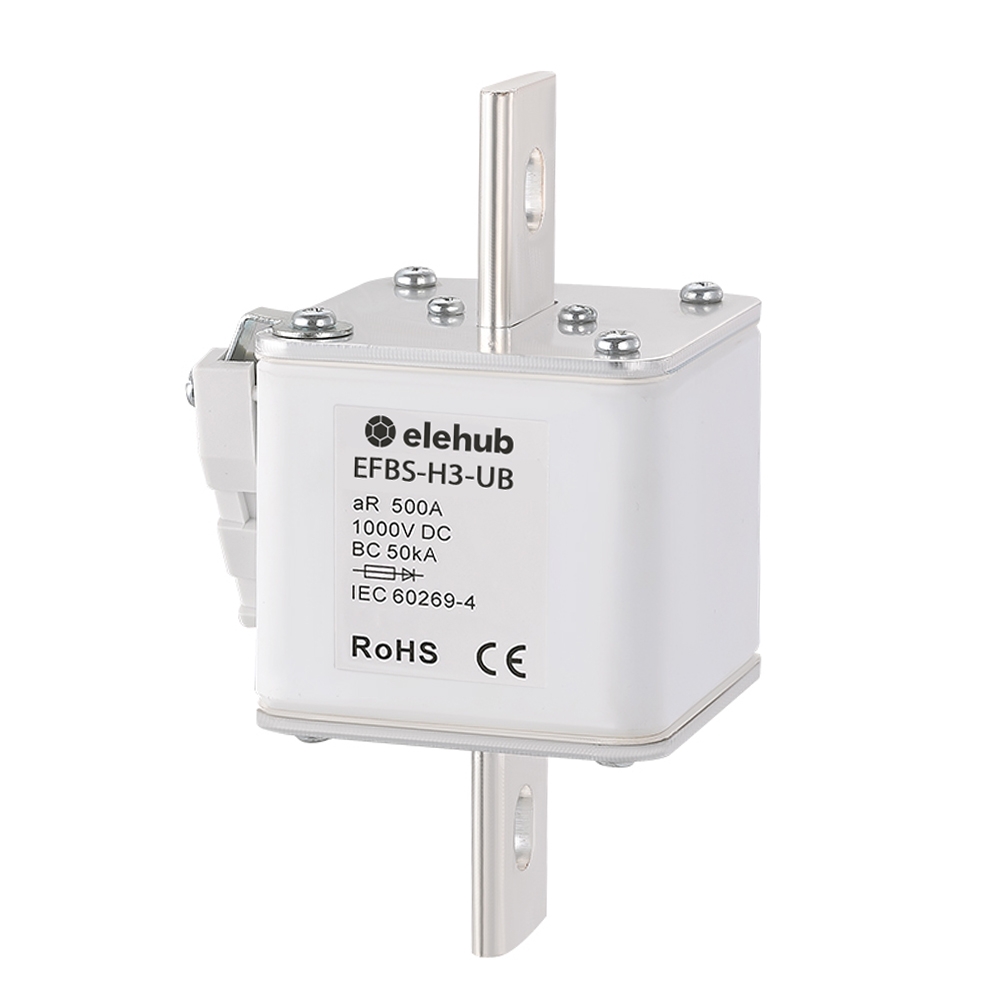
Fuses are critical for protecting electrical circuits, but time delay vs fast acting fuse can be confusing. The right fuse ensures safety and performance. At the following, we compare time delay and fast acting fuses, with practical tips and a decision-making framework to help you choose. Read on to find the perfect fuse for your project!
Understanding Fuses: The Basics

What is a fuse? Fuses are safety devices that protect electrical circuits by interrupting excessive current flow, preventing damage to equipment or fire hazards.
They consist of a metal wire or filament that melts when current exceeds a safe level, breaking the circuit. Fuses come in various types, but time delay (slow-blow) and fast-acting (quick-blow) fuses are the most common.
Choosing the right fuse is crucial. For example, a square bolt fast fuse is ideal for high-performance applications like power distribution systems, while a time delay fuse suits motors with high startup currents. Selecting the wrong type can lead to frequent tripping, equipment failure, or safety risks.
Fast-Acting Fuses: Everything You Need to Know
How Fast-Acting Fuses Work

Source: https://www.glodark.com/fuses.htm
Fast acting fuses are designed to react instantly to overcurrent, providing rapid protection for sensitive circuits.
They have a low I²t value (a measure of energy required to blow the fuse), meaning they melt quickly when current exceeds their rating. This rapid response is critical for protecting components that can’t tolerate even brief overcurrents.
The time-current curve of a fast acting fuse shows its near-instantaneous response. For example, a 5A fast acting fuse may blow in milliseconds if the current spikes to 10A. This makes them ideal for circuits requiring precise protection.
Applications of Fast-Acting Fuses
Fast acting fuses are used in circuits where immediate protection is essential. For instance, a computer power supply might use a fast acting fuse to protect its circuitry from voltage spikes.
- Electronics: Circuit boards, LEDs, and small appliances rely on fast acting fuses to prevent damage from sudden surges.
- Semiconductors: Diodes, transistors, and integrated circuits require rapid protection due to their sensitivity.
- Sensitive Equipment: Medical devices or lab instruments use fast acting fuses to ensure reliability.
Pros and Cons of Fast Acting Fuses

Advantages
- High sensitivity to overcurrent, protecting delicate components.
- Compact design, fitting small devices.
- Wide availability for various ratings.
Disadvantages
- Prone to nuisance tripping in circuits with high inrush currents (e.g., during motor startup).
- Requires precise sizing to avoid premature failure.
Standards
Fast acting fuses comply with standards like UL (Underwriters Laboratories) or IEC (International Electrotechnical Commission), ensuring safety and performance. They’re often marked with voltage and current ratings. Always check these markings to confirm the fuse.
Time Delay Fuses: A Quick Overview
How Time Delay Fuses Work

Source: https://www.easybom.com/blog/a/what-is-a-slow-blow-fuse
Time delay fuses, also called slow-blow fuses, are designed to tolerate temporary overcurrents, such as those during motor startup. They have a higher I²t value, allowing them to withstand brief surges without blowing. This delayed response prevents unnecessary interruptions in circuits with high inrush currents.
The time-current curve for a time delay fuse shows a slower reaction. A 5A time delay fuse might tolerate a 10A surge for a few seconds before blowing, making it suitable for inductive loads.
Applications of Time Delay Fuses
Time delay fuses are ideal for:
- Motors: Electric pumps, fans, or HVAC systems with high startup currents.
- Transformers: Equipment with inductive loads.
- Industrial Equipment: Machinery requiring stable operation during power surges.
For example, a time delay fuse in an air conditioning unit prevents tripping when the compressor starts, ensuring reliable performance.
Pros and Cons of Time Delay Fuses
Advantages
- Prevents nuisance tripping in high-inrush circuits.
- Versatile for industrial and heavy-duty applications.
Disadvantages
- Slower response, unsuitable for sensitive electronics.
- May not meet standards for certain high-precision applications.
Standards and Markings
Time delay fuses also follow UL or IEC standards on the fuse body, along with ratings. These markings help distinguish them from fast acting fuses.
Time Delay vs Fast Acting Fuse: Key Differences
Choosing between a time delay and fast acting fuse depends on your circuit’s needs. Below is a head-to-head comparison to clarify their differences:
| Feature | Fast Acting Fuse | Time Delay Fuse |
| Response Time | Immediate (low I²t) | Delayed (high I²t) |
| Applications | Electronics, semiconductors | Motors, transformers |
| Nuisance Tripping | More likely | Less likely |
| Standards | UL, IEC (specific classes) | UL, IEC (specific classes) |
Key Differences
- Speed and Sensitivity: Fast acting fuses react instantly, ideal for sensitive electronics, while time delay fuses tolerate surges, suiting motors.
- Inrush Current Handling: Time delay fuses handle high inrush currents without tripping, unlike fast acting fuses, which may blow prematurely.
- Safety Implications: Using a fast acting fuse in a motor circuit can cause frequent tripping, while a time delay fuse in sensitive electronics may fail to protect delicate components.
A Fast Acting Fuse suits: Circuit boards, LEDs, medical devices, or any circuit requiring immediate protection.
A Time Delay Fuse suits: Motors, HVAC systems, or equipment with high startup currents.
Time Delay vs Fast Acting Fuses: Identification & Selection
Selecting the right fuse ensures safety and performance. How to identify these two fuse types?
- Visual Cues: Fast acting fuses are often smaller, with glass bodies for low-current applications. Time delay fuses may be ceramic or larger for industrial use.
- Use Tools: Consult manufacturer datasheets or use a multimeter to verify fuse types and continuity. (Read this article on how to check fuse with a multimeter.)
Okay, how to choose between them?
Determine Circuit Type: Is it a sensitive electronic circuit (fast acting) or a motor with high inrush current (time delay)?
- Check Ratings: Match the fuse’s voltage and current ratings to your circuit.
- Assess Inrush Current: If the circuit has startup surges (e.g., motors), opt for a time delay fuse.
- Verify Standards: Ensure the fuse meets UL or IEC requirements for your application.
Safety and Troubleshooting Tips for Fuses
One of the key safety issues is using the wrong fuse type. This is a red light that we should pay more attention to choosing the right one from various fuse types.

Look at these examples of misuse:
- Fast Acting in Motor Circuits: May cause nuisance tripping, disrupting operation.
- Time Delay in Electronics: Slow response can fail to protect sensitive components, leading to damage.
- Incorrect Ratings: Overloading a circuit with an oversized fuse risks fire or equipment failure.
Troubleshooting Tips
We also collected some useful tips to check when facing common problems.
- Frequent Blowing: Check for short circuits, overloads, or incorrect fuse type (e.g., fast acting in a high-inrush circuit).
- Nuisance Tripping: Switch to a time delay fuse for motors or verify current ratings.
- No Response: Ensure the fuse is properly installed and matches circuit specs. Consult an electrician for complex issues.
Fast Acting Focus: Undersizing a fast acting fuse in electronics can lead to premature failure. Always verify the circuit’s peak current to avoid this issue.
Final Thoughts
Choosing between a time delay and fast acting fuse is critical for circuit protection. Fast acting fuses excel in sensitive electronics, offering rapid response to overcurrents, while time delay fuses are perfect for motors and high-inrush equipment.
By understanding their differences, identifying markings, and following safety guidelines, you can select the right fuse for any application.
FAQs
What is the difference between a time delay and fast acting fuse?
A fast acting fuse blows instantly to protect sensitive electronics, while a time delay fuse tolerates temporary surges.
Can a fast acting fuse be used instead of a time delay fuse?
No, fast acting fuses may trip unnecessarily in high-inrush circuits like motors. Always match the fuse to the circuit’s needs.
What are fast acting fuses used for?
Fast acting fuses protect electronics, semiconductors, and sensitive equipment from sudden overcurrents.
What happens if the wrong fuse type is installed?
Using the wrong type can cause nuisance tripping, component damage, or even fire hazards. Fast acting fuses may blow unnecessarily in motor circuits, while time delay fuses might not protect sensitive electronics in time.
Which fuse type is better for solar inverters or battery systems?
Fast acting fuses are typically preferred for sensitive electronics, such as inverters and BMS systems. However, time delay fuses might be used upstream for load-handling equipment. Always consult the equipment manual.