Our homes, offices, and industries run on power. However, it also has severe dangers when not regulated well. Circuit breakers are important because of that. They prevent overloading, short-circuiting, and damage to the equipment of electrical systems.
But such is not the case with all circuit breakers. What is needed to keep your house safe is a residential circuit breaker, which is quite different from an industrial circuit breaker that is utilized in factories or plants.
We will discuss these differences in simple language in this article. We will analyze their mechanism of work, the places of their application, and the types suitable for particular purposes. We will also consider some of the essential aspects, including the design, performance, and maintenance.
⭐️ Quick Summary (TL;DR)
- Residential circuit breakers protect homes, offices, and small buildings, typically at 120–240V and up to 100A. They are compact, inexpensive, and low-maintenance.
- Industrial circuit breakers protect factories, data centers, refineries, renewable energy systems, and machinery at high voltages and high currents. They are heavy-duty, precise, and built for harsh environments.
Circuit Breakers and Their Understanding
A circuit breaker is an automatic electrical switch that cuts off current flow in abnormal conditions. Protection is the primary aim of it. At a current higher than the rated current, the breaker jumps off, halting the current at a single bound.
Simply put, it is a kind of guard for your electric circuit. In its absence, overloading or short-circuiting might result in severe damage or even fires.
👉 Read more: What is a Circuit Breaker? Types, Working Principle, and Applications
Two Major Categories of Circuit Breakers
There are only two broad classes:
Residential Circuit Breakers: The circuits are used in homes and small buildings.
Industrial Circuit Breakers: These are utilized in factories, heavy machinery, and power systems.
Although both protect electrical systems, they are not interchangeable. The second one, the industrial circuit breaker, is more complex than the first one; we will take a closer look at it.
What is an Industrial Circuit Breaker?
An industrial circuit breaker is a heavy-duty protective appliance that is created to work with a large amount of voltage and current. It works in harsh environments and offers uniform security to the equipment, motors, and huge electrical installations.
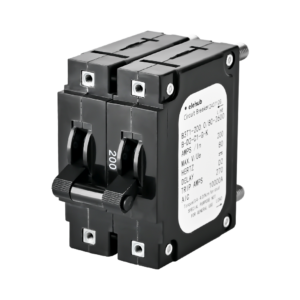
The industrial types are designed to operate at hundreds of volts or thousands of volts, whereas domestic types operate at only a few tens of volts (usually 240 V). They are capable of interrupting huge fault currents and causing no damage to industrial installations.
Circuit breakers used in industries are also designed to be reliable. Their materials are stronger, their arc-extinguishing chambers are more developed, and the contact systems are better. They are durable and can be used over a long period in even the worst conditions, like manufacturing facilities, oil refineries, or data centers.
What is a Residential Circuit Breaker?
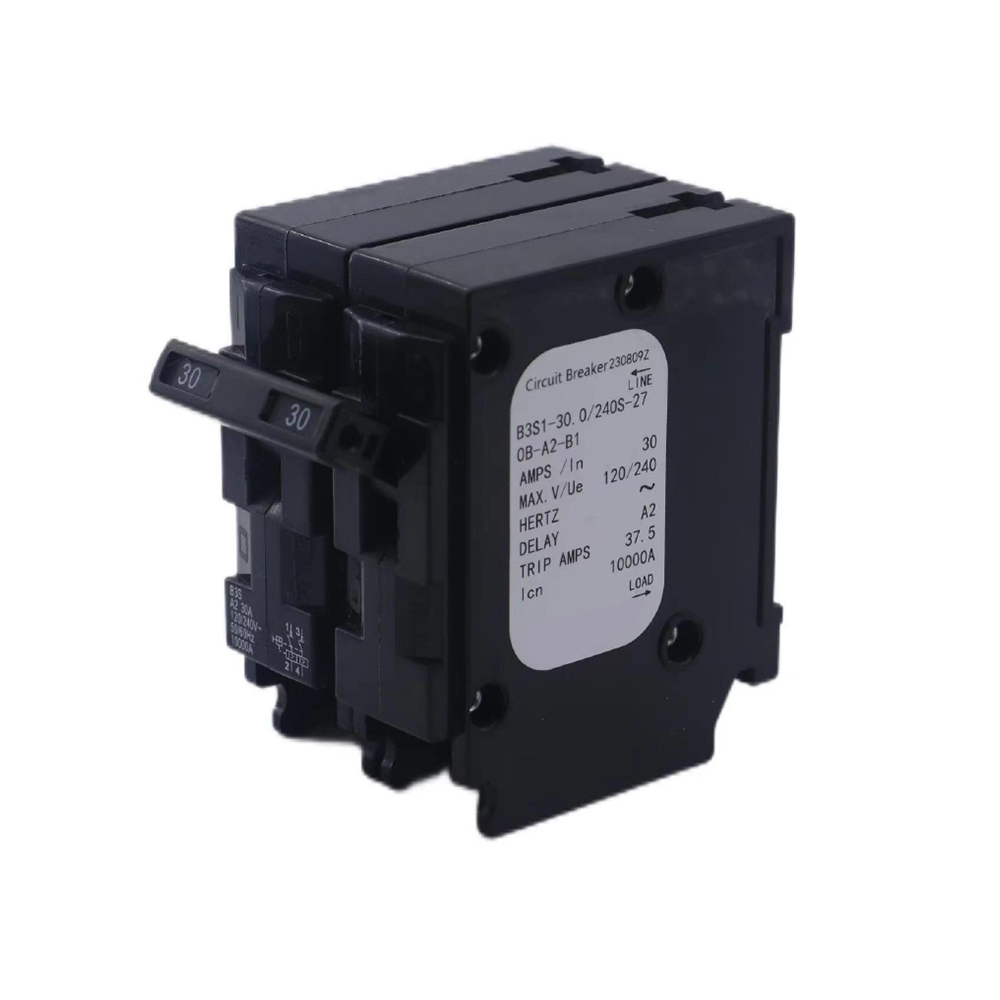
Residential circuit breaker is applied in residential buildings and small commercial buildings. It is used to handle low to moderate electrical loads, typically 120 V or 240 V systems. These breakers are smaller in size, they are easy to install, and cheaper.
 Source: CHNT
It is their duty to guard the house wiring, lighting, fans, and sockets. In cases of overload or short circuit, the breaker will switch to avoid damage. They are convenient, efficient, and they are easy.
Nonetheless, domestic breakers cannot be used in industry. They are not able to resist big fault currents or big fault currents.
Residential and Industrial Circuit Breaker: Key Differences
The design and employment of these two types are considerably different, although they both serve the same purpose – protection. We will condense the key dissimilarities into rough words.
Current and Voltage Capacity
Fewer residential load breakers are used, usually 10A-100A at 240 V.
Industrial breakers are developed to handle large systems with an amperometric load of up to thousands and voltages of 600 V and more.
Construction Quality
Residential: Breakers that can be used in residential areas are small and light.
Industrial: Industrial breakers are bigger and constructed using reinforced materials and have more sophisticated internal mechanisms of arc extinguishing.
Application
Residential: apartments, offices, homes.
Industrial: factories, refineries, data centers, power plants, and heavy machine systems.
Maintenance
Residential: Breakers of residential buildings do not need much maintenance.
Industrial: Breakers used in industries require to be periodically checking, testing, and calibration to aid the long-term reliability.
Trip Mechanism
Residential: Thermal-magnetic trip units are commonly used in residential breakers.
Industrial: Circuit breakers in industries can be precise with hydraulic-magnetic, electronic, or digital trip systems.
🆚 Detailed Comparison Table
To further define the residential and industrial circuit breakers, the following is just a simple comparison table that breaks down the major differences:
|
Feature
|
Residential Circuit Breaker
|
Industrial Circuit Breaker
|
|
Voltage Range
|
120V–240V
|
600V and above
|
|
Current Capacity
|
Up to 100A
|
Up to several thousand amperes
|
|
Structure
|
Compact and lightweight
|
Larger, more robust
|
|
Trip Mechanism
|
Thermal-magnetic
|
Hydraulic-magnetic, electronic, or digital
|
|
Application
|
Homes, small offices
|
Factories, plants, and data centers
|
|
Durability
|
Moderate
|
High endurance and long lifespan
|
|
Maintenance
|
Minimal
|
Requires regular inspection and testing
|
|
Cost
|
Low
|
High, due to the complex design
|
|
Response Time
|
Moderate
|
Fast and highly accurate
|
|
Environmental Resistance
|
Indoor use
|
Resistant to dust, heat, and vibrations
|
In this table, it is revealed that the circuit breaker industrial type is made to be strong, enduring, and precise. In comparison, residential models are more concerned with affordability and ease.
Industrial Circuit Breaker Types
The industrial type of circuit breaker has a number of variants that have a particular purpose. The most popular types used by industries are the following:
Air Circuit Breaker (ACB)
ACBs apply to low voltage applications, typically to 690 V. Their use is perfect in distributing power, as well as the protection of generators or motors.

Features:
- Straightforward design and low maintenance.
- Appropriate for installation indoors.
- Much like arc chutes to manage and put the arc out.
- Application: Electric switchboards at production factories.
Typical applications:
- Power distribution panels
- Generator protection
- Motor control centers
Molded Case Circuit Breaker (MCCB)
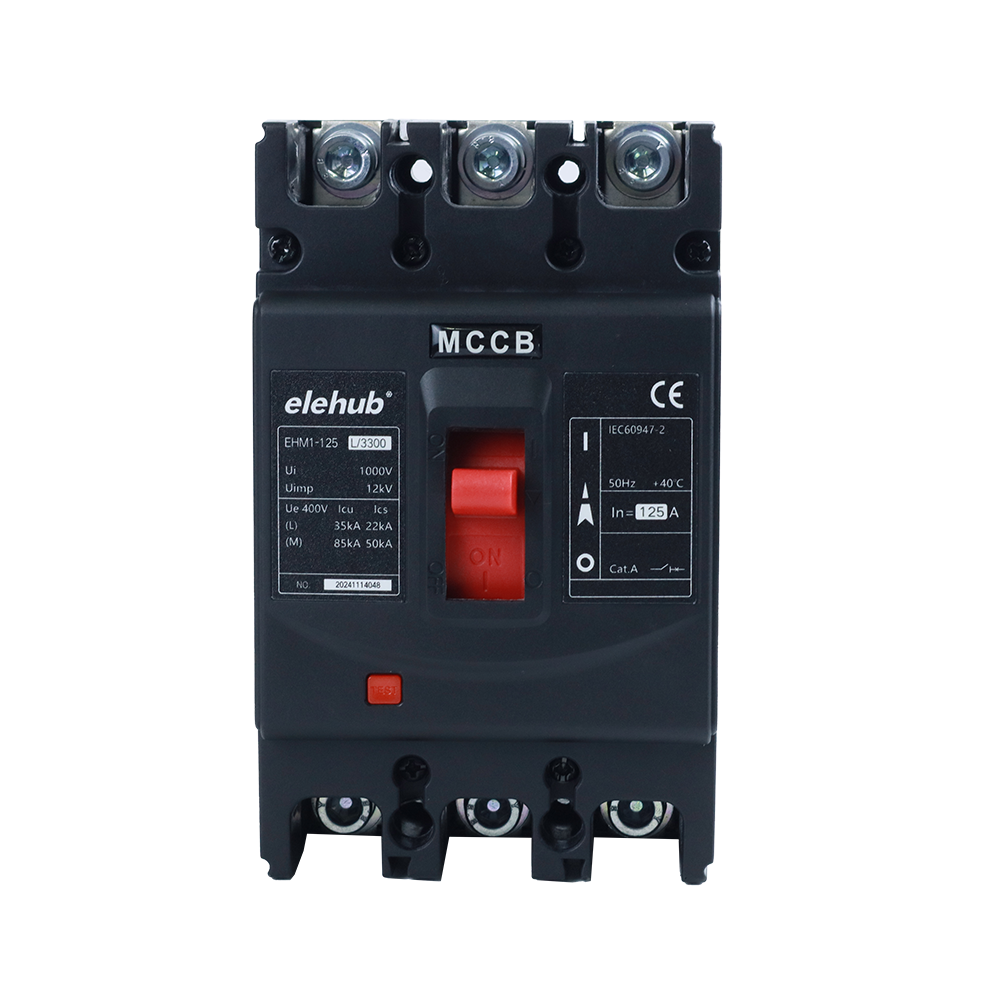
Medium and large-scale industries are extensively equipped with MCCBs. They also deal with larger currents (up to 2500A) and have adjustable trip settings.

Features:
- Small size and effective security.
- Appropriate for overloading and short-circuiting.
- May be applied either in the primary panel or in sub-panels.
Common in:
- Manufacturing systems
- Commercial buildings
- Energy distribution boards
Hydraulic Magnetic Circuit Breaker
This category involves a magnetic coil and a hydraulic system that is used to detect overloads. It responds to the existing changes accurately, hence it is perfect in sensitive applications such as communication systems or renewable energy systems.

Features:
- Proper trip specifications.
- Not sensitive to ambient temperature.
- Appropriate in conditions of protecting equipment in control systems.
Perfect for:
- Data centers
- Telecom systems
- Renewable energy installations
- Control cabinets
- Communication racks
Miniature Circuit Breaker (MCB)-Industrial Grade
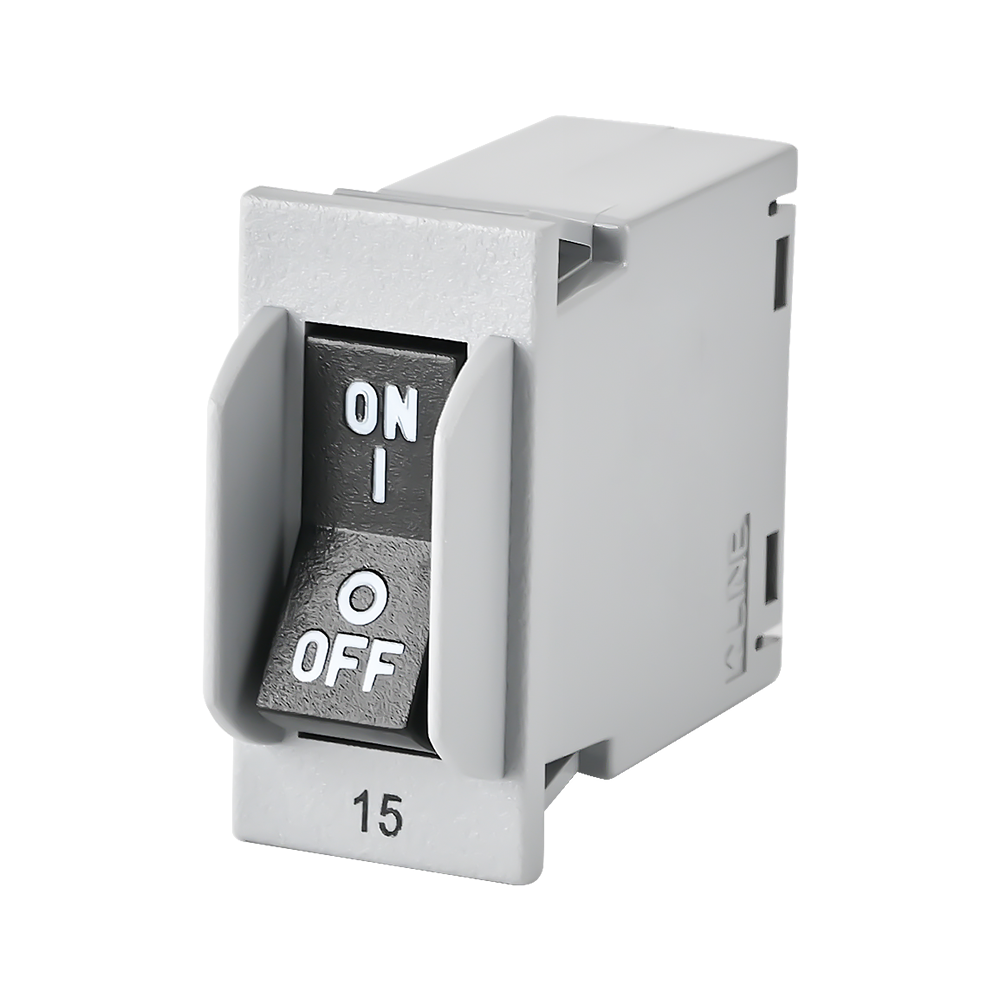
MBCs are also available in industrial versions, though they are usually used in homes. They are suitable for small machinery protection when low-power industrial equipment is involved.

Features:
- Quick response to overload and short-circuit faults.
- Compact size for easy installation in control cabinets.
- Long service life with a reliable tripping mechanism.
- Provides safe manual switching for small equipment.
Used for:
- Small equipment
- Building automation
- Lighting protection in industrial facilities
Earth Leakage Circuit Breaker (ELCB)
ELCBs record traces of small leakage currents, which can be the cause of electric shocks or damage to equipment. Complex ground fault conditions are dealt with in high precision by industrial versions.

Source: Wikipedia
Features:
- Detects leakage currents as low as 30mA for human safety.
- Prevents fire hazards caused by insulation failure.
- Fast disconnection time to avoid equipment damage.
- Used widely in wet or conductive environments for enhanced protection.
Examples:
- Oil refineries
- Food processing plants
- Outdoor power systems
Vacuum Circuit Breaker (VCB)
The arc extinguishing medium in VCBs is vacuum. They are used in medium-voltage applications and are associated with high life and low maintenance.

Source: Wikipedia
Features:
- Compact design.
- High dielectric strength.
- Environment-friendly operation.
Applications:
- Electrical grids
- Power stations
- Large industrial substations
As a professional industrial circuit breaker manufacturer, ELEHUB provides high-performance ACB, MCB, MCCB, and hydraulic magnetic circuit breakers designed for reliable protection across various industrial applications. We welcome global partners to collaborate with us and explore customized solutions that enhance safety, efficiency, and innovation in electrical systems.
Applications and Use Cases
The Circuit Breaker Used in Residential
Home breakers, apartment breakers, and small office breakers are some of the residential breakers that safeguard the electrical systems. They’re ideal for:

- Lighting circuits
- Heat conditioners and air conditioners.
- Kitchen appliances
- Home wiring and outlets
- They are fast in offering home protection against overloads and short circuits.
Industrial Circuit Breakers Applications
A circuit breaker in an industry operates under much worse conditions. Such breakers are needed at locations such as:

- Production facilities – to regulate motors and machines.
- Data centers – to guard the lines of server power.
- Hydraulic oil and gas refineries – to protect against high voltage faults.
- Distribution and system protection– power generation plants.
- Green energy systems, e.g., solar systems or wind systems.
- Energy storage systems (ESS) – protecting lithium batteries and renewable storage from faults.
Such breakers can clear faults within a short period of time, minimizing the chances of downtime and loss of equipment.
As an illustration, it is well known that ELEHUB Hydraulic Magnetic Circuit Breakers are highly sought after in sensitive equipment such as communication racks and renewable systems due to their precise control of the trips as well as their temperature stability.
Best Industrial Circuit Breaker Companies
The industrial breakers market is a global market that has a number of established brands that are recognized internationally because of quality and innovation. The following are the three well-known industrial circuit breaker manufacturers:
Mitsubishi Electric
Mitsubishi has a complete variety of MCBs, MCCBs, and ELCBs. Their breakers have been known to be safe, reliable, and with international standards.

Why Choose Mitsubishi:
- Excellent build quality.
- Wide product range.
- Proven field performance.
Fuji Electric
Fuji focuses on medium voltage breakers and high voltage breakers such as VCBs and ACBs. Their designs are energy efficient and have a long service life.

Why Choose Fuji:
- State-of-the-art arc quenching design.
- Small and lean solutions.
- Appropriate for power distribution systems.
ELEHUB
ELEHUB is a professional maker of hydraulic magnetic circuit breakers. They specialize in innovation, accuracy, and excellence in export to the rest of the globe.

Why Choose ELEHUB:
- Temperature-independent operation.
- Proper overload safety.
- Tailor-made features in varied industrial uses.
Selecting the Appropriate Industrial Breaker
The choice of the type of industrial breaker should be attentive to a number of factors. The incorrect model may create a power failure or create a safety risk. Here’s what to consider:

Rated Current and Voltage
Select a breaker that has the same rate as the system. There should never be a lack of a safety margin with peak loads.
Trip Curve and Response Type
To control the precision, a hydraulic-magnetic circuit breaker is the most appropriate since it is consistent in its operation, irrespective of the temperature. FMCBs have adjustable trip settings, which can be used in general applications.
Environmental Conditions
Breakers that are suitable in adverse conditions should be selected in case your system has to be located under high temperatures, dust, or near vibrations. Competitors such as Fuji Electric and Mitsubishi have provided effective protective enclosures.
Maintenance and Availability
Select pick models which are simple to maintain and whose spares are readily available. Big industrial circuit breakers, such as Mitsubishi and ELEHUB, offer international support and their parts.
Control Systems Compatibility
The Internet of Things and smart systems are adopted in modern factories. Use select breakers that are capable of being connected with control panels and digital monitoring systems in order to detect faults in real time.
Common Mistakes to Avoid
Circuit breakers can be picked or maintained by technicians of any experience, and they may make a mistake. The following are examples of typical errors and ways of preventing them:

Application of Residential Breakers in Industrial Applications
The residential breakers do not come with an industrial fault. Their installation in factories may cause severe electrical failures.
Neglecting Routine Service
Breakers in industries should be checked and tested on a schedule. With time, they may be affected by dust or even corrosion.
Ignoring Load Calculations
Failure to properly analyze the load may lead to frequent trip outages or breakdown of the system. Normal and peak loads should be calculated before installation.
Failure to follow Manufacturer Recommendations
Operating conditions and limits are spelled out by every manufacturer. Any disregard of these instructions can cancel the warranty or destroy the equipment.
Failure to take into account Ambient Temperature
Breakers of thermal type may respond differently in the heat or in cold. This is the reason why hydraulic magnetic types are desired to be very stable in performance with the temperatures.
Standards of Safety and Compliance
The safety standards of the national and international standards should be met by the industrial installations. Some key standards include:

- IEC 60947 of low-voltage switchgear and control gear.
- UL 489 of the molded case circuit breakers.
- IEEE C37 of high voltage circuit breakers.
- Safety and environmental certification of CE.
In any case, you must make sure that your breaker is of these standards. Electrical hazards and lawsuits can be experienced due to non-compliant products.
Tips on Maintenance of Industrial Breakers
Tablet maintenance can be taken to prolong the life of an industrial circuit breaker and guarantee the correct functionality. Here are simple tips:
- Clean Periodically: Check dust, corrosion, or loose connections.
- Test Trip Function: Periodically test that the tripping functions properly.
- Clean Contacts: Take off oxidation and dirt deposits through approved methods of cleaning.
- Check Torque Settings: Bolts and terminals should be tightened up to specification.
- Replace Damaged Parts: Do not use damaged contacts or springs.
- This is because regular maintenance not only ensures that there is no downtime but also ensures system safety and compliance.
Circuit Breaker Industry Type Design Trends in the Future
Circuit breakers are also changing with the modernization of industries. The following are some of the recent trends that are defining the future:

Smart Circuit Breakers
The new industrial breakers are also being fitted with digital monitors. They can transmit real-time data on current, voltage, and temperature, which enhances efficiency in maintenance.
IoT Systems Integration
Breakers have become part of the Internet of Things (IoT) platforms installed in factories. This makes it possible to predict and automatically respond to electrical faults.
Eco-Friendly Designs
The manufacturers are decreasing the application of a toxic gas such as SF6 in the high-voltage breakers. New designs are more efficient, using less energy and are also environmentally friendly.
4. Small-scale and Minimal Construction
The new industrial breaker generation is smaller but more powerful. Modular designs reduce space consumption and control panels, making them easier to install.
5. Enhanced Arc Suppression
- The design and advanced materials that are used in arc-quenching provide faster interruption that reduces the damage caused in internal components and enhances safety.
- These inventions are transforming contemporary breakers into being smarter, safer, and more future-sustainable.
- The Reason behind selecting the appropriate manufacturer.
- Selecting a good manufacturer is equal to selecting a breaker. Mitsubishi, Fuji Electric, and ELEHUB are the best industrial circuit breaker manufacturers that have technical accuracy, safety, and a longer life span of the product.
- Mitsubishi Electric has very strong MCCBs and ELCBs, which are relied upon in industrial protection worldwide.
- Fuji Electric is dedicated to medium voltage solutions and efficient arc control systems.
- ELEHUB has hydraulic magnetic technology that provides accurate and stable solutions to contemporary automation systems.
- Purchasing established brands will also mean that all the international standards of safety, such as IEC, UL, and CE, are met, besides the fact that these products will be supported in terms of parts and servicing.
Conclusion
The residential and industrial circuit breakers are similar in that the main purpose of these two types is protection; however, their functions and capabilities are quite dissimilar. Home breaker: These are ideal to install in a home to provide easy and cheap safety. Industrial circuit breakers, on the other hand, are designed to be strong, reliable, and accurately perform under harsh conditions.
When choosing a type of circuit breaker for industry use, it is possible to pay attention to such factors as load needs, environmental conditions, and standards of compliance. Also, one should always select reliable manufacturers of industrial circuit breakers who deliver quality products and customer service.
The right industrial breaker is safety guaranteed, efficient, and valuable equipment that is not subject to the possibility of failures. As technologies change, the future of circuit breakers is shifting to smart, connected, and environmentally friendly construction, which has transformed the modern industries and made them safer and more efficient than they were previously.
FAQs
What is the main difference between residential and industrial circuit breakers?
Residential breakers protect low-voltage systems in homes. Industrial breakers handle high voltage, high current, and harsh environments with more advanced trip technologies.
Can residential breakers be used in factories or production lines?
No. They cannot withstand industrial fault currents and may fail under heavy loads or extreme conditions.
How often should industrial breakers be serviced?
At least once per year, or more frequently in dusty, hot, or high-load environments.
What standards should industrial circuit breakers meet?
IEC 60947, UL 489, CE certification, and IEEE standards.
Related Post:
Different Types of Circuit Breakers
How Does a Circuit Breaker Work?
Functions and Purpose of Circuit Breakers