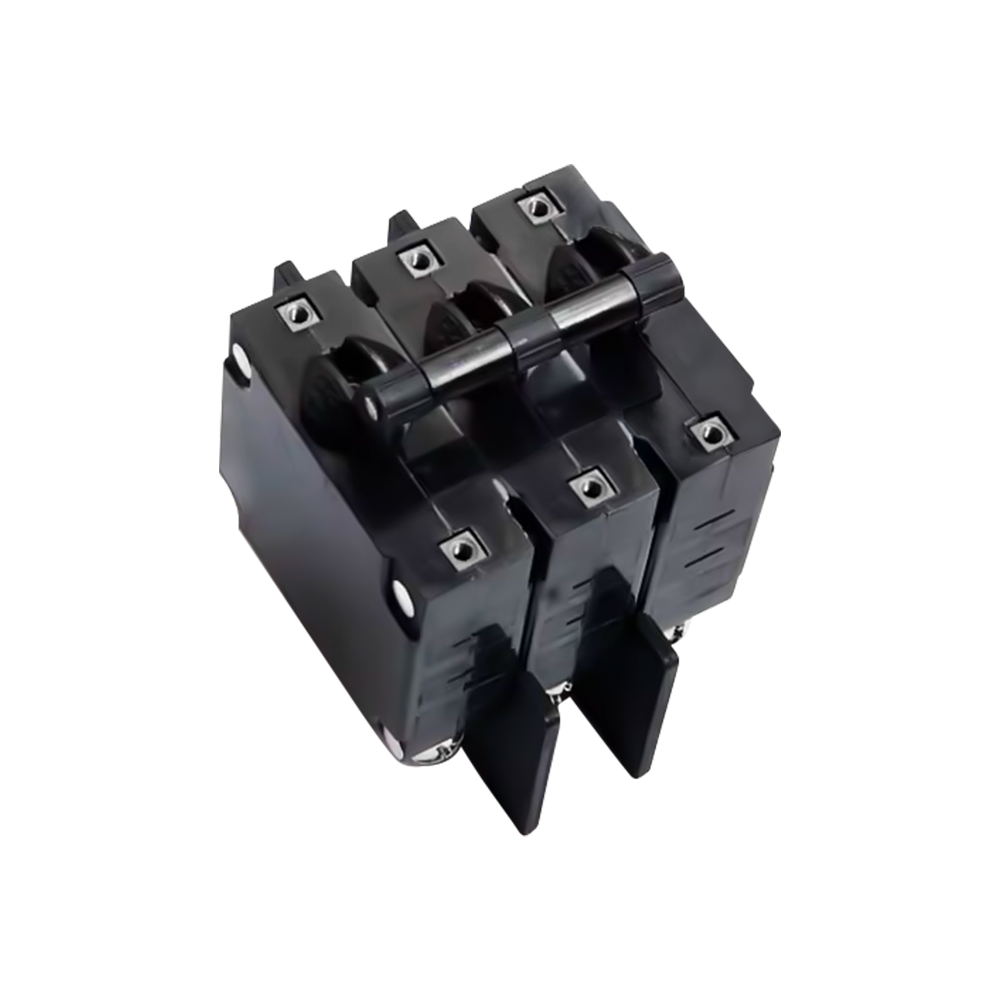
Overload and short circuit are two common electrical fault conditions that can cause excessive current, overheating, equipment damage, and fire hazards. Although they are sometimes treated as the same problem, an overload and a short circuit are not the same electrical fault.
The key difference is simple: an overload occurs when a circuit carries more current than it is designed to handle under normal operating conditions, while a short circuit creates an unintended low-impedance path that can cause a sudden and extremely high current.
Understanding the difference between overload vs short circuit is important when selecting circuit breakers, fuses, overload relays, and other electrical protection devices. It also helps technicians identify why a breaker trips or a fuse blows.
What Is Electrical Overload?
An electrical overload occurs when a circuit, conductor, motor, or other electrical component carries more current than it is designed to handle for a given period of operation.

Source: Circuit Globe
The circuit itself may be wired correctly, and there may be no direct connection between conductors. The problem is that the connected load demands more current than the circuit was designed to supply.
For example, suppose a branch circuit is designed to supply several loads within its rated capacity. If additional equipment is connected and the total current exceeds the circuit rating, the circuit is overloaded.
Common Causes of Overload
Electrical overloads can occur for several reasons:
- Too many electrical devices connected to one circuit
- Equipment with excessive power demand
- An undersized circuit for the connected load
- A motor operating under excessive mechanical load
- A motor that is stalled or unable to reach normal operating speed
- Blocked pumps, conveyors, or other mechanical equipment
- Incorrect equipment selection
- Excessive continuous current
- Poor system design or load calculation
Motor systems are particularly susceptible to overload conditions. For example, a conveyor motor may draw excessive current if the conveyor becomes mechanically jammed or carries more material than intended.
What Happens During an Overload?
When current exceeds the normal rating, electrical conductors and components generate more heat.
The heating effect can be described by:
P = I²R
where:
- P = power dissipated as heat
- I = current
- R = resistance
Because current is squared in this relationship, even a moderate increase in current can significantly increase resistive heating.
For example, if current increases from 10 A to 15 A in the same conductor, the relative I²R heating increases by:
(15/10)² = 2.25
The conductor therefore experiences approximately 2.25 times the resistive heating, assuming resistance remains constant.
If the overload continues, excessive temperature can damage insulation, electrical connections, motors, and other components.
What Is a Short Circuit?
A short circuit occurs when an unintended low-impedance electrical path is created between two points with different voltage potentials.

Normal Circuit vs Short Circuit
Source: Starting Electronics
Instead of current flowing through the intended load, it can bypass part or all of the load through the fault path.
According to Ohm’s law:
I = V / Z
where:
- I = fault current
- V = system voltage
- Z = total circuit impedance
When the impedance of the fault path becomes very low, the resulting current can become extremely high.
The actual short-circuit current is limited by factors such as source impedance, transformer impedance, conductor resistance and inductance, battery internal resistance, and fault-path impedance.
Common Causes of Short Circuits
Short circuits can result from:
- Damaged wire insulation
- Conductors touching each other
- Incorrect wiring
- Loose or damaged connections
- Metal objects bridging electrical conductors
- Water or conductive contamination
- Component failure
- Internal equipment faults
- Mechanical damage to cables
- Insulation breakdown
In a DC battery system, for example, a direct connection between the positive and negative terminals can create an extremely high-current short circuit.
What Happens During a Short Circuit?
A typical short-circuit event can happen very quickly:
Insulation failure → low-impedance fault path → very high fault current → protection device operates → circuit is interrupted
Because the current can rise rapidly, short circuits can produce significant thermal and mechanical energy.
Potential consequences include:
- Conductor overheating
- Arc formation
- Contact damage
- Fire
- Equipment destruction
- Battery damage
- Arc flash hazards in applicable systems
For this reason, short-circuit protection generally needs to operate much faster than protection for a moderate sustained overload.
Overload vs Short Circuit: Key Differences
The most important difference is how the excessive current is created. An overload results from excessive demand through the normal circuit path, while a short circuit results from an abnormal electrical connection that creates a low-impedance path.
| Feature | Overload | Short Circuit |
|---|---|---|
| Basic cause | Excessive electrical load | Unintended low-impedance path |
| Current path | Normal intended circuit path | Unintended fault path |
| Circuit impedance | Generally remains within the normal circuit range | Fault impedance becomes very low |
| Current increase | Usually moderate | Can be extremely high |
| Current development | Often gradual | Usually very rapid |
| Typical duration | May last seconds, minutes, or longer | Often interrupted very quickly |
| Main hazard | Overheating | High fault energy, arcing, fire, equipment damage |
| Typical protection | Overload relay, thermal protection, circuit breaker | Fuse, magnetic trip, circuit breaker |
| Example | Motor carrying excessive mechanical load | Positive and negative conductors directly contacting |
| Protection response | Often time-delayed | Usually rapid |
It is important not to define an overload and short circuit solely by a particular current percentage. The distinction depends primarily on the cause and electrical path of the current, while the actual current level depends on the system.
When designing protection, engineers may need to consider:
- Rated current
- Normal operating current
- Overload current
- Prospective short-circuit current
- Available fault current
- Short-circuit current rating (SCCR)
Available short-circuit current is particularly important when selecting electrical equipment because the equipment and protective devices must be appropriately rated for the expected fault conditions.
Which Devices Are Used in Overload and Short Circuit Protection?
Different devices have different protection functions.
| Device | Overload Protection | Short-Circuit Protection | Typical Application |
|---|---|---|---|
| MCB | Yes, depending on design | Yes, within rated breaking capacity | Final circuits and small distribution systems |
| MCCB | Yes, depending on trip unit | Yes, within rated breaking capacity | Feeders and industrial distribution |
| ACB | Yes, depending on trip unit | Yes, within rated breaking capacity | Main switchboards, large feeders, and industrial distribution |
| HMCB | Yes | Yes, within rated breaking capacity | Marine, telecom, industrial, and equipment protection |
| MPCB | Yes | Yes, within device rating | Motor branch protection |
| RCD/RCCB | No overcurrent protection by itself | No short-circuit protection by itself | Residual-current protection |
| RCBO | Yes | Yes, within device rating | Combined residual-current and overcurrent protection |
| Fuse | Depending on fuse type | Yes, within rated interrupting rating | Equipment and current-limiting protection |
| Thermal overload relay | Yes | No | Motor overload protection |
| Electronic overload relay | Yes | No, not by itself | Motor control and industrial equipment |
How Do Circuit Breakers Protect Against Overloads and Short Circuits?
Many circuit breakers use different mechanisms to protect against overcurrent.
Thermal protection responds to sustained overloads. A bimetallic element heats up as current increases and eventually trips the breaker after a time delay.
Magnetic protection responds rapidly to high fault currents. The resulting electromagnetic force activates the trip mechanism and opens the circuit.
A thermal-magnetic circuit breaker combines both functions:
- Thermal trip → overload protection
- Magnetic trip → short-circuit protection
Here, “thermal-magnetic” describes the circuit breaker’s trip mechanism, rather than a separate circuit breaker category. For example, some MCBs, MCCBs, and MPCBs can use thermal-magnetic protection, while other circuit breakers may use electronic or other trip technologies.
Source: YouTube @Controls and Automation
Always check the manufacturer’s trip curve and ensure the circuit breaker’s breaking capacity is adequate for the prospective short-circuit current.
A breaker’s rated current does not determine its short-circuit interruption capability. Two 50 A breakers, for example, may have different breaking capacities. The selected breaking capacity must be suitable for the prospective short-circuit current at the installation point.
Rated current indicates how much current a breaker can carry during normal operation, while breaking capacity indicates how much fault current it can safely interrupt.
How Do Fuses Protect Against Overloads and Short Circuits?
A fuse opens when its current-sensitive element melts after carrying excessive current for a specified time. A small overcurrent may take longer to clear, while a high short-circuit current can cause rapid operation.
Some current-limiting fuses also reduce the energy let through during a high-current fault, helping limit equipment damage.
When selecting a fuse, consider its:
- Current rating
- Voltage rating
- AC or DC rating
- Interrupting rating
- Time-current characteristic
- Available fault current
- Application requirements
ELEHUB offers DC fuse solutions for applications such as battery energy storage, EV systems, solar PV, telecom power, and industrial DC systems.

Why Do You Need Both Short Circuit and Overload Protection?
Short circuit and overload protection devices serve different purposes, so many electrical systems use both.
For example, an EV battery system may combine a DC fuse + DC contactor + BMS. The fuse provides fast short-circuit protection, while the BMS monitors operating conditions and can command the contactor to disconnect the battery.
Solar PV systems may similarly combine PV fuses + DC circuit breakers/isolators + an inverter.
The exact protection architecture depends on the system, but the principle is simple: different fault conditions require coordinated protection functions.
The basic principle is simple: different fault conditions require coordinated protection functions, and no single device should be assumed to provide every type of electrical protection.
Can an Overload Cause a Short Circuit?
An overload does not automatically become a short circuit, but a prolonged overload can contribute to conditions that eventually cause a short circuit.
A possible sequence is:
Overload → excessive heating → insulation degradation → insulation failure → short circuit
If a conductor or component becomes excessively hot for a prolonged period, its insulation can deteriorate. Once insulation fails, conductors may contact each other or another conductive part, creating a short circuit.
Therefore, overload protection is also important for preventing damage that could eventually contribute to a more severe fault.
Which Is More Dangerous: Overload or Short Circuit?
A short circuit can be more immediately dangerous because it may produce extremely high current and fault energy in a very short time.
However, the severity of either condition depends on factors such as:
- System voltage
- Available fault current
- Circuit impedance
- Equipment construction
- Protection device characteristics
- Fault-clearing time
- Location of the fault
An overload is generally less abrupt but can still cause serious damage if it continues without adequate protection.
How to Troubleshoot an Overload or Short Circuit
If a breaker or fuse repeatedly operates, first determine whether the problem is an overload or a short circuit.
Signs of an Overload
Possible signs include:
- The circuit operates normally at low load but trips when more equipment is connected.
- A motor draws excessive current under heavy mechanical load.
- The breaker trips after operating for some time rather than immediately.
- Multiple high-power devices are operating on the same circuit.

Signs of a Short Circuit
Possible signs include:
- The breaker trips immediately when the circuit is energized.
- A fuse opens immediately after installation or replacement.
- There is visible wiring or insulation damage.
- A component or connector has failed.
- There are signs of arcing or burning.

Electrical Arcing Induced by Power Line Short Circuit
Source: By Robert Lawton – Own work, CC BY-SA 2.5, https://commons.wikimedia.org/w/index.php?curid=991415
Basic Troubleshooting Approach
- Disconnect or isolate the affected circuit.
- Identify the connected loads and recent changes.
- Check wiring, terminals, connectors, and insulation for visible damage.
- Determine whether the protection device trips immediately or after a delay.
- Measure current where appropriate using suitable test equipment.
- Inspect motors and other loads for abnormal operating conditions.
- Do not repeatedly reset a breaker without identifying the cause.
Electrical troubleshooting should be performed by qualified personnel using appropriate safety procedures and test equipment.
Overload vs Short Circuit in Motor Applications
Motors are a common example where the distinction between overload and short circuit is particularly important.

Three-Phase Motor Magnetic Starter Control Circuit Diagram
Source: Electrical Engineering Portal
Motor Overload
A motor can become overloaded when the mechanical load exceeds what the motor is designed to handle.
Possible causes include:
- Pump blockage
- Conveyor overload
- Excessive friction
- Bearing problems
- Mechanical jamming
- Excessive process load
The motor may continue operating but draw excessive current and generate excessive heat.
An overload relay can detect this condition and disconnect the motor before prolonged overheating causes damage.
Motor Short Circuit
A motor short circuit can result from:
- Winding insulation failure
- Phase-to-phase faults
- Phase-to-ground faults
- Damaged motor cables
- Internal component failure
A short circuit generally requires much faster interruption than a motor overload.
A typical motor protection arrangement may therefore combine a short-circuit protective device with overload protection and a contactor for switching.
Overload vs Short Circuit in DC Systems
The difference between overload and short circuit also matters in DC applications such as:
- Battery energy storage systems
- EVs and EV charging equipment
- Solar PV systems
- Industrial DC power systems
- Telecom power systems
- Marine electrical systems
DC short-circuit protection can be particularly challenging because a DC arc does not naturally extinguish at a current zero crossing in the same way an AC arc does.
Therefore, DC fuses, circuit breakers, contactors, and disconnect devices must be properly rated for the system’s DC voltage and available fault current.
In high-power battery systems, protection may combine devices such as:
Battery → Fuse → DC Contactor → DC Load
The fuse can provide fast protection against severe fault currents, while the contactor can provide controlled isolation when commanded by the system.

EV DC Charging Protection Diagram
Source: EE Power
How to Prevent Electrical Overloads and Short Circuits
Good system design and maintenance can reduce the likelihood of both conditions.
Preventing Electrical Overloads
- Perform proper load calculations.
- Select appropriately sized conductors.
- Avoid connecting excessive loads to a circuit.
- Use suitable overload protection.
- Properly size motors for their mechanical loads.
- Monitor equipment operating current.
- Maintain motors, pumps, and other mechanical equipment.
- Avoid continuous operation above equipment ratings.
Preventing Short Circuits
- Use properly rated and insulated conductors.
- Protect cables from mechanical damage.
- Secure electrical connections.
- Follow wiring and installation requirements.
- Protect electrical equipment from moisture and contamination.
- Inspect aging insulation.
- Use appropriately rated fuses and circuit breakers.
- Ensure protective devices have adequate interrupting capability.
Final Takeaway
Overload and short circuit both involve excessive current, but they are different fault conditions.
- Overload: Excessive load → sustained overcurrent → overheating
- Short circuit: Low-impedance fault path → very high current → rapid interruption
- Overload protection: Thermal or electronic protection
- Short-circuit protection: Fuses or magnetic/electronic protection
Selecting the right protection device requires considering system voltage, operating current, fault current, and application requirements. In high-energy DC systems such as battery storage, EV charging, and solar PV, proper coordination between fuses, circuit breakers, contactors, and other protection devices is especially important.
FAQs
Is an overload a type of overcurrent?
Yes. An overload is a type of overcurrent caused by excessive load demand. Short circuits and certain ground faults can also produce overcurrent but result from different electrical conditions.
Can an overload trip a circuit breaker without a short circuit?
Yes. A breaker can trip when continuous current exceeds its thermal rating, even when there is no short circuit or abnormal connection between conductors.
Can a short circuit happen without overloading the circuit first?
Yes. A short circuit can occur suddenly because of insulation failure, wiring damage, or component failure, without any preceding overload condition.
What is the difference between overcurrent and overload?
Overcurrent is a broader term describing current above normal levels. An overload is one type of overcurrent caused by excessive demand through the intended circuit path.
Can an overloaded circuit damage electrical components?
Yes. Sustained overloads increase temperature and can damage conductors, insulation, terminals, motors, connectors, and other components before protective devices interrupt the circuit.
Can a fuse prevent damage from a short circuit?
A properly selected fuse can interrupt excessive fault current quickly and limit fault energy, reducing potential damage to conductors and connected electrical equipment.
Why is DC short-circuit protection different from AC protection?
DC lacks natural current-zero crossings, making arc interruption more difficult. Therefore, DC protective devices require appropriate voltage, interrupting, and circuit-specific ratings.
Why does my circuit breaker trip immediately?
Immediate tripping can indicate a short circuit or high-current condition, but motor, transformer, and capacitive inrush currents can also cause rapid tripping. Check breaker characteristics and equipment startup behavior.