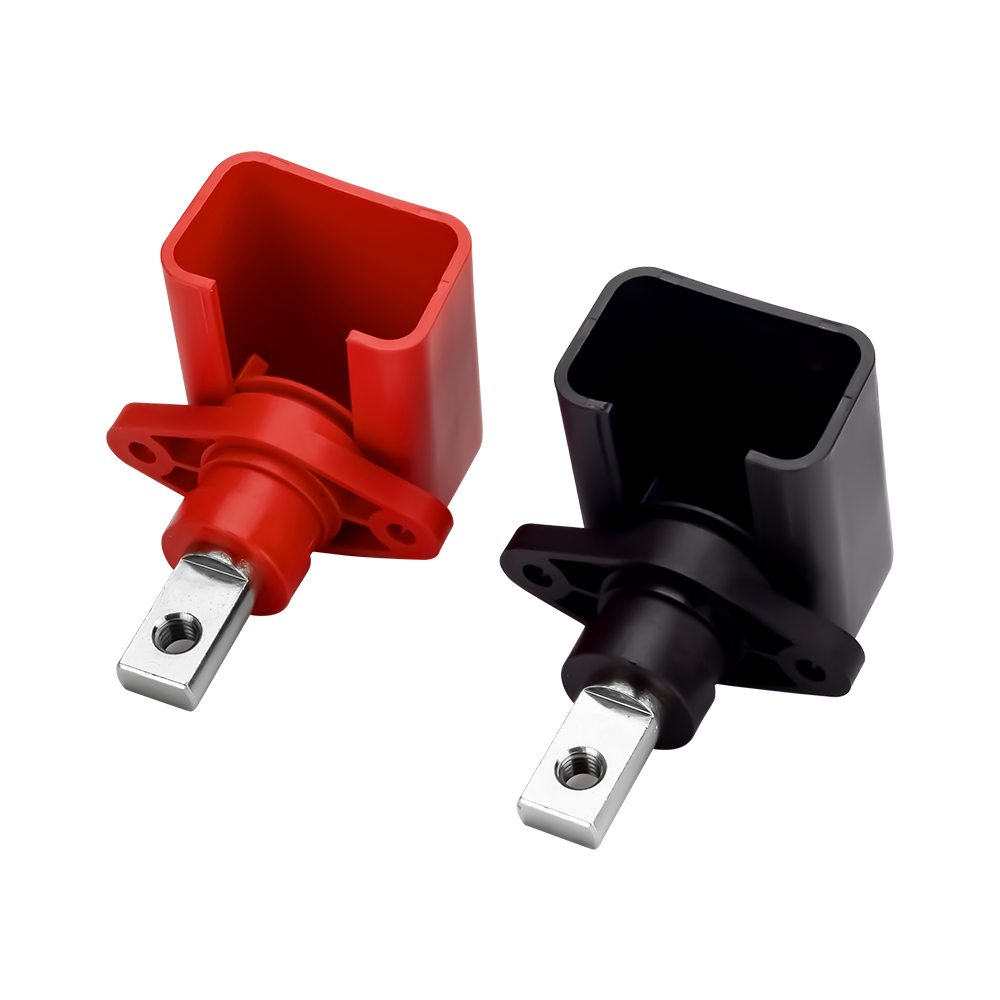
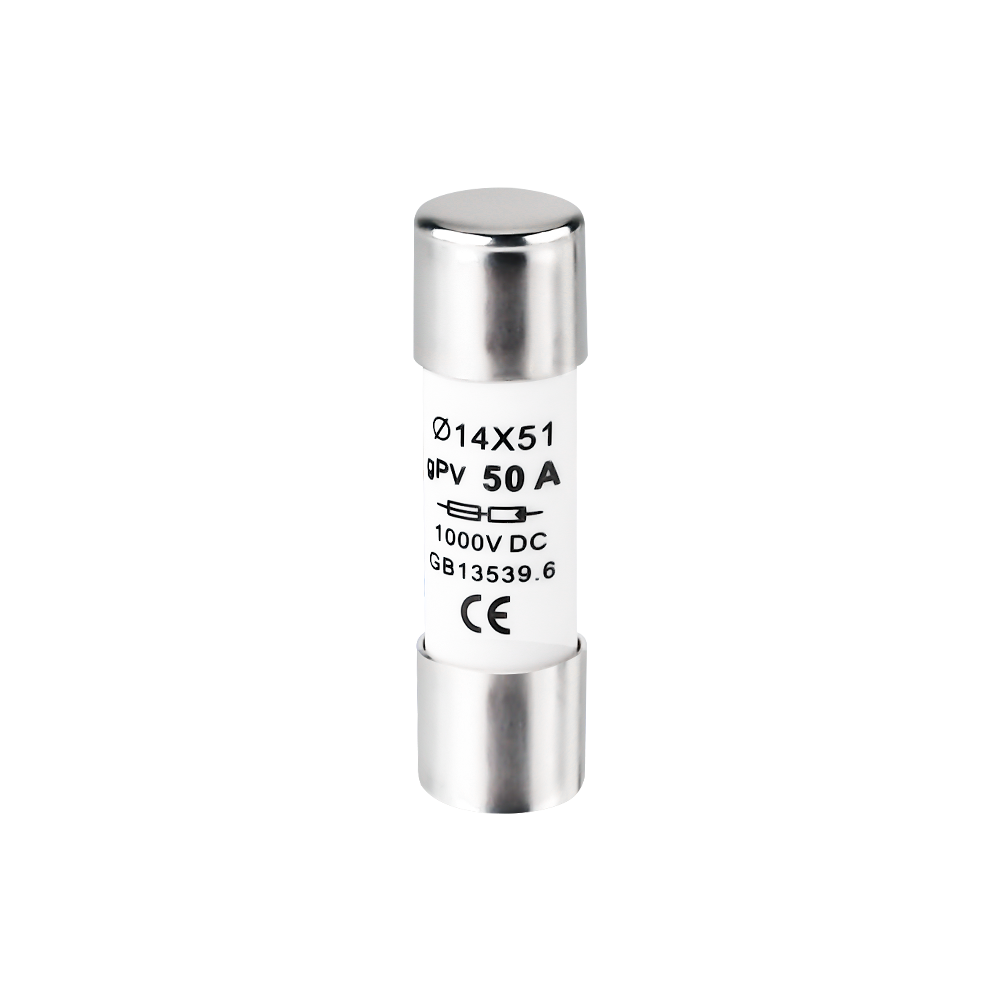
Solar connectors, also known as photovoltaic (PV) connectors, play a critical role in photovoltaic systems by ensuring safe, stable, and efficient electrical connections between solar panels, inverters, and other system components.
Among the most commonly discussed types are MC3, MC4, and MC6 connectors. While they serve the same basic function, they differ significantly in performance, safety, and application scope. Understanding these differences helps installers, system designers, and buyers select the right solution for their solar projects.
In this guide, as a professional MC4 connector manufacturer and wholesale supplier, we will explore the features, advantages, limitations, and applications of different panel solar connector types, helping you make an informed decision when choosing the right solar connector for your system.
🆚 Comparison Table
| Feature | MC3 (Legacy) | MC4 (Industry Standard) | MC6 (High Capacity) |
| Pin Diameter | 3 mm | 4 mm | 6 mm |
| Voltage (DC) | 600V – 1000V | 1000V – 1500V | 1000V – 1500V |
| Current (Avg) | 20A – 30A | Typical 30A to 40A, up to 50A | Typical 30A to 50A, up to 70A |
| Locking | Simple snap | Tool-based lock | Enhanced secure lock |
| IP Rating | IP65 (lower) | IP67 | IP68 |
| Compatibility | Limited | Very wide | Selective |
| Typical Applications | Legacy residential systems | Residential, commercial, off-grid | Solar farms, high-power/utility systems |
What Are Solar Connectors?
Solar connectors, also called photovoltaic connectors or PV connectors, are devices that safely connect solar panels to each other and to other components in a solar power system.
Originally developed by Stäubli (formerly Multi-Contact), MC connectors have become the industry standard for residential, commercial, and utility-scale photovoltaic systems.
Over time, several versions of MC connectors have been introduced to meet increasing power demands and stricter safety requirements. The most common solar panel connector types include MC3, MC4, and MC6 solar connectors. The numbers refer to the diameter of the metal contact pin inside the connector:
- MC3 uses a 3mm pin
- MC4 uses a 4mm pin
- MC6 uses a 6mm pin


MC4 Metal Pin
As the pin size increases, the connector can handle higher current levels, making newer versions better suited for modern, high-power solar modules.
MC3 Connectors
MC3 connectors are an older generation of solar connectors. They are less common now but still found in some PV systems. MC3 solar connectors are compatible with MC4 systems in some cases, but they have lower voltage and current ratings.

Key Features
- Rated for 600V DC in the UL standard, and up to 1000V DC in the IEC Standard
- Rated typically up to 30A
- Simple snap-in connection design
- Requires less specialized tooling
Advantages
- Easy to plug and unplug by hand
- Suitable for small or older solar systems
- Still found in legacy installations
Limitations
- Lower current and voltage capacity
- Less secure locking mechanism compared to newer models
- Not always rated to IP67
- Limited flame-retardant properties
- Being phased out in many regions due to safety standards
Applications
MC3 solar connectors are now rarely used in new installations but may still appear in maintenance or retrofit projects.
MC4 Connectors
MC4 solar connectors are the most widely used solar connectors in modern PV systems and have become the industry standard.

Key Features
- 1000 to 1500V DC
- Typically 30A–40A, with some variants going up to 50A for larger systems (depending on solar cable size)
- Secure locking mechanism with specialized disconnect tools
- TÜV and UL certified for global compliance
- MC4 connector IP rating: Typical IP67 or IP68
Advantages
- High safety with touch-proof design
- IP67, excellent resistance to UV, moisture, and corrosion
- Wide compatibility across most solar panels and inverters
- Strong mechanical locking prevents accidental disconnection
Limitations
- Requires a dedicated unlocking tool, making quick disconnection less convenient
- Not fully cross-compatible with non-MC4 connectors, even if they appear similar
- Higher cost compared to older connector types such as MC3
Applications
MC4 PV connectors are used in multiple solar setups:
- Residential Solar Panels: Connect rooftop panels securely.
- Solar Farms: Support high-voltage DC strings.
- Off-Grid Solar Systems: Reliable connections in remote locations.
- Hybrid Solar Systems: Link solar arrays with battery storage.
- Solar Inverter Systems: Provide a stable DC input to inverters.
How to Install the MC4 Photovoltaic Connector
Installing an MC4 photovoltaic connector is simple. Here’s a step-by-step guide:
- Prepare the Solar Cable: Cut to the desired length and strip 6–8mm of insulation.
- Crimp the Pin: Slide a metal pin onto the wire and crimp securely.
- Insert the Pin: Push the crimped pin into the MC4 housing until it clicks.
- Tighten: Secure the connector with the end cap.
- Connect to Panel: Attach male and female connectors by pushing until they click.
MC4 solar connectors are waterproof and IP67-rated. Proper installation ensures reliable performance in all weather conditions.
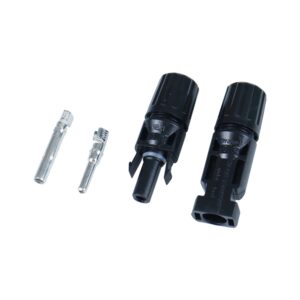
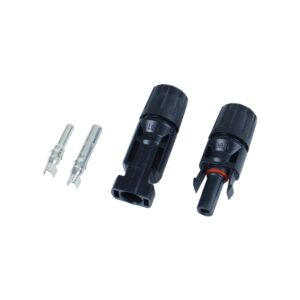
Types of MC4 Solar Connectors in ELEHUB
ELEHUB’s MC4 connectors are known for high quality, durability, and an IP67 waterproof rating. They ensure low power loss and stable connections for outdoor installations.

Here are the main types:
| Model | Rated Current | Rated Voltage | Insulation | Protection |
|
|
50A | 1500V DC | PPO | IP67, UL94 V-0 |
| MC4 T Branch
|
30A–45A | 1000/1500V DC | PPO | IP67, UL94 V-0 |
| MC4 UL Type
|
30A | 1000/1500V DC | PC | IP67, UL94 V-0 |
| MC4 TUV Type
|
30A | 1000/1500V DC | PPO | IP67, UL94 V-0 |
MC6 Connectors
MC6 solar connectors for solar panels are an upgraded version of MC4, providing higher performance and durability, especially for high-efficiency and industrial-scale installations.

Key Features
- Higher current-carrying capacity than MC4
- Optimized for modern high-wattage and bifacial modules
- Improved contact design to reduce resistance and heat buildup
Advantages
- Enhanced efficiency and long-term reliability
- Better suited for high-current DC systems
- Ideal for large solar farms and energy storage systems
Limitations
- Less universally compatible than MC4
- Higher cost
- Availability may be more limited depending on region
Applications
MC6 PV solar connectors are primarily used in high-performance solar installations, including:
- Utility-Scale Solar Farms: Designed to handle high current and long DC strings efficiently
- Large Commercial Solar Projects: Ideal for systems requiring higher power density
- High-Efficiency PV Systems: Supports modern, high-wattage and bifacial solar panels
- Energy Storage and Hybrid Systems: Reliable connections for high-current DC applications
What’s the Same Between MC3, MC4, and MC6?
MC3, MC4, and MC6 share several fundamental characteristics:
Designed for Photovoltaic Applications
All three connector types are specifically engineered for solar power systems. They are used to connect solar panels to each other and to other components such as inverters, combiner boxes, and charge controllers.
High Safety and Reliability Standards
MC3, MC4, and MC6 connectors are designed to ensure safe electrical connections. They feature insulated housings, secure contact designs, and protection against accidental contact with live parts, helping reduce the risk of electrical shock and short circuits.
DC Power Transmission
All MC connectors are designed for direct current (DC) applications and are optimized for stable and efficient power transmission from solar panels to the rest of the PV system.
Industry Recognition and Standardization
Originally developed by Stäubli, MC connectors follow internationally recognized standards and are widely accepted across the global solar industry, ensuring compatibility with most photovoltaic system components.
What are the Key Differences Between MC3, MC4, and MC6 PV Connectors?
Although MC3, MC4, and MC6 connectors all serve the same basic purpose of connecting solar panels within a photovoltaic system, they differ significantly in terms of current capacity, safety level, durability, and application scope:
Voltage Rating
- MC3: Supports up to 1000V DC, commonly used in older PV systems.
- MC4: Supports up to 1500V DC, meeting modern solar system requirements.
- MC6: Also supports 1500V DC, ideal for high-voltage and high-efficiency systems.
Current Capacity
- MC3: Has a relatively low current capacity of 20A–30A, making it suitable for small or legacy solar systems.
- MC4: Offers medium to high current capacity, typically 30A–40A and up to 50A, making it ideal for most residential and commercial solar installations.
- MC6: Provides the highest current capacity, typically 30A–50A and up to 70A, designed for high-power and utility-scale solar applications.
Locking Mechanism
- MC3: Uses a simple snap-in locking design, which is easy to connect but less secure.
- MC4: Features a tool-based locking mechanism that prevents accidental disconnection.
- MC6: Uses an enhanced secure locking system for maximum mechanical stability.
IP Rating
- MC3: Rated IP65, providing basic protection against dust and low-pressure water jets, suitable for older or less demanding installations.
- MC4: Rated IP67, offering strong protection against dust and temporary water immersion, ideal for most residential and commercial solar systems.
- MC6: Rated IP68, delivering the highest level of protection against dust and long-term water exposure, making it ideal for harsh outdoor and utility-scale environments.
Compatibility
- MC3: Limited compatibility, primarily suitable for older systems.
- MC4: Broad compatibility with most modern solar panels and inverters.
- MC6: Selective compatibility, typically used in specific high-performance system designs.
Market Usage
- MC3: Mainly used in legacy systems and older solar installations.
- MC4: The industry standard, widely used in residential, commercial, and utility-scale projects.
- MC6: Commonly used in large-scale solar farms and high-power industrial applications.
Alternatives to MC4 Solar Connectors
While MC4 connectors are the industry standard, several compatible or alternative connector types are also used in photovoltaic systems. Among the most common alternatives are H4 and T4 connectors. These options are often chosen based on manufacturer preference, certification requirements, or system design needs.
H4 Connectors
H4 connectors are high-quality solar connectors developed by Amphenol, designed as a compatible alternative to MC4 connectors.

Key Features
- Fully compatible with MC4 connectors (when certified for cross-mating)
- Rated up to 1500V DC
- High current capacity, up to 65A with larger wires
- Excellent UV, moisture, and temperature resistance
- TÜV and UL certified
Advantages
- Reliable electrical performance and long service life
- Push-button design allows quick installation and disconnection
- Widely used by major solar panel manufacturers
Applications
- Residential and commercial solar installations
- Utility-scale solar projects requiring certified MC4-compatible connectors
T4 Connectors
T4 connectors are produced by manufacturers like Canadian Solar (Tlian) and provide a high-performance alternative to MC4 connectors. They offer reliable DC connections but are less standardized than MC4, making them less widespread globally.

Key Features
- Rated for up to 1500V DC
- High current capacity, comparable to MC4 connectors
- IP68 rated, excellent UV, moisture, and temperature resistance
- Certified for cross-mating with MC4 connectors
- UL and TÜV approved
Advantages
- Strong locking system ensures safe, durable connections
- Reliable performance under harsh environmental conditions
- A wide operating temperature range from -40°C to +90°C (-40°F to 194°F)
Applications
- Rooftop residential solar arrays
- Commercial solar installations
- Large-scale solar farms requiring MC4-compatible solutions
Important Note on Compatibility
Although H4 and T4 connectors are often marketed as “MC4-compatible,” mixing different connector brands is not always recommended unless explicitly approved by the manufacturer and certified for cross-mating. Using unmatched connectors may lead to increased resistance, overheating, or warranty issues.
Applications of Solar Connectors
Here are some of the most common applications:
Residential Solar Systems
In homes, solar connectors play a crucial role in ensuring the smooth and safe flow of energy within a photovoltaic (PV) system. Different types of connectors are used with various solar panels, each serving a specific purpose in residential solar installations.
The most common type used in these systems is the MC4 connector, which is known for its durability and ease of use. They allow quick and secure connections, ensuring a seamless flow of energy to power homes.
Additionally, their IP67 waterproof rating allows them to withstand harsh weather conditions such as rain, snow, dust, and humidity, making them ideal for rooftop installations.

Choosing the Right Solar Connector for Home
Selecting the appropriate connector is crucial for both safety and performance. In residential solar systems, connectors should:
- Match the solar cable size (typically 2.5 mm² to 6 mm²).
- Support system voltages of up to 1000V DC.
- Be certified by recognized standards such as UL or TÜV for long-term safety and compliance.
Maintenance of Home Solar Connectors
To maintain the residential solar system’s efficiency, periodically inspect the solar connectors. Regular maintenance includes:
- Visual Inspection: Look for wear, corrosion, or damage, particularly after extreme weather.
- Cleaning: Remove dirt and debris with a soft cloth or brush.
- Check Connections: Ensure connectors are secure and free from loose or exposed wires.
Commercial Solar Installations
Commercial solar systems typically operate at higher voltages and currents than residential systems, necessitating the use of heavy-duty, high-performance connectors. MC4 connectors are widely adopted in commercial rooftops, factories, warehouses, and office buildings due to their reliability and efficiency.

Choosing the Right Solar Connector for Commercial
MC4 connectors are the preferred choice for many commercial solar installations, offering several key benefits:
- IP67 Waterproof Rating: Reliable performance in extreme weather conditions such as rain, snow, humidity, and dust storms.
- High Voltage and Current Support: Capable of handling currents up to 50A and voltages up to 1500V DC, making them ideal for large rooftop and industrial solar arrays.
- Safety Certifications: UL- and TÜV-approved connectors enhance system safety by reducing risks such as short circuits and overheating.
For more demanding applications, MC6 connectors may be used instead of MC4 connectors to handle even higher voltage and current levels, providing extra capacity for large-scale commercial systems.
Maintenance of Commercial Solar Connectors
Proper installation and routine maintenance of solar connectors are essential in commercial systems. Regular inspections should be conducted to check for looseness, corrosion, or physical wear.
Using high-quality solar panel connectors reduces energy losses, improves system efficiency, and significantly extends the operational life of the commercial solar installation.
Solar Farms
In large-scale solar farms, connectors are essential to manage thousands of panels, linking them to inverters and electrical grids. These connectors must be robust and capable of withstanding harsh environmental conditions like extreme temperatures, rain, and dust. PV connectors are designed for such high-volume applications, ensuring minimal energy loss over long distances.

Choosing the Right Solar Connector for Solar Farms
MC4 and MC6 connectors are applied on large-scale solar farms. These connectors retain stable links between hundreds of panels. IP 67 is a rating that is resistant to rain, dust, and UV rays.
Solar farms also benefit from using certified connectors. UL and TUV-approved MC4 connectors ensure compliance with international safety standards, which is essential for large-scale energy projects.
Maintenance
Proper installation techniques, such as crimping pins correctly and securely connecting male and female connectors, are crucial to maintain efficiency and prevent energy losses.
Regular maintenance checks, including inspections for wear and tear, will help prolong the life of connectors and optimize the performance of the entire solar farm.
Off-Grid Solar Systems
In off-grid solar setups, connectors play a crucial role in linking solar panels, batteries, and other components. These connectors are designed to be reliable and efficient, ensuring that the system remains low-maintenance while handling the high energy demands of off-grid living.
It’s important to select connectors that are compatible with the system’s voltage and cable sizes. Using durable connectors is essential, as they need to withstand harsh environmental conditions and ensure long-term system reliability.
Solar Vehicle Systems
Solar connectors are also essential in solar-powered vehicles, such as RVs and boats. These connectors connect solar panels to battery storage systems, helping optimize the energy flow in off-grid applications.
As with off-grid solar systems, reliable connectors are key to maintaining energy efficiency and system performance in these mobile, often exposed, environments.

By Hideki Kimura, Kouhei Sagawa – Own work, CC BY 3.0,
https://commons.wikimedia.org/w/index.php?curid=8341063
Hybrid Solar Energy Systems
In hybrid PV + ESS (Energy Storage Systems), solar panels are paired with battery storage to provide a more reliable and efficient energy solution. Solar connectors are used to link the panels to inverters and batteries.
For maximum efficiency, the connectors should be weather-resistant, capable of handling harsh outdoor conditions.
They also need to be rated for higher currents and voltages, as hybrid systems require robust components to ensure minimal energy loss and maximum performance.
Tips for Choosing the Right Solar Connector
Choosing the right solar panel connectors is essential for system efficiency. Consider the following:
- Current and Voltage Rating: Match connectors to your system’s load.
- Compatibility: Ensure connectors fit your solar panels and inverters.
- Durability: Look for IP67 rating and flame-retardant material.
- Connector Type: Select based on wiring needs.
- Installation Ease: Snap-in and plug-and-play designs reduce errors.
- Certifications: UL or TUV certification ensures safety compliance.
For most modern applications, MC4 remains the safest and most cost-effective option, while MC6 is best for high-capacity and future-proof systems.
How to Maintain Solar Connectors
Proper maintenance of solar connectors is essential to ensure safe, efficient, and long-lasting photovoltaic system performance. Regular inspections, cleaning, and timely replacement of damaged components help prevent energy loss and costly system failures.
For Home/Residential Solar Systems
Residential solar systems typically use MC4 connectors, and maintenance is straightforward but essential for long-term efficiency and safety:
- Regular Visual Inspection: Check connectors for discoloration, cracks, or physical damage.
- Clean Connectors: Remove dirt and dust using a soft cloth or brush.
- Check Connections: Ensure male and female connectors click securely and have no loose wires.
- Inspect Seals: Verify O-rings and gaskets are intact to maintain IP67 waterproofing.
- Monitor Performance: Watch for drops in solar output that may indicate poor contact.
- Replace Damaged Connectors: Replace any corroded or damaged connectors with the same MC4 type.
For Industrial/Commercial Solar Systems & Solar Farms
Industrial systems use high-current connectors, often MC4 or MC6, and maintenance must be more thorough due to scale, high voltage, and environmental exposure:
- Scheduled Inspections: Perform inspections quarterly or semi-annually and check for wear, UV damage, corrosion, or mechanical stress.
- Connector Cleaning: Remove dust and debris with compressed air and use approved cleaning solvents for stubborn dirt.
- Tighten and Test Connections: Ensure crimped pins and housings are properly seated and use torque wrenches if specified.
- Check Weatherproofing: Verify IP67/IP68 ratings and replace damaged gaskets or housings while inspecting for water ingress.
- Thermal Imaging: Periodically use thermal cameras to detect hotspots and address overheating connectors immediately.
- Documentation: Maintain logs for each string or section and track connector replacements and inspections for warranty compliance.
- Preventive Replacement: Replace connectors nearing the end of service life and avoid mixing connector types unless certified for cross-mating.
Conclusion
Choosing the right solar panel connector is essential for ensuring the safety, efficiency, and long-term reliability of any photovoltaic system. MC3, MC4, and MC6 connectors each represent different stages in the evolution of solar connectivity:
- MC3 connectors belong mainly to older systems
- MC4 connectors dominate today’s market due to their balance of safety and performance
- MC6 connectors are designed for next-generation, high-power solar installations.
Selecting the appropriate connector helps optimize system performance, reduce energy loss, and improve overall system stability. High-quality connectors—such as ELEHUB solar connectors—ensure reliable electrical connections, lower long-term energy costs, and consistent performance in demanding environments.
FAQs
Are MC4 connectors waterproof?
Yes. MC4 connectors are IP67-rated. They prevent water and dust ingress, suitable for outdoor PV systems. Proper installation maintains their waterproof performance.
Can I use MC4 connectors for high-voltage systems?
Yes. MC4 connectors support up to 1500V DC. They are suitable for both residential and commercial systems.
What are solar branch connectors?
Branch connectors, often referred to as T-connectors or Y-connectors, combine multiple solar panel strings into a single output, simplifying wiring and reducing the need for combiner boxes. They maintain stable current flow, are compatible with MC4 connectors, and are built for long-term outdoor use in residential, commercial, and utility-scale PV systems.
Are MC3 connectors still used?
MC3 connectors are older types. They are less common but still found in some residential or small-scale solar setups. They have lower voltage and current ratings than MC4.
How do I install an MC4 connector?
- Strip 6–8mm of cable insulation.
- Crimp the metal pin onto the wire.
- Insert the pin into the MC4 housing.
- Secure with the end cap.
- Connect male and female connectors until they click.
Can MC4 connectors be used in hybrid systems?
Yes. MC4 connectors are widely used in hybrid PV + ESS setups. They link panels to batteries and inverters efficiently.
What materials are used in MC4 connectors?
- Contact: Thickened or tin-plated copper
- Housing: PPO or PC for flame resistance
These materials ensure low resistance, durability, and safe operation.
Solar IP67 vs IP68, what’s the differences?
IP67 vs IP68 in solar equipment (like connectors, junction boxes, and enclosures) refers to how well they resist dust and water.
- IP67: Completely dust-tight and can withstand temporary immersion in water (typically up to 1 meter for about 30 minutes). Suitable for most standard outdoor solar installations where exposure is mainly rain, dust, and occasional flooding.
- IP68: Also completely dust-tight but rated for continuous or long-term immersion in water under conditions specified by the manufacturer (deeper than IP67). It offers a higher level of water protection for harsher environments like coastal, flood-prone, or underground installations.
In solar PV systems, IP67 is usually sufficient, while IP68 is used when extra waterproofing reliability is needed.
Solar Connector Maintenance Tips
Proper maintenance ensures longevity and performance:
- Inspect connectors regularly for dirt or corrosion.
- Keep connectors tightly secured.
- Replace any damaged connectors immediately.
- Use connectors with IP67 rating for outdoor systems.
- Avoid mixing different connector types unless compatible.
Why Choose ELEHUB MC4 Connectors?
ELEHUB is a trusted MC4 solar connector manufacturer. Key reasons to choose them:
- High-Quality Materials: Thick copper contacts and flame-retardant housing.
- Durable & Waterproof: IP67 rating for outdoor use.
- Certified Safety: UL and TUV approvals ensure compliance.
- Wide Range: Standard MC4, T/Y branch connectors, and high-current options.
- Custom Solutions: Tailored connectors for specific project requirements.
- Fast Delivery: Efficient shipping worldwide.
- Cost-Effective: High-quality at competitive prices.