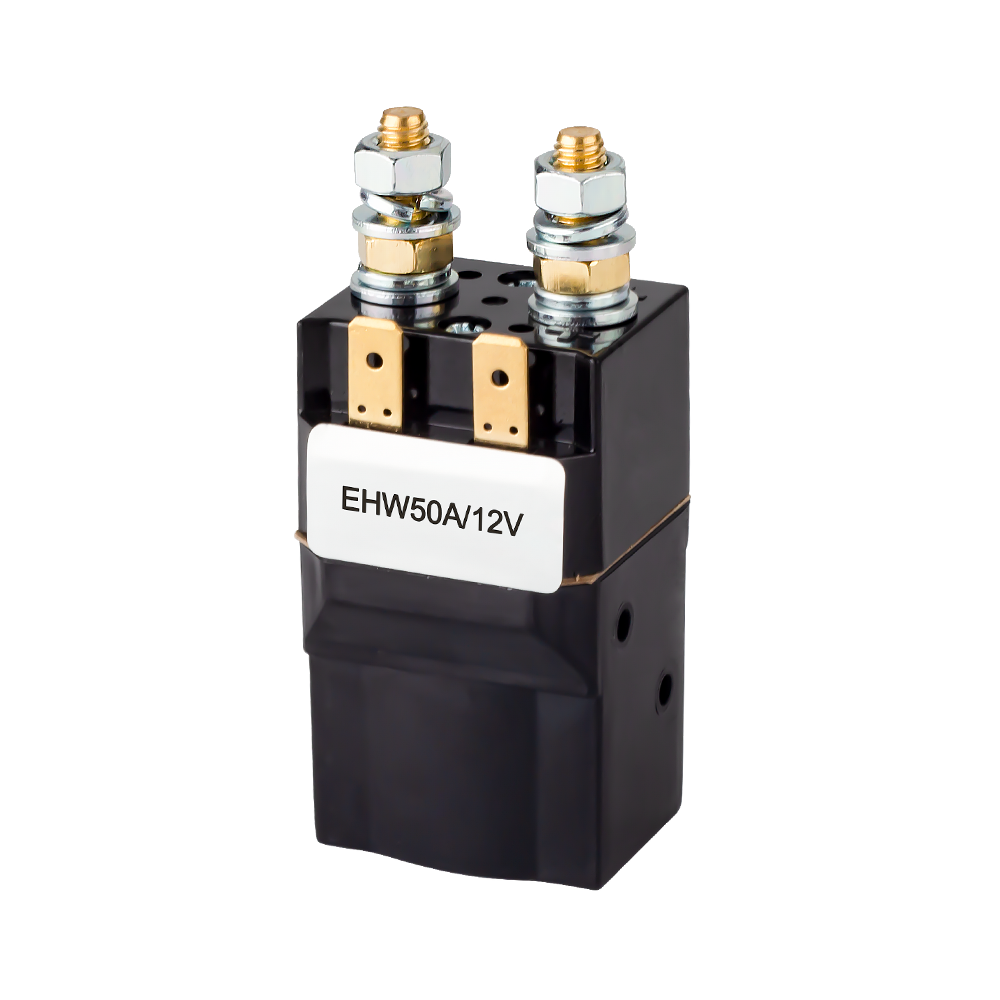
The contactor is an electrical device used to control electrical circuits and switch power to a load. It is essentially a subtype of relay and is often referred to as an electromagnetic switch.
Contactors are commonly used in circuits where large currents need to be managed. They open and close the circuit through electrically controlled switching mechanisms.
These devices come in different types based on their voltage ratings, including high-voltage contactors and low-voltage contactors. Understanding the differences between high-voltage (HV) and low-voltage (LV) contactors is crucial for choosing the right component for electrical systems.
In this post, we will explain their definitions, applications, key differences, and how to select the right contactor for your needs.
TL;DR Comparison Table
| Feature | Low Voltage (LV) Contactor | High Voltage (HV) Contactor |
| Voltage Rating | Up to 1000 V | 1 kV – 36 kV+ |
| Current Rating | Medium to high | Very high |
| Control Voltage | Standard 24–230V AC/DC | Higher voltage required |
| Common Loads | Pumps, compressors, motors, lighting | Transformers, feeders, capacitor banks |
| Typical Uses | Motor starters, panels, residential & commercial | Power grids, renewable systems, substations, traction |
| Insulation | Air, plastic housings | Epoxy, SF₆, Ceramic |
| Arc Quenching | Air arc quenching, magnetic blowout | Vacuum, SF₆, air blast, special chambers |
| Size & Build | Compact, lightweight | Heavy-duty, high insulation |
| Switching Speed | Fast | Moderate |
| Interrupting Capacity | Medium | Very high |
| Heat Dissipation | Basic ventilation | Needs cooling |
| Safety Level | Standard safety | High safety (arc flash, interlocks) |
| Standards | IEC 60947-4-1, UL 508 | IEC 62271, IEEE C37 |
| Cost | Lower | Higher |
| Installation | Easy installation | Skilled workers & tools |
| Maintenance | Minimal, simple | Periodic, specialized |
| Service Life | Very high mechanical life | Long (vacuum/SF₆ arc control) |
What is a Low-Voltage Contactor?
A low-voltage contactor is used in applications where the operating voltage is below 1000 volts. These contactors are commonly found in electrical systems used in offices, homes, and small industrial loads.

Unlike manual switches, a contactor operates automatically and controls devices through an electrical signal from a remote location. The structure of a low-voltage contactor includes a coil, contacts, and a protective casing.
When the coil is energized, it creates a magnetic field that pulls the contacts together, closing the circuit and allowing current to flow. When the coil is de-energized, the contacts open and the current stops.
Low-voltage contactors are widely used in industrial automation, HVAC systems, and motor starters. Modern low-voltage contactors also include overload protection, auxiliary contacts, and integrated control logic, enabling them to perform multiple functions.
Their automatic switching capability reduces human error and manual effort, ensuring reliable operation in various applications.
What is a High-Voltage Contactor?
A high-voltage contactor operates through a control switch with built-in protection features. It is commonly used in charging stations, electric vehicles (EVs), and energy storage systems to connect and disconnect high-voltage circuits safely.

Electric vehicles rely heavily on their battery packs, which use high-voltage DC contactors for system safety and operational control. In an EV power battery circuit, the high-voltage contactor enables current flow when required and disconnects the circuit when the voltage is not needed.
If a fault occurs in the vehicle, the contactor immediately breaks the circuit to protect both the vehicle and the operator. Since these contactors handle high voltage and high current, manufacturers enhance their materials and design features to ensure reliable performance, effective fault breaking, and long service life.
Key Differences Between HV and LV Contactors
Below are the key differences between these two types of contactors:
Voltage Rating
- High Voltage (HV) Contactor: Designed for electrical systems operating above 1 kV, with typical ranges from 1 kV to 36 kV and beyond, depending on the application load. These contactors are critical in high-voltage networks, ensuring reliable switching under elevated voltage conditions while maintaining system insulation integrity.
- Low Voltage (LV) Contactor: Engineered for applications up to 1000 V, commonly used in industrial panels and standard control circuits. LV contactors provide dependable performance for medium and low-voltage automation and power distribution systems.
Current Rating
- HV Contactor: Supports high-load switching and is capable of interrupting significant fault currents commonly encountered in transmission lines, substations, and heavy industrial equipment.
- LV Contactor: Suitable for mid- to high-current circuits, including HVAC systems, motor drives, and commercial lighting. Designed to provide operational control without the need to withstand high fault currents.
Control Voltage
- HV Contactor: Requires higher control voltages and robust auxiliary circuits to ensure reliable operation.
- LV Contactor: Operates with standard control voltages (24V, 48V, 110V, 230V AC/DC), simplifying integration into conventional control systems.
Load Compatibility
- HV Contactor: Ideal for traction systems, transformers, capacitor banks, MV/HV motors, and power feeders.
- LV Contactor: Commonly applied to pumps, compressors, conveyors, lighting circuits, and small-to-medium motors.
Typical Applications
- HV Contactor: Employed in power transmission networks, substations, renewable energy installations, medium and high-voltage switchgear, electric traction systems, and large-scale industrial equipment. Critical for scenarios where system reliability and operator safety are paramount.
- LV Contactor: Used for motor starters, industrial control panels, residential and commercial automation systems, and small-to-medium industrial loads, where compact design and rapid switching are prioritized.
Arc Quenching Technology
- HV Contactor: Implements advanced arc suppression techniques, including vacuum interrupters, SF₆ gas chambers, air-blast arc quenching, or specialized arc chute designs. These technologies ensure safe operation under high-voltage switching and minimize contact erosion.
- LV Contactor: Relies primarily on air arc quenching and magnetic blowouts, sufficient for low-voltage operations, and optimized for cost-effective and reliable performance.
Construction Size
- HV Contactor: Features robust, heavy-duty construction with high-insulation materials such as epoxy resin, ceramic, solid insulation, and SF₆ gas. Designed to maintain dielectric strength under prolonged high-voltage stress.
- LV Contactor: Compact and lightweight, utilizing air insulation with thermoset or plastic housings suitable for integration into standard control panels.
Switching Characteristics
- HV Contactor: Moderate switching speed, optimized for power system control where load interruption and fault isolation are critical.
- LV Contactor: High-speed switching capabilities suitable for automation, motor control, and rapid operational cycles.
Interrupting Capacity
- HV Contactor: Extremely high interrupting capacity to safely manage fault currents in high-voltage networks.
- LV Contactor: Medium interrupting capacity sufficient for routine switching.
Heat Dissipation
- HV Contactor: Generates significant heat during operation due to high currents and voltages, requiring specialized cooling systems, heat sinks, or ventilation strategies to maintain safe operating temperatures and ensure long-term reliability. Proper thermal management is critical to prevent insulation degradation and contact wear.
- LV Contactor: Produces minimal heat under normal operating conditions and requires only basic ventilation. Its lower power handling allows for passive cooling, simplifying installation and reducing maintenance needs.
Safety Standards
- HV Contactor: Adheres to stringent safety protocols, including arc-flash protection, interlocks, and high creepage distances. Designed to meet IEC 62271 and ANSI/IEEE C37 standards.
- LV Contactor: Complies with standard safety requirements appropriate for low-voltage operation, typically meeting IEC 60947-4-1 and UL 508 standards.
Cost
- HV Contactor: Involves a higher procurement cost due to the use of advanced materials, specialized arc-quenching technologies, and complex manufacturing processes required to ensure reliable performance under high-voltage conditions.
- LV Contactor: More Cost-effective and widely available, designed for standard industrial and commercial applications. Lower material and manufacturing complexity make it economical for large-scale deployment while still providing reliable switching performance for medium- and low-voltage circuits.
Installation
- HV Contactor: Installation must be performed by trained personnel using specialized tools due to high-voltage safety and insulation requirements.
- LV Contactor: Straightforward installation suitable for standard electricians, enabling quick integration into control panels and automation systems.
Maintenance & Service Life
- HV Contactor: Requires periodic inspection and preventive maintenance, particularly for vacuum and SF₆ designs. Provides long service life through effective arc control, but may have limited mechanical operation cycles.
- LV Contactor: Low maintenance requirements, with very high mechanical endurance under low-power operational conditions, ensuring long-term reliability with minimal downtime.
DC Contactor Types
DC contactors come in different types, each designed to perform specific operations. The selection of a contactor depends on the required function and safety features. Commonly used types include:
Electromagnetic Contactors
These standard contactors operate through coil energization. When the coil produces a magnetic field, the contacts experience an attraction force, the circuit closes, and current begins to flow. They are widely used in high-power circuits, motor control, and industrial equipment.
Magnetic Latching Contactors
These contactors maintain their position—open or closed—even when power is removed. This capability makes them useful for energy-saving systems and quick-response breakers that require stable positions during power-off conditions.
Vacuum Contactors
These contactors operate inside a sealed vacuum, which reduces arc formation during switching. This design also minimizes contact wear and increases operating life. They are ideal for high-voltage applications such as substations.
Air Contactors
Use air as the medium to quench arcs during switching. They are cost-effective, environmentally friendly, and ideal for medium- to high-voltage DC systems.
Gas-Sealed Contactors
These contactors use hydrogen or nitrogen gas in an insulated, sealed chamber to prevent arc formation. They often feature ceramic brazing or epoxy resin sealing, making them suitable for high-voltage DC systems.
Application-Specific Contactors
These contactors are used in HVAC systems and compressors and are also known as definite-purpose contactors. They provide consistent operation under specific electrical conditions.
Reversing Contactors
These contactors are used in circuits that require motor direction control. They include two interlocked contactors that change the direction of current flow. Reversing contactors ensure safe bidirectional operation and are commonly used in conveyor systems.
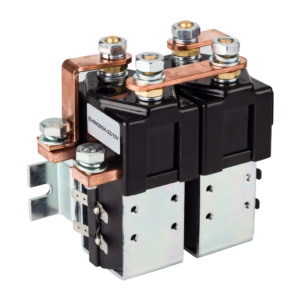
DC Contactors in ELEHUB
ELEHUB is a leading DC contactor manufacturer, offering both high-voltage and low-voltage solutions for a wide range of applications. Our DC contactors are designed for reliability, safety, and long service life, capable of handling everything from small industrial loads to high-power traction systems.

Our high-voltage DC contactors feature epoxy and ceramic designs, supporting currents from 30A to 800A and voltages of 1000V and 1500V. They provide stable and safe performance, making them ideal for electric vehicles, renewable energy, and demanding industrial applications.
Our low-voltage DC contactors include DC reversing contactors and general-purpose contactors, supporting currents from 100A to 800A. With rated coil voltages from 12V, 24V, 48V, to 72V, they deliver reliable switching, safety, and efficiency, perfectly suited for electric vehicles, renewable energy, and industrial low-voltage DC systems.
Discover the right HV/LV DC contactor for your application—contact ELEHUB today and enhance your system’s performance!
Applications of Contactors
Contactor systems play a vital role in controlling electrical circuits across various industries, ensuring safe and efficient operation. Below are key applications for low-voltage (LV) and high-voltage (HV) contactors:
Vehicle Systems
Low-voltage contactors are used in vehicle loop detector systems, where they help control power to the detection system. These detectors operate with low-voltage signals to detect vehicle presence in parking lots, toll stations, and automated vehicle systems. They also manage power to the protection system components, ensuring proper operation of the vehicle’s electrical system.
In addition, high-voltage contactors are used in electric vehicles (EVs) and hybrid systems to manage and isolate high-power circuits, such as battery packs and drive systems.
Both low- and high-voltage contactors play a critical role in managing power to protection system components, ensuring the safe and reliable operation of a vehicle’s electrical system.

HVAC Systems
In HVAC applications, low-voltage contactors are used to control power to critical components such as compressors, fans, and pumps. These contactors ensure smooth operation and energy-efficient management of heating, ventilation, and air conditioning systems in both residential and commercial environments.

Overcurrent Protection Systems
Some overcurrent protection relay circuits integrate both high-voltage and low-voltage contactors in the same system. In these applications, the low-voltage contactor typically controls the control circuit, while the high-voltage contactor is responsible for managing the main power circuit and interrupting current during high-load or fault conditions.
Telecommunication Systems
DC high-voltage contactors are critical in telecommunication systems for managing power supply circuits. These contactors ensure a stable and continuous power supply to cloud servers and large-scale telecom infrastructure, maintaining the reliability of communication networks.

How to Choose the Right Contactor
Selecting the right contactor is critical for ensuring safe, reliable, and efficient operation of electrical systems. Whether you are working with high-voltage contactors in industrial power distribution or low-voltage contactors in home automation and motor control, making the correct choice depends on several key factors.
Determine Circuit Voltage and Current Requirements
Identify the operating voltage and maximum current your system needs. For circuits above 1 kV, a high-voltage contactor is required; for circuits up to 1000 V, a low-voltage contactor is appropriate. Ensure the contactor’s current rating exceeds the peak load and inrush current.
Some low-voltage projects, such as small building circuits and home automation systems, use low-voltage contactors because they are low-cost and easy to install.
Select Contactor Type Based on Control Logic
Decide between normally open (NO) or normally closed (NC) contacts depending on your automation or protection logic. For reversible motor applications, consider a reversing contactor.
Check Environmental and Installation Conditions
Consider ambient temperature, humidity, dust, and vibration. High-voltage contactors may require specialized installation with skilled technicians, while low-voltage contactors are easier to integrate into standard panels.
Verify Coil Voltage Compatibility
Ensure the control circuit voltage matches the contactor coil voltage (e.g., 12V, 24V, 48V, 230V AC/DC). This ensures reliable switching and prevents premature coil burnout.
Ensure Compliance with Safety Standards
Check for adherence to international standards: IEC 62271 or IEEE C37 for high-voltage, IEC 60947-4-1 or UL 508 for low-voltage contactors. Compliance ensures safe operation, reduces risk, and may be required for certification. The contactor must follow the safety standards of that country or region.
DC Contactor Market Overview
In 2024, the value of the DC contactor market was $500 million, with a CAGR of 7.2 percent from 2025 to 2034. The main factors for the DC contactor market growth are industrial automation, energy systems, and the use of EVs.
These systems are important for handling and DC circuit switching that works for high-voltage applications, providing good power management and safe operation of devices.
The demand for DC contactors increases for the management of high voltage and current due to the use in energy storage systems like wind and solar power production systems.

|
Category
|
Details
|
|
Base Year
|
2024
|
|
Market Size (2024)
|
USD 500 Million
|
|
Forecast Period
|
2025 to 2034
|
|
CAGR (2025–2034)
|
7.20%
|
|
Market Size (2034)
|
USD 1 Billion
|
|
Primary Growth Drivers
|
|
|
Challenges
|
Availability of alternative switching techniques
|
|
Technology
|
Digital monitoring for smart systems: Predictive maintenance features
Lower carbon footprint designs
|
|
Fastest-Growing End-Use
|
Electric vehicles (CAGR > 8% through 2034)
|
Low-Voltage Contactor Market
The low-voltage contactor market is integral to advanced electric vehicle (EV) systems, particularly in managing power distribution and control within EV infrastructure and high-voltage battery systems.
These contactors are essential for maintaining safety and efficiency in high-demand applications. Despite their focus on lower power use, their durability in harsh conditions remains a key challenge.
As EV adoption accelerates and infrastructure expands, the demand for reliable low-voltage contactors increases. Innovations in design and integration with automation systems further fuel market growth, positioning low-voltage contactors as critical components in the evolving EV and renewable energy sectors.
High-Voltage Contactor Market
The high-voltage contactor market plays a pivotal role in general industrial control, robotics, and machinery, enabling efficient power management in various applications. These contactors are designed for reduced power usage, ensuring energy efficiency while maintaining high performance in industrial environments. Their integration with automation controls allows for seamless operation within advanced manufacturing systems, boosting productivity and precision.
As industries increasingly adopt automation and robotics, the demand for reliable high-voltage contactors grows, supporting the development of smart, energy-efficient systems. This market is driven by advancements in automation technologies and the need for robust, durable electrical components in industrial settings.
Conclusion
Whether you are working with high voltage or low voltage, each type of contactor has its own features and applications. Understanding their differences is important for selecting the right component for practical use. If you are having difficulty choosing the correct contactor for your circuit, you can contact us for help.
As specialists in contactors, ELEHUB has the expertise and experience to provide the right guidance for proper contactor selection.
Glossary for Technical Terms
Electromagnetic Switch – A device that uses an electric current to generate a magnetic field, which opens or closes contacts to control circuits.
Coil Voltage – The electrical voltage required to energize a contactor’s coil and activate the switching mechanism.
Normally Open (NO) Contact – A contact configuration where the circuit remains open (off) when the contactor is de-energized and closes (on) when energized.
Normally Closed (NC) Contact – A contact configuration where the circuit is closed (on) when the contactor is de-energized and opens (off) when energized.
Arc Quenching – A technique used to extinguish the electrical arc that forms when contacts open or close, preventing damage and ensuring safe operation.
Interrupting Capacity – The maximum current a contactor can safely stop without damage or risk of failure.
IEC/UL/ANSI Standards – Safety and performance standards that electrical devices, including contactors, must meet to ensure safe operation.
FAQs
What is a DC contactor?
A DC contactor is an electrical switching device designed to control direct current (DC) circuits. It operates automatically using an electromagnetic coil to open or close the circuit, allowing safe and reliable control of power in applications like electric vehicles, industrial machinery, renewable energy systems, and automation equipment. DC contactors often include features such as arc quenching, auxiliary contacts, and overload protection to ensure long-term durability and safety. Check out more details in our article “DC Contactors: Everything You Need to Know“
How does a DC contactor work?
A DC contactor works by energizing an electromagnetic coil, which creates a magnetic field that pulls the contacts together, closing the circuit. When the coil is de-energized, the contacts separate, stopping current flow. Advanced designs include arc quenching, latching, and sealed chambers for high-voltage safety and durability. Check out more details in our article “DC Contactor Working Principle: How Do DC Contactors Work?“
Can high-voltage contactors be used for EVs?
Yes. High-voltage contactors are commonly used in electric vehicles (EVs) to manage the connection and disconnection of the battery pack to the vehicle’s electrical system. They ensure safe current flow during operation and instantly disconnect the circuit in case of faults, protecting both the EV and the operator. These contactors are essential for EV safety, battery management, and reliable power delivery.
Related Posts:
What is the Difference Between a Relay and a Contactor?
How to Choose the Right DC Contactor for Different Applications
What’s the Difference Between AC and DC Contactors? A Detailed Guide