Forklifts are essential in modern material handling and industrial operations, relying on efficient and reliable power systems. At the core of these systems are forklift battery connectors, which link the battery to the forklift’s electrical components.
These connectors allow high currents to flow safely, powering driving motors, hydraulic pumps, and auxiliary devices. Choosing the right connector ensures performance, safety, and operational efficiency. This guide provides a complete overview of forklift battery connectors, including types, specifications, materials, safety features, manufacturers, and future trends.

Working Principle of Forklift Battery Connectors
Forklift battery connectors create a connection between the forklift battery and the electrical system, allowing the machine to operate properly. Their operation is simple and designed to provide a strong, low-resistance path for current flow from the battery to the forklift’s drive motors, electrical components, and hydraulic pumps.

The main steps involved in the working of forklift battery cable connectors are as follows:
Electrical Transmission
The connectors have conductive contact surfaces that allow current to flow efficiently from the battery to the forklift system. Low electrical resistance reduces energy losses and helps prevent overheating during operation.
Strong Connection
Forklift battery connectors are designed to lock securely into place, preventing accidental disconnection during operation. A secure connection ensures safe performance, as loose connections can cause sparking, voltage drops, and damage to components.
Insulation and Safety
These connectors are equipped with durable insulation that prevents short circuits and protects operators from electric shock. The insulating materials ensure that current flows only through the intended path, maintaining safety and reliability during forklift operation.
Reliability Mechanisms
To ensure proper electrical performance during repeated connections and disconnections, forklift battery cable connectors are designed with specific reliability mechanisms:
- Flat-wiping Contacts: These contacts slide against each other during connection. This wiping action cleans the contact surfaces, minimizes corrosion, and ensures accurate and consistent electrical contact.
- Pin-and-socket Arrangements: Pins fit precisely into matching sockets, creating a strong electrical connection that resists vibration and mechanical stress during forklift operation.
Technical Specifications of Forklift Battery Connectors
Different features make forklift battery cable connectors reliable and suitable for practical applications.

Current Rating
The current rating defines the maximum current the connector can carry safely without overheating. Forklifts typically draw high current during heavy load and acceleration conditions. Therefore, selecting a connector with an adequate or higher current rating is essential to prevent overheating, voltage drop, and connector damage.
Voltage Rating
The voltage rating specifies the highest voltage the connector can safely handle. Using a connector with the correct voltage rating for the forklift battery reduces the risk of arcing, insulation breakdown, and damage to both the connector and the battery system.
Pole Numbers
Pole numbers indicate how many separate electrical paths a connector provides. Single-pole connectors are typical for simple power delivery, while multi-pole connectors can combine power and control signals or allow parallel connections for higher currents. Correct pole selection ensures proper functionality and safety of the battery system.
Contact Resistance
Contact resistance is the resistance at the interface between mating contacts. Low contact resistance is important for efficient power transfer. High resistance leads to power losses, excessive heat generation, and reduced service life of the forklift and connector.
Cable Size Compatibility
Connectors must match the battery cable size to ensure secure electrical contact. Properly sized connectors reduce the chance of loose connections, overheating, and mechanical stress.
Temperature Tolerance
Temperature tolerance refers to the range of temperatures in which the connector can operate safely during high charge and discharge cycles. Forklift batteries generate significant heat during operation, so connectors must maintain electrical and mechanical performance without melting, deforming, or degrading insulation.
Mechanical Strength
Mechanical strength determines the connector’s ability to withstand repeated connection and disconnection cycles without performance loss. Forklift batteries are frequently disconnected for charging and maintenance. A robust connector design reduces wear, maintains a consistent electrical connection, and minimizes long-term damage.
Materials and Construction
Forklift battery connectors are made of specific materials that support effective power transmission and safe operation. Their structure includes three main parameters.
Insulating Housing
The housing is made of polyethylene or polyamide. The housing covers the conductive components to provide insulation and prevent short circuits. The plastic material has good mechanical strength and can withstand vibration and repeated connection cycles, ensuring safe operation and maintenance.

Conductive Components
These components are made of copper or copper alloys, which are excellent conductors and help the connector transmit high current from the battery to the forklift’s electrical system. These conductive materials reduce power loss, heat generation, and voltage drop.

Protective Coatings
These coatings are made of nickel or tin plating applied to the contact surfaces. The plating minimizes corrosion and oxidation at connection points, ensuring reliable electrical connections. Corrosion-resistant coatings help increase the working life of the connector and provide continuous conductivity, even under different operating conditions.
Forklift Battery Connector Types
The two most common types used in forklifts today are Anderson SB connectors and Euro-DIN connectors, each offering unique advantages for high-current battery systems.
1. Flat-wiping Battery Connectors (Anderson SB)
This flat battery cable connector, manufactured by Anderson Power Products, uses the flat-wipe contact technique for high-current, reliable power transfer.
These contacts and connector structures are widely used in chargers, batteries, and vehicles. Their design and structure are simple because both the connector housing and contacts are genderless.
To connect two connectors, one connector is rotated 180 degrees before mating. In this contact assembly, a large conductive surface area is created, and a sacrificial tip is used to break the high-current circuit safely during connection and disconnection.

Key Components
This combination of components ensures safe, reliable, and efficient power transfer between the forklift battery and the electrical system:
- Contact Terminals – Made of silver-plated copper for high conductivity and low resistance
- Flat-Wiping Contacts – Enable self-cleaning during mating for reliable electrical performance
- Housing – Durable, flame-retardant thermoplastic, providing insulation and mechanical protection
- Locking Mechanism – Ensures a secure and stable connection, preventing accidental disconnection
- Polarization Keys – Prevent incorrect mating and maintain correct polarity
- Cable Connection Point – Designed for crimping or soldering, securing the battery cable to the connector
Color-Coding for Safety
Anderson SB connectors use color-coded housings as a simple but powerful safety feature. The colors provide mechanical keying, meaning connectors of different colors cannot physically mate with each other. This design helps prevent accidental cross-connections between battery systems with different voltages or purposes.
Housing color does not affect electrical performance. All SB connectors within the same series share identical electrical characteristics. Color selection is used strictly for identification, compatibility control, and safety.
Common Color Conventions:
While not electrically mandated, the following color conventions are widely adopted in forklift and industrial battery applications:

Yellow = 12v
Orange = 18v
Red = 24v
Gray = 36v
Blue = 48v
Green = 72v
Black = 80v
Brown = 96v
Purple = 120v
Why Color Coding Matters:
In environments with multiple forklifts, batteries, and chargers:
- Prevents connecting the wrong battery to a forklift
- Avoids voltage mismatches
- Reduces electrical faults and component damage
- Improves workplace safety and operational efficiency
- Enables quick visual identification of battery systems
Connector Sizes
Anderson SB connectors come in different ampacity sizes used on forklifts:
- SB50 – Up to ~50 A, light equipment
- SB120 – ~120 A, Medium duty
- SB175 – ~175 A, medium-duty forklifts
- SB350 – ~350 A, heavy-duty forklifts, most common
2. Euro-DIN Connectors
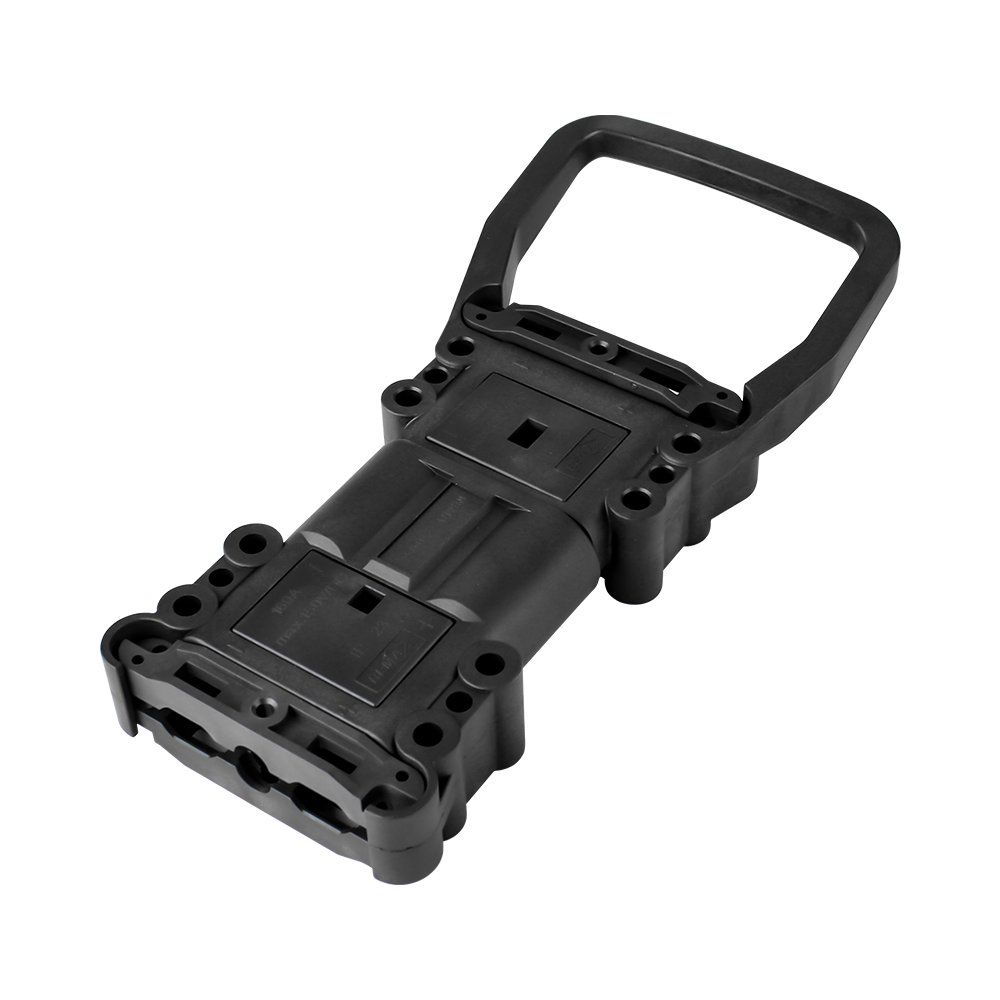
Euro-style battery and charger connectors used in forklift trucks feature a modular design and are preferred for various applications. These connectors use a pin-and-socket connection method. The contact design allows easy plugging and unplugging while minimizing wear and damage.
Unlike some flat forklift connectors, Euro-DIN connectors do not use color variations and are typically manufactured only in black.
Their structure follows a male-and-female configuration. A male contact pin and a female contact socket help identify the connector type. On the battery side, female socket connectors are typically used, while male pin connectors are used on the charger side.
During design and assembly, the forklift battery cable is securely connected to the contact through crimping. In some cases, soldering is also used to attach contact to the battery cable for a reliable electrical connection.
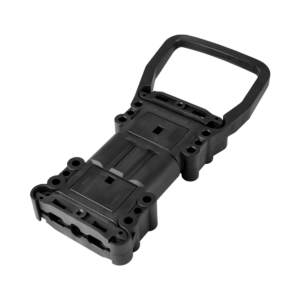
Key Components
These components work together to provide robust, reliable, and safe electrical connections for forklift battery systems, even under heavy-duty, high-current industrial operations:
- Male Contact Pins – Conductive pins (copper or alloy) that carry current from charger to battery.
- Female Contact Sockets – Receive male pins on the battery side, reducing accidental contact.
- Housing – Durable thermoplastic casing providing insulation, protection, and vibration resistance.
- Cable Termination Point – Designed for crimping or soldering to secure battery cables.
- Polarization Key / Orientation Slot – Ensures correct alignment and polarity.
- Locking Mechanism (Optional) – Retaining clips or snap-fit locks for stable connections under vibration.
Connector Sizes
- DIN 80 – 80 A, compact size for light-duty forklifts and industrial battery applications
- DIN 160 – 160 A, medium size for standard electric forklifts
- DIN 320 – 320 A, heavy-duty size for high-current forklifts and material-handling systems
🆚 Comparison Table
| Feature | Anderson SB Connectors | Euro-DIN Connectors |
| Contact Technology | Flat-wiping contacts (self-cleaning) | Pin-and-socket contacts |
| Connector Design | Genderless / Hermaphroditic | Male–Female configuration |
| Color Coding | Multiple colors for identification | Typically black, no color coding |
| Mating Method | One connector rotated 180° before mating | Direct plug-in |
| Electrical Contact Area | Large, flat contact surface | Point/area contact via pin and socket |
| Current Capacity | 50A, 120A, 175A, 350A | 80A, 160A, 320A |
| Voltage Range | Up to 600V DC | Typically lower, forklift-specific voltages (~150 V) |
| Resistance to Vibration | Excellent | Good |
| Connection Cycles | High (up to 10,000 cycles) | Moderate to high |
| Safety During Disconnect | Sacrificial tip helps safely break high current | Standard disconnect, relies on operator handling |
| Ease of Use | Very easy, intuitive | Easy but requires correct male/female alignment |
| Maintenance | Low maintenance | Moderate (pin wear over time) |
| Regional Usage | Global (very common in US & global markets) | Common in Europe |
| Typical Applications | Forklifts, EVs, chargers, BESS, UPS | Forklifts, industrial battery & charger systems |
Safety Features and Protection
When it comes to forklift battery connectors, safety is a paramount concern. Properly designed connectors not only ensure efficient power transfer but also protect both operators and equipment from electrical hazards. The following key safety features are commonly implemented in modern forklift battery connectors:
Polarization
The connector design ensures proper directional connection and correct polarity. Maintaining correct polarity is critical, as reversed connections can damage the battery and forklift and may cause sparking.
Overcurrent Protection
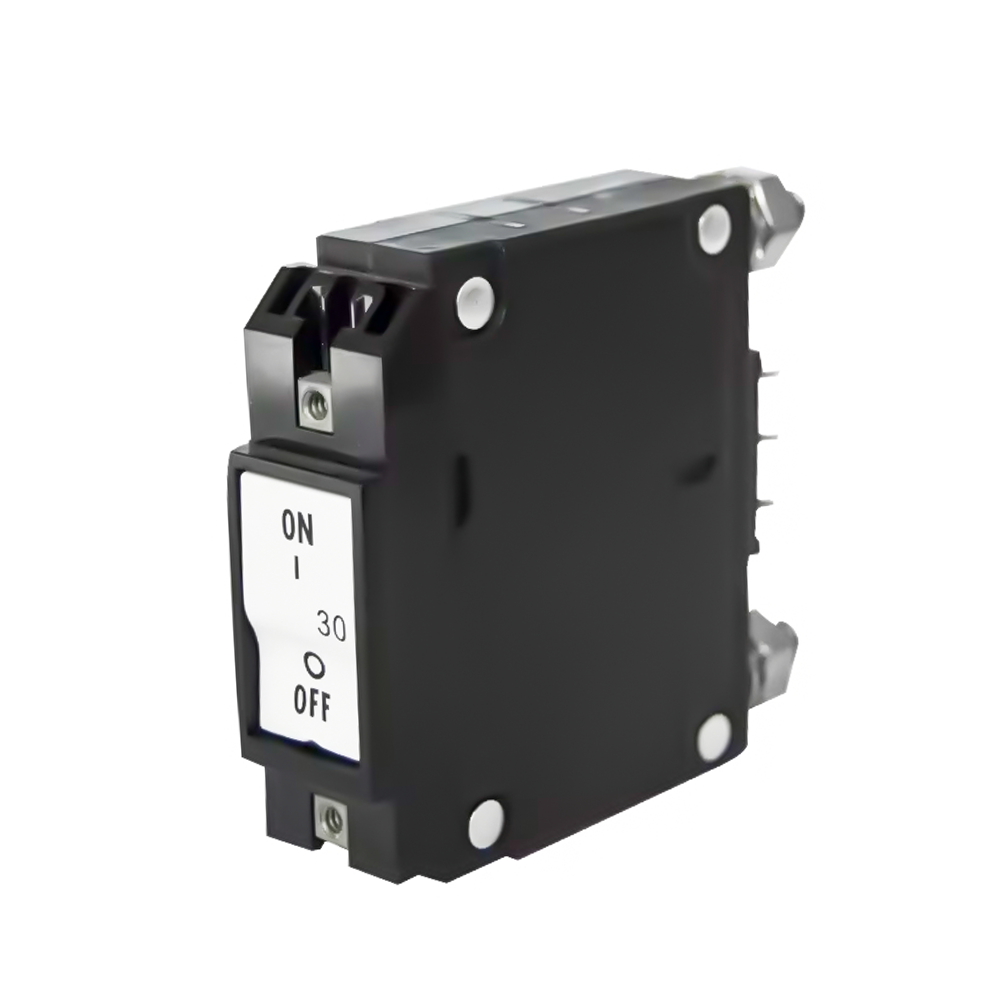
Connectors are used with circuit breakers or fuses that protect the battery and forklift from damage caused by overloads or short circuits.
Insulation
All conductive parts are covered with high-quality insulation materials to prevent contact with live electrical components, reducing the risk of short circuits and electric shock.
Strong Locking Mechanisms
The connector includes mechanical locks and retaining clips that keep it firmly connected during forklift operation. This prevents accidental disconnection, power interruption, and sparking.
Forklift Systems Applications
Key applications include:
Electric Drive Motors
The connector delivers power from the battery to the forklift’s main drive motor. It ensures smooth and consistent movement for lifting, transporting, and load handling. Reliable connectors prevent voltage losses and maintain accurate motor performance.
Power to Hydraulic Lifting Systems
Forklifts use electrically operated hydraulic pumps for lifting and tilting the forks. Battery connectors supply the required current efficiently, enabling reliable operation while handling heavy loads.
Auxiliary Devices and Battery Charger Connections
Connectors also provide power connections for auxiliary devices such as lights and onboard electronics, as well as external battery chargers. They ensure proper charging, reliable operation, and maintenance of auxiliary systems without the risk of electrical faults.
Fast Battery Swaps
For multi-shift operations, forklifts use rapid battery replacement. Standardized connectors allow quick battery swapping, reducing downtime and supporting continuous productivity.
Manufacturers of Forklift Battery Connectors
Different companies manufacture and design high-quality forklift battery connectors, each offering unique features:
Anderson
Anderson is a standard manufacturer of connectors, with its SB series providing reliable and durable designs. These connectors are widely used in electric vehicles, forklifts, and high-current industrial applications.

REMA
REMA connectors are high-current and ideal for heavy-duty forklift operations. They are an essential part of battery systems, offering protection and reliable performance in demanding industrial environments.

ELEHUB
ELEHUB offers innovative battery connectors designed for optimal performance in battery-based industrial operations and high-capacity DC power systems.

Our offerings include:
- Euro-din REMA connectors – 80A, 160A, 320A; designed for electric forklifts and material-handling equipment, featuring flame-retardant PA66 housings, silver-plated copper terminals, and support for large battery cables for safe energy transfer.
- Anderson SB series connectors – 600 V, available in 50 A, 80 A, 120 A, 175 A, and 350 A; constructed with copper, silver-plated contacts, and PC housing, UL94 V-0 for durability and safety. Suitable for solar, UPS, BESS, forklifts, and high-capacity DC industrial systems.
ELEHUB connectors are engineered for stable connections, excellent conductivity, and long service life. They feature ergonomic designs, flame-retardant materials, and support for high voltage and current. Additionally, they are easy to install, reduce downtime, improve operational efficiency, and meet the power requirements of modern industrial and energy systems.
How to Choose Forklift Battery Connectors
When selecting a forklift battery connector, several factors must be considered to ensure safe, reliable, and long-lasting operation:
1. Current and Voltage Demand
The connector must handle the forklift’s electrical load without overheating or causing voltage drops. It is essential to choose a connector with ampere and voltage ratings compatible with the forklift battery system to prevent damage to devices.
2. Compatibility
The connector should fit properly with the forklift battery and its electrical system. Selecting the appropriate connector type according to the forklift design ensures seamless integration and reliable operation.
3. Operational Environment
Forklifts often operate under heavy-duty conditions where connectors are exposed to vibration, moisture, and dust. Choose connectors with high mechanical strength, wear resistance, and temperature tolerance to maintain long-term performance.
4. Safety Features
Safety is critical for preventing shocks, short circuits, and accidental disconnections. Connectors should have proper insulation, overcurrent protection, and polarization to ensure safe operation.
5. Availability
Connectors may require maintenance or replacement over time. Select connectors that are readily available and easy to replace to minimize downtime.
6. Amperage Rating
Ensure the connector matches the required amperage for the application. Overloading a connector can lead to overheating, damage, and reduced operational life.
Installation and Maintenance Considerations
Proper installation and maintenance of forklift battery cable connectors are crucial for safe and reliable operation. Key points to follow include:
1. Inspection
Before connecting the battery, inspect the connector for dirt, corrosion, or wear. Any foreign material can increase contact resistance, causing sparks and reducing power efficiency.
2. Secure Connections
Ensure that connectors are properly locked according to the manufacturer’s guidelines. Loose connections can lead to voltage drops and sudden disconnections during forklift operation.
3. Clean Contacts
Use appropriate cleaning agents to remove oxidation, dust, or debris from the contact surfaces. Clean contacts reduce resistance, improve efficiency, and minimize overheating.
4. Replace Damaged Connectors
Immediately replace any connectors showing cracks, corrosion, or other faults. Damaged connectors can cause electrical faults and disrupt power flow, affecting forklift performance.
Standards and Certifications
Proper adherence to standards and certifications ensures that forklift battery connectors operate safely and meet industrial requirements.
- IEC 60309: This standard applies to socket outlets, connectors, and industrial plugs. It ensures that connectors provide safe connections for high-power installations, including forklifts.
- ISO 3691-4: Part of the ISO 3691 series, this standard specifies safety features for industrial trucks. Connectors following this standard support safe forklift operation and reduce electrical hazards.
- UL Certification ensures that connectors meet required safety standards.
- CE Certification verifies compliance with European safety and health regulations.
These certifications confirm that connectors are tested, safe, and reliable for industrial use.
Future Trends in Forklift Battery Connectors
- Smart Connectors: These connectors have compatibility for sensors for the detection of wear, current flow, and temperature. helps to do proper maintenance and detect faults before serious damage
- Faster-Charging: They are compatible with high-current, speedy charging in lithium-ion batteries, which minimizes downtime and enhances efficiency for high-throughput environments.
- Modular Designs: Connectors with interchangeable modules for maintenance and replacement. It makes battery swapping easy and minimizes maintenance costs.
- Sustainability: It has fewer environmental effects since it employs recyclable materials that are compatible with green initiatives and minimizes ecological footprints in industrial functions.
Conclusion
The forklift battery connector is the main component for the safe and effective function of electric forklifts. Using an accurate type, proper installation, regular maintenance, and adherence to standards provides reliable functional operation. As technology grows, connectors are getting smart, durable designs and are preferred for advanced industrial applications.
🔍 FAQs
Can a connector from one forklift manufacturer be used on another forklift brand?
Yes, it can be used if the voltage, current, and physical dimension requirements are the same. So ensure features before connecting one forklift brand connector with another.
How often should forklift battery connectors be inspected?
A forklift battery connector needs to be inspected on a daily basis during the pre-shift check for finding cracks, loose connections, corrosion, and any other damage. For weekly inspection, perform terminal cleaning and perform a detailed inspection monthly to find cable wear and connector quality.
What do forklift battery connector colors mean?
Anderson SB battery connector colors indicate system voltage and help prevent mismatched connections. Common colors: Yellow = 12V, Red = 24V, Gray = 36V, Blue = 48V, Green = 72V, Black = 80V (universal). They provide a simple visual safety and compatibility guide.
Euro-DIN connectors, by contrast, are typically black and rely on mechanical design, not color, to ensure safe, error-free connections.