Safety and reliability are the primary concerns in all electrical systems. Fuses play a critical role by providing a fail-safe system that interrupts the flow of current in the event of an overload or fault.
While fuses are everywhere on all forms of electrical systems, their design and operation differ significantly between alternating current (AC) and direct current (DC) applications. Let’s explore different fuse types and their benefits.
What are Fuses?

What is a fuse? A fuse is a safety device to protect electrical equipment and wiring from excessive current levels. It breaks the circuit every time the current flow exceeds the designated limit.
It’s a piece of wire or strip of metal that melts when a high level of current passes through it. The break-up prevents the potential damage to the sensitive components as well as prevents fire and other hazards from arising.
Learning the fundamental terms in fuse specification is the basic.
- Current Rating: The maximum current the fuse can carry without blowing.
- Voltage Rating: The maximum voltage the fuse can interrupt safely.
- Interrupting Capacity: The fuse’s ability to stop current flow during faults.
- Time-Delay Characteristics: Some fuses can tolerate short bursts of high current (inrush current) without blowing at once.
Fuses can be classified along several dimensions. This multi-dimensional approach helps engineers choose the right fuse based on electrical characteristics and application requirements.

Fuse Types Based on Current Type
The operation of a fuse in AC circuits is different from that in DC circuits. In AC circuits, the current will periodically drop to zero, which will tend to extinguish any arcs that can be formed when the AC fuse blows.
In DC circuits, there is a constant flow of current, which can sustain an arc even after the fuse element has melted. DC fuses are constructed with additional specifications to overcome this challenge, for instance, extra arc suppression methods and unique materials.
Comparison Between AC and DC Fuses
The most basic classification of fuses is AC and DC fuses. Understanding the AC and DC fuse differences to get an idea.
| Aspect | AC Fuses | DC Fuses |
| Operational Differences | Rely on the natural fluctuations of AC | Must handle a continuous, unidirectional flow of current |
| Arc Quenching Mechanism | Benefit from the cyclic zero-crossing of AC | Require specialized arc suppression features |
| Design Complexity | Simpler in design | Involve sophisticated engineering and design innovations |
| Material and Construction Requirements | Design focuses on cost-effective and reliable interruption | Utilize advanced, high-performance materials and robust construction |
| Safety and Reliability | Built-in cycle characteristics support safety | Achieve safety through custom design and engineering |
| Impact in High Voltage or Sensitive Applications | Adequate for many standard applications | Essential in high voltage and sensitive electronics |
Fuse Types Based on Voltage Rating
- Low Voltage Fuses (LV) (<1000V): Used extensively in home and low-power industrial circuits.
- Cartridge Fuses: Having a cylindrical body covering them, they offer a compact design and high performance.
- Plug Fuses: With the advantage of easy insertion in plug-and-socket systems, they are a standard in most home electrical applications due to their convenience and wide availability.
- Blade-Type Fuses: Widely used in automotive and low power circuits, blade-type fuses provide a secure and efficient connection with a simple to replace configuration for easy and safe operation.
- High Voltage Fuses (HV) (>1000V): Specifically designed to resist the stresses involved in high voltage applications.
- Expulsion Fuses: Expulsion fuses are designed to expel molten metal and arc gases quickly, effectively quenching high voltage circuit arcs and preventing collateral damage.
- Current-Limiting Fuses: Particularly developed to restrict the size and duration of fault currents, current-limiting fuses provide protection to sensitive downstream equipment by minimizing the let-through energy during a fault.
For low- and high-voltage fuses, understanding voltage ratings is critical—learn more here: Does Voltage Matter on a Fuse?
Fuse Types Based on Breaking Capacity
- Low Breaking Capacity (LBC) Fuses: Used in circuits where fault currents are relatively low.
- High Breaking Capacity (HBC) Fuses: Developed to safely interrupt very high fault currents, these fuses are essential for heavy-duty applications.
Fuse Types Based on Operation Speed
Fast-Acting (Quick-Blow) Fuses
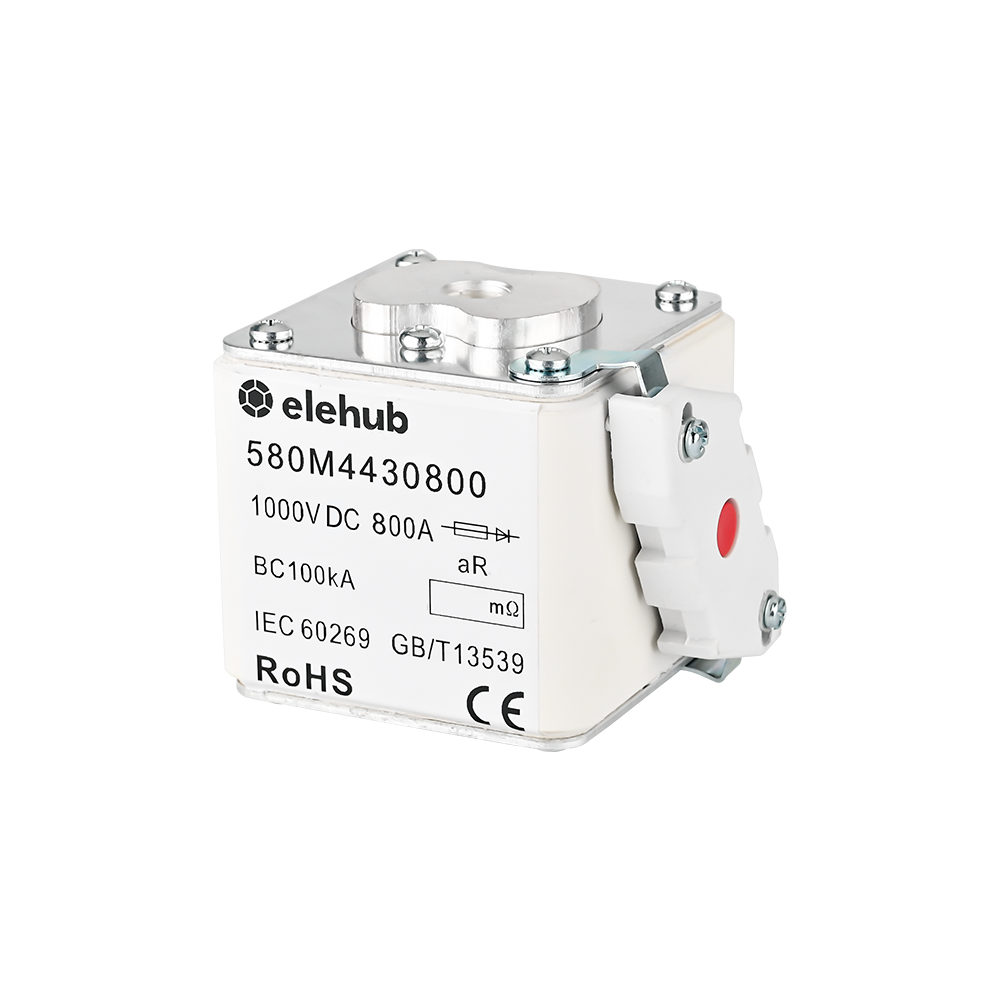
Fast-acting fuses are built to open almost instantly in the event of an overcurrent situation. Their quick action is particularly valuable in the protection of sensitive electronic equipment which may be damaged by even a transient surge.
In DC circuits—such as battery control or semiconductor circuits—such fuses prevent potentially catastrophic breakdowns by isolating faults rapidly. Certain special examples include semiconductor fuses for microelectronic equipment, where both precision and speed are crucial.
Slow-Blow (Time-Delay) Fuses
Slow-blow fuses are designed with a time delay in their operation, which allows them to resist temporary overloads or inrush currents without tripping. This is utilized in circuits that have transient overloads, e.g., motor start-up circuits or power supply circuits.
Slow-blow fuses have a very significant application in DC systems, e.g., industrial drives or renewable energy systems, where high inrush currents are a normal condition. They offer a balanced protection strategy, ensuring continuity while guarding the circuit from extended overloads.
👉 Read more: Time Delay vs Fast Acting Fuse
Fuse Types Based on Construction & Design
Cartridge Fuses, Glass Tube Fuses, and Ceramic Fuses

These fuses vary widely in construction and are selected based on the specific thermal and mechanical demands of the application. Cartridge fuses, for instance, are found in both AC and DC circuits for their robust and miniature build. Glass tube fuses have visual inspection of the fuse element and are employed in low power circuits, while ceramic fuses are used in high-temperature or high-energy conditions due to their enhanced lifespan.
Blade-Type Fuses

Blade-type fuses are used extensively in automotive applications due to their simplicity of installation, consistent connection, and fast operation. They are used in other DC applications such as electric vehicles and battery systems, where consistency of operation under dynamic loads is key.
Bolt-Down Fuses

Bolt-down fuses have a firm and stable mounting assembly, thus the option for application in high-power circuits where structural stability is of essence. The fuses find use in DC systems, more so industrial or battery storage applications involving high current, to present a safe contact during adverse operation conditions.
Resettable Fuses (PTC)

Resettable fuses utilize a positive temperature coefficient (PTC) polymer, whose resistance is raised when it is heated by the overcurrent. When the fault is cleared and the fuse cools back to room temperature, the device resets itself, offering an automatic recovery.
They are especially applied in DC circuits for consumer equipment and telecommunications, where repeated overcurrent conditions might be experienced and a maintenance-free solution is needed.
Liquid Fuses
Liquid fuses employ a liquid as the medium to effectively quench arcs, primarily in high-voltage applications. They are employed to quickly extinguish recurring arcs that can be present in DC circuits, where recurring current flow makes it difficult to interrupt arcs.
They are predominantly applied in specialized industrial or high-energy DC systems with extreme current and voltage conditions.
Fuse Types Based on Application
Automotive Fuses
Automotive fuses, which are conventionally available in blade-type or bolt-down forms, are specially engineered to address the unique needs of motor vehicle electrical systems.
In new vehicles’ DC applications—e.g., electric vehicles or driver-assistance systems—EV fuses must handle high current loads and sudden surges while being maintained in a reliable state under varying environmental conditions.

For a deeper dive into how fuses protect electric vehicles and their critical systems, check out: Do Electric Cars Have Fuses? A Deep Dive into EV Fuses.
Industrial Fuses
Industrial fuses are intended to operate in harsh operating conditions and may include high voltage or cartridge design. HRC fuses are often used in industrial processes and equipment powered by DC to protect heavy machinery from fault currents that could otherwise cause considerable downtime and damage.
Electronic Fuses
These fuses are predominantly PCB-mounted and give protection to sensitive electronic circuits. For DC systems, such as for consumer products or precision equipment, resettable fuses and semiconductor fuses find extensive applications due to their miniature size and speedy response, which will guard delicate components from temporary overcurrents.
Solar/Photovoltaic (PV) Fuses
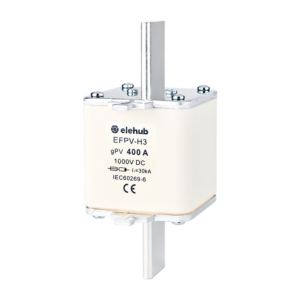
Specifically intended for DC circuits, solar fuses protect solar inverters and related circuitry from overcurrent conditions. Solar fuses are specifically engineered to address the particular issues of solar power systems, including varying sunlight intensity and related variable power outputs.

For a detailed explanation of fuse usage in solar installations, see: Do Solar Panels Have Fuses?
Battery & Energy Storage Fuses
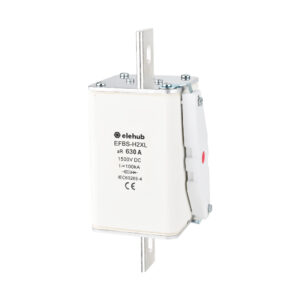
In energy storage and battery systems, fuses are used to control the high currents and potential short circuits that can occur. The energy storage fuse is typically constructed with a focus on fast-acting and high interrupting capacity to provide safety and longevity to the energy storage system.
Railway & Traction Fuses
Fuses used in traction and railway applications are made to resist high current burdens and rugged operating conditions.
For DC traction applications, these fuses need to interrupt fault currents safely in order to protect essential components and ensure safe operation for long distances and varying environmental conditions.
Household Fuses
Typical household fuses, such as plug fuses or fuses in conjunction with miniature circuit breakers (MCBs), are designed to protect household electrical installations.
Although the fuses are normally used in AC systems, DC-rated fuses are available for certain home installations, such as solar power installations and battery-backed backup systems.
What Are the 5 DC Fuse Types
Fast-Acting Fuses
Fast-acting fuses are intended to respond quickly during an overcurrent situation. If current is greater than the safe amount, the fuse element melts very quickly, protecting sensitive electronic components from damage. Their quick response makes them ideal for circuits where even a short surge would be hazardous.
Slow-Blow (Time-Delay) Fuses
Slow-blow fuses have an incorporated time-delay characteristic that allows them to withstand short-duration surges.
The delay avoids nuisance tripping but continues to offer protection against overloads of longer duration. Such fuses’ structure is a balance between safety and endurance.
Thermal Fuses
Thermal fuses are made to act on temperature rather than on current alone. They contain a temperature-sensitive element that will break the circuit when the ambient temperature exceeds a certain point.
This is particularly useful in applications where excessive heat is a problem, giving an added protection feature in thermal-sensitive applications.
High Rupturing Capacity (HRC) Fuses
High Rupturing Capacity (HRC) fuses are used for high energy uses. They will interrupt large fault currents safely without exploding or inducing further damage.
Their heavy-duty construction makes them necessary in industry or high power DC circuits where the possibility of a fault is greater.
Semiconductor Fuses
Semiconductor fuses are specially designed to protect sensitive electronic devices found in modern devices.
Semiconductor fuses are specifically made to support low-level currents and provide precise protection to semiconductor devices. They are small in size and act very fast, making them crucial for advanced electronic applications.
Advantages of Using DC Fuses
Enhanced Safety in DC Systems
DC fuses are specifically designed to handle the continuous flow of direct current. This precise design ensures that in case there is an overload, the fuse will be effective in interrupting the circuit and thereby preventing the risk of electrical fires or the destruction of sensitive components.
Effective Overcurrent and Short Circuit Protection
DC fuses provide a reliable protection against overcurrent and short circuit conditions. Cutting off the flow of current the moment the abnormal conditions are detected, these fuses provide the overall reliability of the electrical system.
Improved System Reliability
Through the quick and safe isolation of faults, DC fuses can contribute to the overall reliability of electrical systems. This translates to less downtime and lower repair costs, which is important in commercial and industrial applications.
Easy Maintenance and Replacement
Fuses are designed to be single-use components and can easily be replaced when they blow. Periodic inspection and maintenance can identify issues early, allowing quick replacements that minimize system downtime.
How to Choose DC Fuse: Technical Considerations and Ratings

When selecting a DC fuse, certain technical parameters must be taken into account.
Voltage and Current Ratings
Each fuse also has its current and voltage ratings stating maximum operating conditions. It’s necessary to choose a fuse with ratings equal to or above the circuit demands to give proper performance as well as safety.
Interrupting Capacity and Thermal Response
The interrupting capacity is a major specification, particularly in high-voltage or high-power systems.
This rating defines the maximum fault current that the fuse can interrupt safely without suffering damage. Additionally, the thermal response of the fuse—how quickly it reacts to rising temperatures—is an important factor in ensuring the fuse will operate as expected under a range of conditions.
Standards and Certifications
Fuses should comply with industry standards and certifications to guarantee reliability and safety.
When choosing a fuse, choose products that are compliant with recognized standards such as IEC, UL, or ANSI, since these certifications guarantee that the fuse has been thoroughly tested.
Final Thoughts
DC fuses are a critical component in the protection of modern electrical systems. Their ability to interrupt current flow when fault conditions arise ensures that circuits are secure and components are not destroyed. This comprehensive guide has provided an extensive overview of various types of fuses, especially for DC fuses, each serving unique roles in their applications.
FAQ
How do DC fuses differ from AC fuses?
While both serve the overall protective function, DC fuses are made to handle the continuous flow of direct current. They react to issues such as chronic arcing and other thermal characteristics that are not as prevalent in AC circuits.
What are the 5 common types of fuses used in DC circuits?
The five broad categories are rapid-blow (quick-acting) fuses, slow-blow (time-delay) fuses, thermostats fuses, HRC fuses, and semiconductor fuses. All are applied in specific circumstances, sacrificing speed, tolerance, and lifespan.
What should be considered when selecting a fuse for DC applications?
Key among these are voltage and current ratings, interrupting capacity, heat transfer, and compliance with industrial standards. It is essential that a fuse should meet at least the circuit requirements to ensure effective protection.
How are high voltage fuse types designed differently?
High voltage fuses incorporate sophisticated materials and design features to handle the additional stress of high voltage DC circuits. These fuses incorporate enhanced arc suppression capabilities and rugged insulation to prevent damage under fault.
What advantages do DC fuses offer in electrical systems?
DC fuses provide enhanced safety with fast fault isolation, offer effective overcurrent and short-circuit protection, and improve system reliability. They also facilitate easier maintenance by offering simple identification and replacement of faulty components.
Can an AC fuse be used in a DC circuit?
Typically, NO. AC fuses are designed for use in AC circuits and may not break DC circuits adequately due to their distinctive operation patterns. It is essential to use a fuse that is DC-rated for the application to ensure it will be safe.
How often should DC fuses be inspected or replaced?
Inspect frequency differs with application and operating conditions. Periodic maintenance in line with the manufacturer’s instructions is recommended to ensure the fuses function as expected and identify any degradation symptoms in the early stages.