EV charging protocols and standards are technical rules that define how electric vehicles, charging stations, and energy systems communicate, connect physically, and ensure safe and efficient power transfer across different regions and platforms.
EV charging standards basically define regulations and technical rules for safety, energy transfer, and hardware compatibility, while EV charging communication protocols provide digital communication between chargers, vehicle controllers, and service centers.
Due to different grid structures and regulations, EV charging protocols and standards vary across regions.
In this tutorial, we will cover the detailed features of EV charging protocols and standards and their importance in modern charging systems. So, let’s get started.

What Are EV Charging Protocols and Standards?
EV charging protocols and standards are the technical foundation that enables electric vehicles, charging stations, and energy networks to work together safely, efficiently, and intelligently.
In simple terms, they define how EV charging works from both a physical and digital perspective, ensuring that different brands, systems, and regions can all interact within the same ecosystem.
Types of EV Charging Protocols and Standards
Different EV standards & protocols are technical specifications used to define how electric vehicles connect with charging equipment, enable communication, and ensure safe power transfer. They also provide support and protection between vehicles and charging infrastructure across different markets and applications.
EV charging standards and protocols can be broadly categorized into two key layers:
- Connector and plug standards (how EVs physically connect in AC and DC charging)
- Communication protocols (how systems exchange data between vehicle, charger, and backend systems)
While these standards define how the system should work, electrical components inside ensure safe and reliable operation in real-world high-power charging environments.
EV Charging Connector & Plug Standards
EV charging connector and plug standards specify the physical design, pin configuration and power capacity requirements. They enable interoperable AC and DC charging across global EV ecosystems.
📊 Connector & Plug Standards Overview
| Standard | Region | Charging Type | Key Feature |
| Type 1 (SAE J1772) | 🇯🇵 Japan/🇨🇦🇺🇸 North America | AC | Single-phase AC, widely used legacy standard |
| Type 2 (Mennekes) | 🇪🇺 Europe | AC | Supports three-phase AC, EU standard |
| CCS1 | 🇨🇦🇺🇸 North America | AC + DC | Widely used standard, supports DC fast charging |
| CCS2 | 🇪🇺 Europe | AC + DC | High-power, widely adopted |
| CHAdeMO | 🇯🇵 Japan | DC | Supports V2G (bidirectional charging) |
| GB/T | 🇨🇳 China | AC + DC | Separate AC/DC connectors, dominant in China |
| NACS | 🇨🇦🇺🇸 North America | AC + DC | Compact design, Tesla-origin, rapidly expanding |
⚡️ AC Charging Connectors
1. Type 1 (SAE J1772)
Type 1 (based on SAE J1772 standard) is an older EV charging standard used in Japan and North America. It has also been incorporated into the IEC 62196 international standard for plugs, socket-outlets, vehicle connectors, and vehicle inlets.

SAE J1772-2009 electric vehicle connector
Source: By Michael Hicks / Flickr “mulad”, CC BY 2.0, https://commons.wikimedia.org/w/index.php?curid=19025533
By Mliu92 – Own work, CC BY-SA 4.0, https://commons.wikimedia.org/w/index.php?curid=108177440
This standard is compatible with single-phase AC charging, and is mainly used for slower charging applications such as home charging or public Level 2 stations. It supports Level 1 (120V) and Level 2 (240V) AC charging. Compared to newer standards, its charging capacity is relatively lower.
Type 1 is commonly used for older vehicle models, residential charging setups, overnight charging, and public AC chargers.
Although Type 1 is a reliable option, it is gradually being replaced by technologies that offer faster charging speeds.
2. Type 2 (Mennekes)
Type 2 is a commonly used AC charging standard in Europe and some other regions. It is often referred to as “Mennekes,” after the German company that originally developed the connector design. Type 2 connectors are also defined under the IEC 62196 standard.

Type 2 connector
Source: By Hadhuey – Own work, CC BY-SA 4.0, https://commons.wikimedia.org/w/index.php?curid=45826314
Own work, CC BY-SA 4.0, https://commons.wikimedia.org/w/index.php?curid=108351845
It is compatible with both single-phase and three-phase AC power, which provides a higher charging speed. It comes with advanced pin modules that allow a flexible power supply according to design.
Its common uses are in home chargers in Europe, workplace charging systems, and public AC charging stations.
Type 2 offers higher power compared to Type 1, and is widely used as an AC charging standard in modern EV ecosystems.
⚡️ DC Fast Charging Connectors
1. CCS1 (Combined Charging System Type 1)
CCS1 is the primary DC fast charging standard in North America. It builds on the Type 1 connector by adding two DC power pins, allowing both AC and DC charging through one integrated inlet.

CCS combo 1 connector
Source: By Mariordo (Mario Roberto Durán Ortiz) – Own work, CC BY-SA 4.0, https://commons.wikimedia.org/w/index.php?curid=115882524
By Mliu92 – Own work, CC BY-SA 4.0, https://commons.wikimedia.org/w/index.php?curid=108177318
It is commonly used in fast charging stations in the USA and in advanced EVs for rapid charging.
2. CCS2 (Combined Charging System Type 2)
CCS2 is used in Europe as a replacement for CCS1 and is also used in the global market. It extends the Type 2 connector by adding DC pins for high-power charging.

CCS combo 2 connector
Source: By Smnt – Own work, CC BY-SA 4.0, https://commons.wikimedia.org/w/index.php?curid=88869223
By Mliu92 – Own work, CC BY-SA 4.0, https://commons.wikimedia.org/w/index.php?curid=108208696
CCS2 is compatible with ultra-fast charging and is best suited for commercial charging systems and highways.
These standards are part of public DC high-speed chargers and high-power charging systems worldwide.
3. CHAdeMO
CHAdeMO is a DC fast charging standard developed in Japan. Compared to CCS, CHAdeMO uses a separate connector for DC charging.

CHAdeMO electric vehicle connector
Source: By Nick Birse – Own work, CC BY-SA 4.0, https://commons.wikimedia.org/w/index.php?curid=61426361
By Mliu92 – Own work, CC BY-SA 4.0, https://commons.wikimedia.org/w/index.php?curid=108209697
Its main feature is compatibility with bi-directional charging, allowing power to flow from the vehicle back to the grid (Vehicle-to-Grid or V2G).
This standard is used in Japanese EVs (e.g., older Nissan models) and in some global fast-charging stations.
CHAdeMO is an advanced technology with V2G capabilities, but it is gradually being replaced by CCS in many regions.
4. GB/T (China Standard)
GB/T is the official EV charging standard used in China, which is also the world’s largest EV market. Unlike CCS, GB/T comes with separate connectors for AC and DC charging.

GB/T AC charging connector
Source: By loremo – https://www.flickr.com/photos/loremo/3499948469/, CC BY 2.0, https://commons.wikimedia.org/w/index.php?curid=10974828
By Mliu92 – Own work, CC BY-SA 4.0, https://commons.wikimedia.org/w/index.php?curid=108206602

GB/T DC charging connector
Source: By Matti Blume – Own work, CC BY-SA, https://commons.wikimedia.org/w/index.php?curid=174870090
By Mliu92 – Own work, CC BY-SA 4.0, https://commons.wikimedia.org/w/index.php?curid=108206603
It supports both slow and fast charging applications across residential, commercial, and public charging infrastructure.
However, its design and communication techniques differ from CCS standards.
It is used in EVs in China as well as in Chinese-manufactured vehicles.
5. NACS (Tesla Charging Standard)
Tesla originally developed its own proprietary charging connector, commonly known as the North American Charging Standard (NACS). It has now been standardized by SAE International as SAE J3400.
Tesla connectors have a compact design and are compatible with both AC and DC charging in a single design.

NACS AC/DC Connector
Source: By Paul Sladen – Own work, CC0, https://commons.wikimedia.org/w/index.php?curid=75261474
By RickyCourtney – Own work, CC BY-SA 4.0, https://commons.wikimedia.org/w/index.php?curid=133111353
NACS is also integrated into the Tesla Supercharger network, one of the largest and most reliable fast-charging infrastructures in North America.
Initially used for Tesla vehicles, NACS is now also being adopted by other North American manufacturers, such as Ford and General Motors.
⭐️ Further Reading: AC vs DC EV Charging: What Are Their Differences?
EV Charging Communication Protocols
EV charger communication protocols control authentication and authorization, charging session management, billing and payment processing, power delivery settings, and safety monitoring.
In simple terms, they define how communication occurs between the vehicle and the charging station during a charging session.
These protocols operate across multiple layers, ranging from device-level control to cloud-based management and grid integration. If protocols are not supported, the charger may not work properly with EVs.
EV Charging Communication Architecture
EV charging communication operates across multiple layers:
- Device Layer → Internal hardware communication
- Vehicle ↔ Charger Layer → Charging session control
- Charger ↔ Backend Layer → Network management
- Roaming Layer → Cross-network interoperability
- System Layer → Infrastructure coordination
- Grid Layer → Energy and demand response management
Each layer uses specific protocols designed for its function, but they work together as a unified ecosystem.
📊 EV Charging Communication Protocols Overview
| Protocol | Layer | Role | Status |
| Modbus | Device | Device monitoring & control | 🟡 Widely used, but not primary |
| CAN | Vehicle | In-vehicle communication | 🟢 Mainstream automotive |
| IEC 61851 | Vehicle-Charger | Safety & control signaling | 🟢 Foundational standard |
| PLC | Physical data transmission | 🟢 Mainstream enabler | |
| ISO 15118 | Smart charging & V2G | 🟡 Emerging mainstream | |
| DIN 70121 | Legacy DC communication | 🔴 Legacy | |
| OCPP | Backend | Charger management | 🟢 Global mainstream |
| OCPI | Roaming | Cross-network interoperability | 🟡 Fast-growing mainstream |
| OICP | Commercial roaming ecosystem | 🟢 Established ecosystem | |
| OCHP | Billing settlement | 🔴 Legacy | |
| eMIP | Early interoperability | 🔴 Phased out | |
| IEC 63110 | System | Charging infrastructure management | 🟡 Emerging standard |
| OpenADR | Grid | Demand response | 🟢 Mature smart grid |
| OSCP | Load balancing | 🟡 Emerging | |
| IEEE 2030.5 | Smart grid integration | 🟡 Emerging mainstream |
🔧 Device-Level & Internal Communication
These protocols are used for low-level communication within chargers or vehicles, ensuring reliable operation of hardware components.
1. Modbus

Modbus is an industrial communication protocol used for internal system coordination.
It connects components such as power modules, energy meters, and controllers, enabling real-time monitoring of voltage, current, power, and system status.
Modbus is especially common in AC charging systems and energy management platforms because it is simple, reliable, and compatible with many hardware devices.
2. CAN (Controller Area Network)

CAN is mainly used to enable real-time communication and coordinated control between electronic control units (ECUs) within a vehicle.
In electric vehicles, CAN connects key components such as the battery management system (BMS), motor controller, and onboard charger. These systems can exchange data directly without a central controller, improving response speed and overall reliability.
CAN supports high-speed, low-latency data transmission, making it ideal for real-time control applications. It also has strong resistance to electrical noise, allowing stable operation in complex environments.
In addition, CAN is used for fault detection and system monitoring, helping enhance vehicle safety and stability.
🚗 Vehicle-to-Charger Communication (EV ↔ Charger)
These protocols define how the EV and charger interact during a charging session.
1. IEC 61851
Foundational global standard

IEC 61851 is an international standard that defines the conductive charging system for electric vehicles.
It focuses on charging modes (Mode 1–4), electrical safety, and control signaling between the vehicle and the charging station to ensure safe and reliable charging operation.
Key parts of the standard include:
- IEC 61851-1: General requirements for all EV supply equipment (EVSE)
- IEC 61851-23: Requirements for DC charging stations
- IEC 61851-24: Digital communication between DC chargers and vehicles
IEC 61851 operates at the control signaling level and provides the foundation for higher-level communication protocols such as ISO 15118.
It acts as a “rulebook” that ensures connectors like Type 2 in Europe or CCS work correctly with vehicles. It often works together with ISO 15118 for advanced digital communication.
As a foundational international standard for EV charging infrastructure, IEC 61851 is widely adopted globally.
2. PLC (Power Line Communication)
Physical Layer Communication Technology
PLC (based on HomePlug Green PHY) serves as the physical communication layer for data exchange between electric vehicles and charging stations, especially in CCS systems.
It enables digital communication directly over the charging cable, eliminating the need for additional communication hardware. As a result, PLC forms the foundation for higher-level protocols such as ISO 15118.
Through PLC, essential data like authentication, charging control, and billing information can be transmitted securely. It also supports advanced features like Plug & Charge and smart charging.
With the communication channel established by PLC, higher-level protocols define how this data is structured and used.
3. ISO 15118
Emerging mainstream standard

ISO 15118 builds on PLC and defines data exchange between EVs and the charging station during charging. It is the mainstream and advanced communication standard for modern EV charging systems.
One of its key features is plug-and-charge, where electric vehicles are automatically authenticated and billed when connected, without the need for apps or RFID cards.
ISO 15118 supports:
- Automatic authentication
- Secure data exchange
- Billing and invoicing
- Smart charging support
- Bidirectional charging (V2G, V2H), where vehicles can supply power back to the grid during peak demand
4. DIN 70121
Legacy Protocol

DIN 70121 is an early communication standard used in DC fast charging systems, particularly within CCS infrastructure.
It defines basic communication between electric vehicles and charging stations, enabling functions such as charging parameter negotiation, power control, and session initialization.
Unlike ISO 15118, it does not support advanced features like Plug & Charge or bidirectional authentication.
DIN 70121 is a transitional protocol used before ISO 15118 in CCS DC charging. Today, it is still used in legacy systems. It serves as a fallback when ISO 15118 is not available.
🌐 Charger-to-Backend Communication (Charger ↔ Network)
The protocol connects charging stations to central management systems (CSMS).
OCPP (Open Charge Point Protocol)
Global mainstream standard

OCPP is an important communication protocol for EV charging systems. It is used to define how charging stations connect with a central management system.
It acts as a communication interface between the charger and network operator software, managing different signals and messages such as:
- Start/stop charging
- Meter and session data reporting
- Firmware updates
- Authorization and configuration
OCPP 1.6 is widely deployed, while OCPP 2.0.1 introduces enhanced security, smart charging, and ISO 15118 integration.
OCPP is designed to prevent vendor lock-in, allowing any charger manufacturer’s hardware to communicate with EV charging systems that are compatible with OCPP, regardless of the manufacturer.
🔗 Charger Network Roaming & Interoperability
This layer enables seamless interaction between different charging networks, allowing EV users to access multiple charging providers with a single account or subscription.
Roaming eliminates fragmentation in the EV charging ecosystem by enabling cross-network authentication, pricing exchange, and billing settlement. It significantly improves user experience and network utilization.
1. OCPI (Open Charge Point Interface)
Fast-growing mainstream

OCPI provides features for connection, communication, and secure data exchange between different systems.
For example, if a user wants to use a single charging account across multiple networks, such as EVgo or Electrify, OCPI enables roaming between different charging platforms.
It supports:
- Charger availability and location data
- Tariff and cost exchange
- Reservation support
- Charging authorization
- Roaming
OCPI makes it possible to access multiple charging networks using a single account, without needing separate accounts for each system.
It has become one of the most important open standards in today’s EV charging ecosystem.
2. OICP (Open InterCharge Protocol)
Commercial mainstream ecosystem

OICP is a commercial roaming protocol developed by Hubject.
It enables and supports:
- Interoperability between charging networks,
- Authentication
- Billing
- Roaming services across multiple operators within a unified ecosystem
OICP is widely used in large-scale commercial roaming networks, helping CPOs and eMSPs exchange real-time data and manage cross-network charging services.
3. OCHP (Open Clearing House Protocol)
Niche legacy protocol

OCHP is a roaming protocol used to enable communication between charging service providers and clearing house systems.
It supports functions such as
- Charging session authorization
- Transaction handling,
- Tariff exchange
- Billing settlement between different EV charging networks
Unlike direct network-to-network communication protocols like OCPI, OCHP typically operates through a central clearing house model. This simplifies financial reconciliation and roaming agreements between multiple operators.
4. eMIP (eMobility Interoperation Protocol)
Early Legacy Protocol
eMIP is an early roaming protocol designed to support interoperability between different charging networks.
It enables the exchange of information such as:
- Charging station availability
- Pricing, authentication
- Session management across multiple service providers
Although it has been largely replaced by newer standards like OCPI and OICP in many regions, eMIP played an important role in the early development of EV roaming ecosystems in Europe. It represents the starting point of cross-network EV charging communication.
⚙️ System-Level Management
The protocol focuses on large-scale coordination, energy management, and grid integration.
IEC 63110
Emerging global standard
IEC 63110 defines the management framework for EV charging infrastructure. It focuses on system coordination, energy flow control, and backend integration.
It enables efficient management of large-scale charging networks. It supports communication between charging infrastructure, energy systems, and grid operators.
IEC 63110 also promotes smart grid connectivity. It helps balance energy demand and improve overall grid stability.
This standard works at a system level. It complements OCPP by providing a more structured and standardized management approach for EV charging ecosystems.
⚡ Grid & Energy Management
These protocols enable coordination between EV charging systems and the electrical grid, supporting demand response and energy optimization.
1. OpenADR (Open Automated Demand Response)
Mature smart grid standard

OpenADR is a standardized communication protocol, designed to enable automated demand response between utilities and energy-consuming devices, such as EV charging systems.
It allows grid operators to send price signals, load reduction requests, or emergency notifications to charging networks in real time.
EV charging stations or management systems can then automatically adjust charging power, delay sessions, or reschedule charging to reduce grid stress.
OpenADR plays a key role in integrating electric vehicle charging into smart grid systems, improving energy efficiency, supporting renewable energy balancing, and helping prevent grid overload during peak demand periods.
2. OSCP (Open Smart Charging Protocol)
Emerging grid protocol

OSCP enables smart charging coordination between charging infrastructure operators and grid operators.
It allows distribution system operators (DSOs) to provide capacity forecasts to charging network operators, helping them optimize charging load distribution across different locations.
By using OSCP, charging management systems can dynamically adjust charging schedules and power allocation based on available grid capacity. This helps prevent local grid congestion and supports more efficient use of existing electrical infrastructure.
OSCP is particularly useful in large-scale EV charging deployments, where multiple charging stations must be coordinated within limited grid capacity constraints.
3. IEEE 2030.5
Smart grid emerging standard

IEEE 2030.5 is a smart grid communication protocol used for integrating distributed energy resources such as EV chargers, solar systems, and energy storage.
It supports real-time coordination between devices and utility systems for optimized energy management. This supports optimized energy usage, better grid stability, and improved integration of renewable energy sources.
As a system-level protocol, IEEE 2030.5 plays a key role in building fully connected and intelligent energy ecosystems.
EV Charging Protocols and Standards by Region
| Region | AC Charging | DC Charging | Communication | Key Characteristics |
| 🇺🇸🇨🇦 North America | Type 1 (SAE J1772) |
|
|
Transitioning from CCS1 → NACS; strong fast-charging network (Tesla Supercharger + CCS) |
| 🇪🇺 Europe | Type 2 (Mennekes) | CCS2 |
|
Highly standardized CCS2 ecosystem; strong interoperability & roaming |
| 🇦🇺 Australia | Type 2 (Mennekes) | CCS2 |
|
Follows European-style standards; CCS2 dominant for public charging |
| 🇨🇳 China | GB/T AC | GB/T DC |
|
Largest EV market; independent GB/T system (AC & DC separated) |
| 🇯🇵 Japan | Type 1 (SAE J1772) |
|
|
Early CHAdeMO leader; now gradual shift toward global CCS |
| 🇮🇳 India |
|
|
|
Rapid CCS2 adoption; local Bharat standards still exist |
Key Components for EV Charging Execution Layer
While EV charging standards and protocols define system rules, electrical components ensure these rules are safely executed in real-world high-power charging environments.
As EV charging systems evolve toward higher power levels, faster charging speeds, and smarter communication capabilities, the reliability of core electrical components becomes increasingly critical.
High-voltage switching devices must ensure safe current interruption, stable operation under extreme electrical loads, and full compatibility with global EV charging standards such as CCS, CHAdeMO, GB/T, and NACS systems.

ELEHUB provides a complete range of high-voltage power components for the execution layer:
-
DC Shunt Resistors: Enable accurate real-time current measurement in EV charging systems. They support energy monitoring, billing accuracy, and smart charging data management.
-
DC Surge Protectors: Protect EV charging systems from voltage spikes caused by lightning or switching surges; help maintain system stability and reduce damage to sensitive power electronics.
-
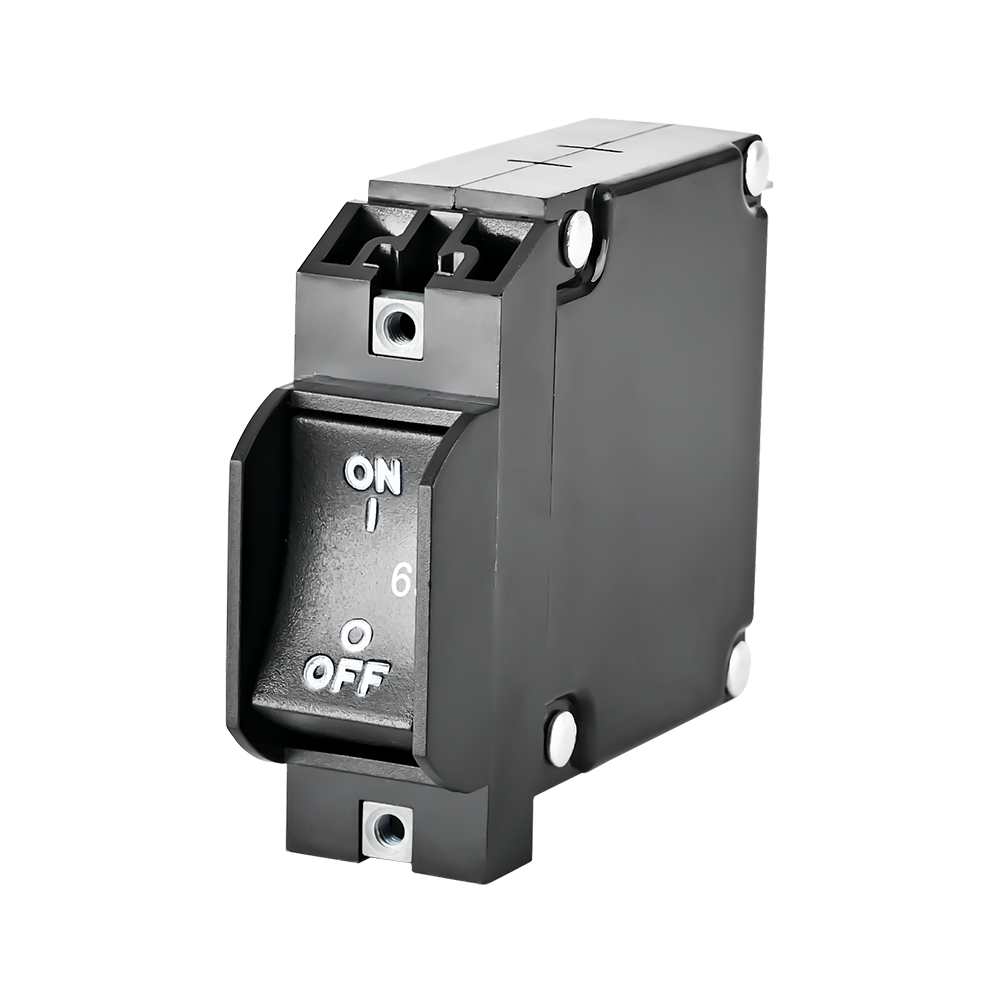
Circuit Breakers: Provide overcurrent and short-circuit protection for EV charging infrastructure. They automatically disconnect faulty circuits to ensure safe system operation.
-
DC Disconnector Switches: Used for manual isolation of high-voltage DC circuits during maintenance or emergencies. They enhance operational safety and support infrastructure protection requirements.
-
Fast-Acting Fuses (aR Type): Rapidly interrupt fault currents to protect sensitive semiconductor devices. Widely used in fast charging and power conversion systems to prevent equipment failure.
-
Energy Storage Connectors: Provide secure and efficient high-current connection between energy storage systems and EV charging infrastructure.
⭐️ Further Reading: What Are EV Charging Station Components?
Future Trends in EV Charging Standards
Unified Global Standards
One of the main challenges for the EV industry is the fragmentation of charging standards across different regions. Different connector types and communication systems create compatibility issues for manufacturers. There is a growing trend toward global harmonization of EV charging standards. Vehicle manufacturers, industries, and standardization organizations are working to reduce fragmentation.
Ultra-Fast Charging
Charging speed is a critical factor in EV adoption. While current fast chargers provide high power, further improvements are needed. Next-generation EV chargers are being developed to deliver 350 kW or more, significantly reducing charging time.
For example, EVs may charge in 10 to 15 minutes, enabling longer travel with minimal delays.
Wireless Charging (Inductive Charging)
Wireless charging reduces the need for physical cables and connectors, providing a more convenient and user-friendly experience.
Inductive charging systems use electromagnetic fields to transfer energy between a ground-based charging pad and a vehicle receiver.
This reduces connector wear and tear and performs well in harsh weather conditions. It is especially useful for autonomous vehicles and smart parking systems.
Vehicle-to-Grid (V2G)
EVs primarily consume electrical energy, but advanced systems allow them to function as mobile energy storage units.
Through V2G technology, EVs can supply power back to the grid during peak demand. It also supports renewable energy integration and allows EV owners to earn money by supplying excess energy.
These operations require bidirectional chargers, advanced communication protocols, and grid management systems.
Conclusion
EV charging standards and protocols are considered the building blocks of EV systems:
- Connector standards define the physical interface for AC and DC energy transfer.
- Communication protocols enable smart interaction between vehicles, chargers, and systems.
- Electrical components support power control and protect the charging process.
With the advancement of the EV industry, harmonized standards, high-speed charging technologies, and advanced communication protocols are continuously evolving. Modern charging systems not only provide power but also create smart, connected, and efficient energy ecosystems.
ELEHUB high-voltage power components play a critical role in bridging system rules and real-world operation, ensuring safety, reliability, and efficiency in modern EV charging infrastructure.
Although there are challenges in global standardization, continuous advancements, innovation, and collaboration among manufacturers, authorities, and technologists are driving the industry forward. The future of EV charging is based on intelligent systems, unified standards, and improved user experiences.
❓ FAQs
Which EV charging standard is most widely used?
CCS is currently the most widely adopted DC fast charging standard globally.
What is ISO 15118 used for?
ISO 15118 enables Plug & Charge functionality and secure communication between EV and charger
Is CHAdeMO still used?
Yes, but it is gradually being replaced by CCS in many markets.
Is Tesla NACS replacing CCS?
Yes, NACS is increasingly adopted in North America by major automakers.
How does EV charging communication work?
A typical charging session follows a simplified flow:
- Vehicle connects to charging station
- IEC 61851 establishes safety signaling
- PLC enables digital communication
- ISO 15118 or DIN 70121 handles authentication
- Charging parameters are negotiated
- Session starts and data is exchanged
- OCPP manages backend monitoring and billing
- Grid systems may adjust power via OpenADR or OSCP
Type 1 vs Type 2 AC Charging

| Feature | Type 1 (SAE J1772) | Type 2 (Mennekes) |
| Region | North America, Japan | Europe, Australia, global |
| Power phases | Single-phase AC only | Single-phase + three-phase AC |
| Charging speed | Slower | Faster |
| Design | 5-pin connector | 7-pin connector |
| Use cases | Home charging, older EVs, Level 2 stations | Home, workplace, public AC charging |
| Compatibility trend | Gradually being replaced | Modern global AC standard |
CCS 1 vs CCS 2

| Feature | CCS1 (Combined Charging System Type 1) | CCS2 (Combined Charging System Type 2) |
| Region | North America | Europe, Australia, global |
| Base connector | Type 1 | Type 2 |
| Power type | AC + DC in one inlet | AC + DC in one inlet |
| DC pins | 2 additional DC pins | 2 additional DC pins |
| Charging speed | High-speed DC fast charging | Ultra-fast DC charging (higher capacity) |
| Design difference | Larger, Type 1-based | More compact, Type 2-based |
| Market trend | Being replaced by NACS in US | Dominant global DC standard |