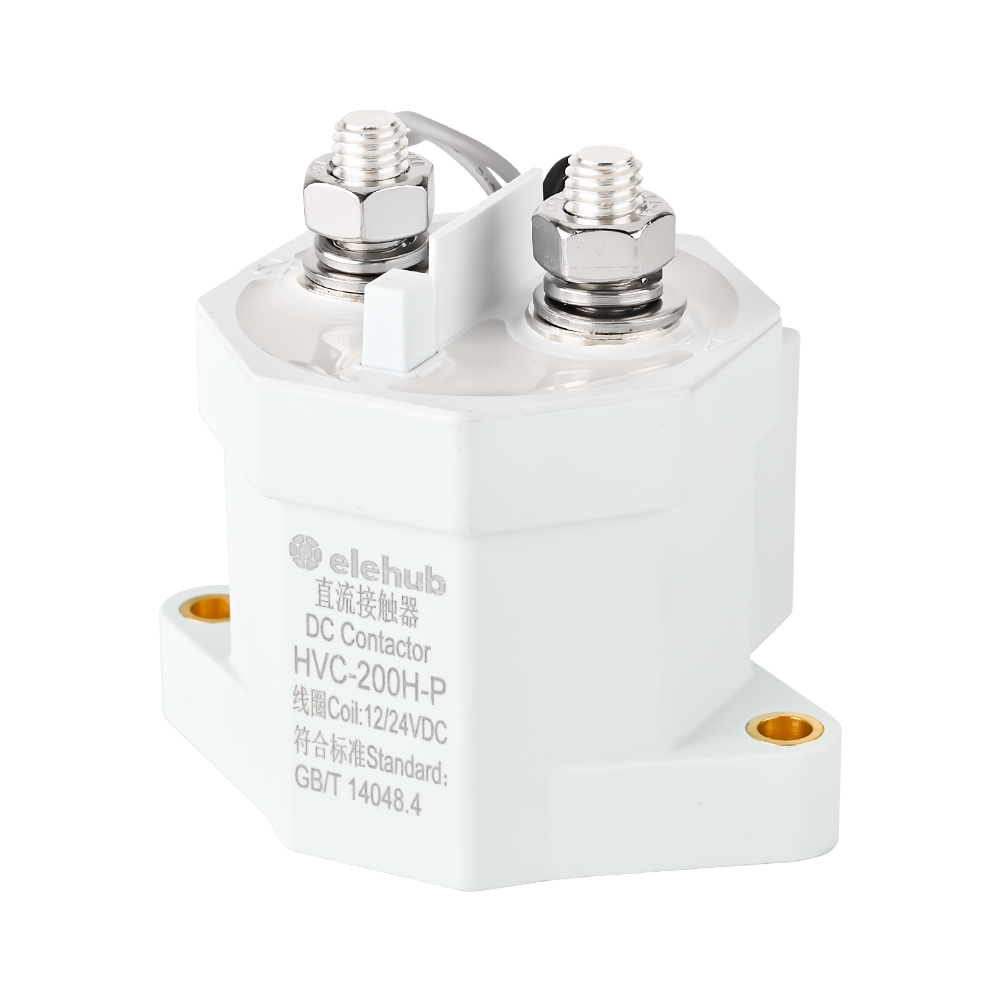
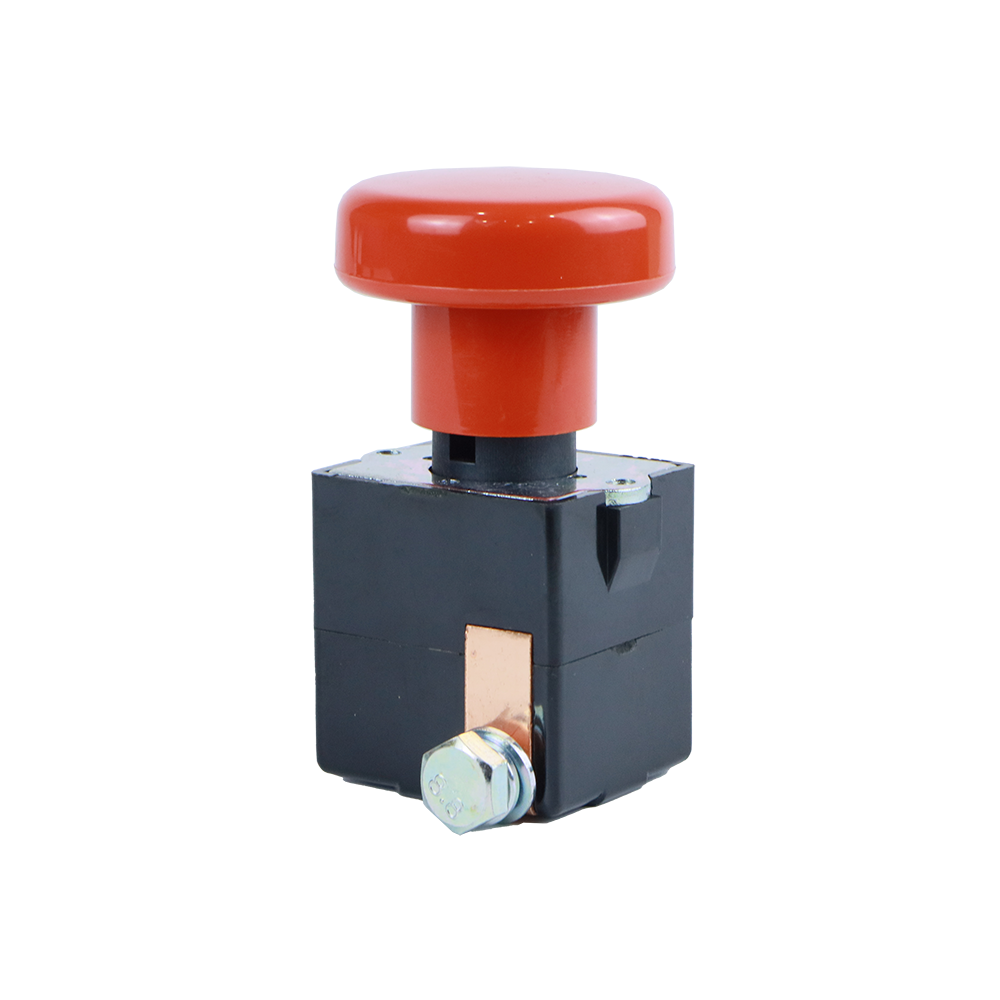
High-voltage DC contactors are vital components in modern electrical systems. They control and switch direct current (DC) circuits safely, ensuring reliable operation in electric vehicles, solar power systems, energy storage systems, and industrial automation. Among these, resin and ceramic DC contactors are the most common types. If you’re unsure which is right for your application, this guide will help you compare epoxy vs ceramic DC contactors.
Epoxy-sealed DC contactors offer durability, compact design, and cost-effectiveness. Ceramic-sealed DC contactors provide superior thermal resistance, mechanical strength, and long-term reliability. Choosing the right type depends on the application, operating environment, and performance requirements.
Here, we will explore the differences between resin and ceramic DC contactors, their advantages, limitations, applications, sealing technologies, and how to select the right high-voltage DC contactor for your needs.
📍 TL;DR Technical Comparison Table: Epoxy vs Ceramic DC Contactors
| Key Parameter | Epoxy DC Contactors | Ceramic DC Contactors |
| Insulation Material | Epoxy resin | Ceramic |
| Sealing Type | Solid encapsulation (non-hermetic) | Fully hermetic ceramic seal |
| Size & Weight | Compact and lightweight | Bulkier and heavier |
| Voltage Rating | 450–1500 VDC | ≥1500 VDC (up to 2000 VDC+) |
| Continuous Current | 200A–1000A | High voltage focused; larger size for high current |
| Arc Extinction | Magnetic blowout & arc runners | Gas-filled arc chamber |
| Thermal Performance | Good with proper heat sinking; limited by epoxy conductivity | Excellent intrinsic thermal conductivity; bulk may limit external dissipation |
| Environmental Resistance | Resistant to moisture, dust, and vibration | Excellent sealing prevents ingress; sensitive to impact |
| Lifespan | Long, but gradual thermal/mechanical aging | Very long; minimal aging under stable conditions |
| Cost Level | Cost-effective | High cost |
| Typical Applications | EVs, ESS, DC chargers | Rail, aerospace, ultra-HV systems |
Overview of DC Contactors
DC contactors are essential components in modern electrical systems. They are designed to safely control and switch direct current circuits. These contactors are widely used in electric vehicles (EVs), energy storage systems, solar power systems, and industrial automation.
High-voltage DC contactors are specialized devices capable of handling voltages typically ranging from 400V to 1500V DC or higher, depending on the application. Choosing the right DC contactor ensures safety, reliability, and efficient power management.
There are two main types of DC contactors: resin DC contactors and ceramic DC contactors. Each type has its unique features, advantages, and limitations. Understanding these differences helps engineers and technicians make informed choices for specific applications.
Further Reading:
Low-Voltage vs. High-Voltage Contactors
What Is an Epoxy DC Contactor?
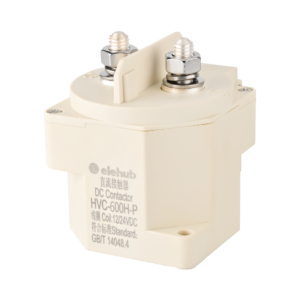
An epoxy DC contactor uses a molded epoxy resin material for insulation. The epoxy body provides mechanical support and electrical isolation, making it ideal for high-voltage applications. Epoxy contactors can handle high current and voltage while offering compact designs.
Resin-sealed DC contactors are commonly epoxy-based, so the terms “resin contactor” and “epoxy contactor” are often used interchangeably.
Advantages
Epoxy DC contactors offer several benefits:
- High Insulation: Epoxy resin provides excellent electrical insulation, reducing the risk of short circuits.
- Compact Design: Epoxy allows components to be placed closer together, minimizing the overall size.
- Design Flexibility: Epoxy can be molded into a wide range of shapes and sizes, making customization easier for different system architectures.
- Cost-Effective: Compared to ceramic contactors, epoxy-based models are generally more affordable.
- Wide Applications: They can be used in EV DC contactors, solar systems, and energy storage setups.
Limitations
Despite their advantages, Epoxy DC contactors have some limitations:
- Thermal Resistance: Epoxy has lower thermal resistance compared to ceramic, making it less suitable for extremely high-temperature applications.
- Chemical Resistance: Although resistant to most automotive and industrial environments, epoxy may degrade when exposed to harsh chemicals or solvents over time.
- Mechanical Strength: Epoxy may be less resistant to mechanical shocks and stress.
- Longevity: While durable, epoxy contactors may not last as long as ceramic contactors in harsh environments.
Example Product: ELEHUB Epoxy-Sealed High Voltage DC Contactor offers reliable performance with epoxy insulation. It provides high-current handling, compact design, and robust safety features. It is suitable for EV charging stations, home solar systems, and industrial energy storage applications.
What Is a Ceramic DC Contactor?
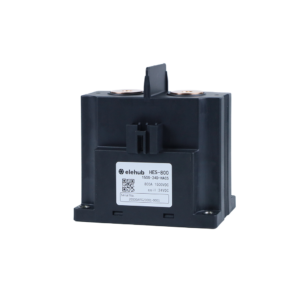
A ceramic DC contactor uses ceramic materials for insulation and structural support. Ceramic has superior thermal and electrical properties, making it ideal for extreme conditions.
Advantages
Ceramic DC contactors provide several benefits:
- Superior Insulation: Ceramic materials prevent electrical arcing and enhance safety.
- High Thermal Resistance: Can withstand extreme temperatures without performance loss.
- Strong Corrosion Resistance: Resistant to chemical attack, moisture, and environmental contaminants.
- Mechanical Strength: Ceramic housings provide rigidity and maintain structural integrity under high stress.
- High Reliability: Hermetic ceramic sealing prevents the ingress of dust, moisture, and other contaminants.
- Long Lifespan: More durable than resin in harsh environments.
- Reliable for EV Applications: Perfect for high-current, high-voltage DC systems in electric vehicles.
Limitations
While ceramic contactors are highly reliable, they have some drawbacks:
- Higher Cost: Ceramic contactors are usually more expensive than resin types.
- Heavier Design: Ceramic designs are bulkier and heavier, which can impact integration in space- or weight-constrained systems.
- Limited Design Flexibility: Ceramic materials are rigid by nature, restricting the range of achievable shapes and sizes.
- Fragility: Ceramic can be brittle and more prone to cracking under impact.
- Complex Manufacturing: Ceramic contactors are harder to produce, which may affect availability.
Example Product: ELEHUB Ceramic-Sealed High Voltage DC Contactor uses ceramic insulation for superior performance. It can handle up to 1500VDC and high current ratings, ensuring reliable operation in EVs and energy storage systems.
Key Differences: Epoxy vs Ceramic DC Contactors
Choosing between epoxy and ceramic DC contactors depends on several factors:

1. Insulation Materials
Epoxy and ceramic differ fundamentally in material properties and long-term insulation behavior.
- Epoxy insulation offers excellent mechanical toughness and impact resistance. It tolerates vibration, shock, and repeated thermal cycling well, making it suitable for automotive and mobile applications.
- Ceramic insulation provides superior dielectric stability over long service life. Its electrical properties remain highly stable under extreme voltage stress and temperature conditions, with minimal material aging.
In practice, epoxy insulation prioritizes mechanical robustness and manufacturability, while ceramic insulation prioritizes ultimate dielectric endurance.
2. Sealing Method
In high-voltage DC contactors, the sealing method refers to how the internal components—such as contacts, coils, arc chambers, and magnetic structures—are encapsulated and protected from external factors like moisture, dust, vibration, and chemical exposure. A reliable sealing method ensures insulation integrity, mechanical stability, and long-term performance of the contactor, especially in harsh automotive, industrial, and renewable energy applications.
Epoxy-Sealed DC Contactors:
Epoxy-sealed DC contactors use thermosetting epoxy resin to encapsulate internal components, including contacts, coils, arc chambers, and magnetic structures. The solid, non-porous epoxy forms a robust insulation barrier that protects components from moisture, dust, and vibration.
The arc-extinguishing chamber, made of plastic and filled with a controlled pressure of inert gas (typically nitrogen), dissipates arcs through a magnetic blowout mechanism.
Unlike ceramic brazed sealing, epoxy potting does not require specialized equipment such as vacuum furnaces or laser welding, nor does it impose strict material requirements on components. This results in a simpler, more cost-effective production process, while maintaining excellent mechanical robustness, manufacturability, and environmental resistance, making epoxy-sealed contactors the dominant solution in mass-market new energy applications.
Ceramic DC Contactors:
Ceramic DC contactors use high-purity ceramic housings combined with metal brazing techniques to form a hermetically sealed enclosure.
The internal chamber is either vacuumized or filled with a protective inert gas (such as hydrogen, nitrogen, or specialized gas mixtures) to optimize arc extinction.
These contactors are engineered for maximum electrical endurance and high-voltage arc interruption, offering superior dielectric stability and reliability. However, this design comes with increased size, cost, and manufacturing complexity, making ceramic contactors primarily suitable for ultra-high-voltage or mission-critical applications.
3. Manufacturing Process
The manufacturing process of epoxy-sealed and ceramic-sealed DC contactors differs significantly in terms of materials, production complexity, and cost structure.
Epoxy-Sealed DC Contactors:
Epoxy-sealed contactors are typically manufactured using precision molding and resin potting processes.
The internal components—including contacts, coils, terminals, and magnetic structures—are assembled and encapsulated using thermosetting epoxy resin. After curing, the epoxy forms a durable insulation barrier that protects the internal structure from vibration, moisture, and contamination.
Key manufacturing advantages include:
- Lower production complexity
- Faster manufacturing cycles
- Easier customization
- High-volume scalability
- Lower overall production cost
These advantages make epoxy-sealed contactors highly suitable for mass-market EVs, ESS systems, and industrial automation applications.
Ceramic DC Contactors:
Ceramic-sealed contactors require a more complex manufacturing process involving ceramic sintering, metallization, brazing, and hermetic sealing technologies.
High-purity ceramic materials are first molded and fired at high temperatures to achieve the required mechanical and dielectric properties. Metalized surfaces are then brazed to conductive components under controlled furnace conditions to create a hermetically sealed chamber.
The internal chamber may be vacuumized or filled with specialized gases to optimize arc suppression performance.
Although ceramic manufacturing provides exceptional insulation stability and high-voltage endurance, it involves:
- Higher material costs
- Longer production cycles
- More stringent quality control
- Increased manufacturing complexity
For this reason, ceramic-sealed contactors are generally reserved for high-performance and mission-critical applications.
4. Size and Weight
Packaging efficiency is an important consideration in high-density power systems.
- Epoxy-sealed designs are generally more compact, lighter, and easier to integrate into battery packs, BDUs, and power modules where space and weight are constrained.
- Ceramic contactors tend to be bulkier due to ceramic wall thickness and metal sealing structures. They are heavier and less flexible in mounting orientation.
As a result, epoxy-sealed contactors are favored in space- and weight-sensitive applications.
5. Creepage Distance
Creepage distance refers to the shortest path along the surface of an insulating material between two conductive parts. In DC applications, especially under humid or contaminated environments, surface leakage current can gradually increase and eventually lead to insulation failure or tracking.
- Ceramic materials generally provide more stable dielectric performance and lower surface conductivity under high electrical stress. As a result, ceramic-sealed DC contactors can often achieve higher voltage withstand capability with shorter creepage distances.
- Epoxy insulation systems, while highly durable and mechanically robust, may require larger creepage and clearance distances to maintain safe insulation margins in polluted or high-humidity environments. Modern epoxy-sealed contactors compensate for this through optimized molded geometries, insulation barriers, and advanced resin formulations.
6. Voltage Withstand Capability
Voltage insulation capability is one of the most visible performance differences.
- Epoxy-sealed contactors typically support voltage ranges from 450 VDC up to 1500 VDC, using optimized creepage and clearance distances achieved through molded geometry.
- Ceramic contactors excel at ultra-high voltage insulation, often exceeding 1500 VDC, with custom designs capable of 2000 VDC or higher.
For most EV platforms (400V / 800V) and ESS systems (up to 1500V), epoxy-sealed designs provide sufficient dielectric margin when properly engineered.
7. Current Carrying Capacity
Current density and thermal rise are closely linked to contact and terminal design.
- Epoxy-sealed contactors commonly support 200A to 1000A continuous current, using optimized copper terminals and low contact resistance designs.
- Ceramic contactors are often optimized for voltage withstand rather than current density and may require larger footprints to achieve equivalent current ratings.
For high-current applications with frequent operation, epoxy-sealed designs are typically more efficient.
8. Thermal Performance
Thermal behavior directly impacts reliability, contact resistance, and service life.
- Epoxy resin has lower intrinsic thermal conductivity but allows flexible internal heat paths and effective external heat sinking through terminals and mounting surfaces.
- Ceramic materials have better intrinsic thermal conductivity; however, thicker ceramic walls and hermetic structures can limit heat dissipation to the external environment.
With proper thermal design, epoxy-sealed contactors can achieve excellent temperature-rise performance at high continuous currents.
9. Arc Extinction Behavior
Arc extinction is a critical requirement in DC switching, as DC arcs do not naturally extinguish at zero-current crossings like AC arcs. Uncontrolled arcs can lead to rapid contact erosion, reduced component lifespan, overheating, insulation damage, and potential system failure. Effective arc control is therefore the most important technical differentiator between epoxy-sealed and ceramic DC contactors.
Epoxy-Sealed DC Contactors:
Epoxy-sealed DC contactors use magnetic blowout devices, optimized contact geometry, and arc runners to control and extinguish DC arcs.
During switching, the magnetic blowout device generates a magnetic field perpendicular to the arc. Under the Lorentz force, the arc is rapidly driven away from the contact surfaces and stretched into the arc chamber, where it is cooled and extinguished.
This design allows the arc to dissipate in air or controlled internal chambers. It is optimized for frequent switching under load and normal operating currents, making epoxy-sealed contactors well-suited for EV, ESS, and DC charging applications.
Ceramic DC Contactors:
Ceramic DC contactors use hermetically sealed, gas-filled chambers to achieve highly efficient arc suppression. The chamber is typically filled with an inert or specially formulated gas, which significantly reduces arc energy, accelerates arc cooling, and promotes rapid ion recombination.
This mechanism enables ceramic contactors to deliver exceptional interruption performance under extreme fault and short-circuit conditions, particularly in ultra-high-voltage DC systems.
While ceramic contactors clearly outperform epoxy-sealed designs in ultra-high DC fault interruption, this level of performance is often unnecessary for standard EV and ESS switching duties, where epoxy-sealed contactors provide sufficient arc control with lower cost and smaller size.
10. Coil and Magnetic Structure
The magnetic drive structure of a DC contactor directly affects switching speed, contact pressure, power consumption, and overall reliability.
Modern epoxy-sealed DC contactors often utilize optimized single-coil magnetic structures that allow compact packaging and efficient electromagnetic force generation. In these designs, the contacts are positioned close to the magnetic center, improving switching response and enabling higher current density within a smaller housing.
Traditional high-voltage ceramic contactors may employ more complex magnetic systems with reinforced contact pressure mechanisms to support ultra-high-voltage interruption and enhanced arc control performance.
Advanced magnetic system optimization is essential for achieving reliable switching performance in high-frequency operating environments such as EV battery systems and DC charging infrastructure.
11. Environmental Resistance
Environmental robustness is critical in automotive and industrial settings.
- Epoxy-sealed contactors show strong resistance to vibration and shock, perform well in automotive environments, and resist moisture and dust ingress.
- Ceramic contactors benefit from hermetic sealing that prevents internal contamination but are more sensitive to mechanical shock and potential ceramic cracking.
This makes epoxy-sealed designs better suited for mobile and high-vibration systems.
12. Lifetime and Aging
Long-term stability differs mainly due to material aging mechanisms.
- Epoxy materials may experience slow thermal aging over decades, though modern formulations significantly reduce degradation and property drift.
- Ceramic housings exhibit minimal aging, making them suitable for extremely long service lifetimes in stable, controlled environments.
13. Cost and Manufacturing Considerations
From a production and supply-chain perspective:
- Epoxy sealing enables lower manufacturing complexity, lower unit cost, excellent scalability, and easier customization.
- Ceramic sealing involves higher material and processing costs, complex brazing steps, and limited scalability.
For high-volume industries such as EVs and ESS, epoxy sealing offers high cost and supply-chain advantages.
14. Typical Applications
Epoxy DC contactors:
Epoxy DC contactors are widely used in mainstream DC power systems where compact size, cost efficiency, vibration resistance, and reliable switching are required. Typical applications include:
- Electric Vehicles (EVs): Used for switching, isolation, and protection in battery packs, onboard chargers, and auxiliary high-voltage systems.
- Energy Storage Systems (ESS): Provide safe DC isolation and power distribution between batteries, inverters, and DC buses.
- Battery Management Systems (BMS): Protect battery packs during charging, discharging, and fault conditions.
- Industrial Automation Equipment: Applied in manufacturing and process control systems, offering stable operation in dusty, vibrating industrial environments.
- Industrial Equipment: Suitable for DC-powered machinery and material handling systems requiring robust and repeatable switching.
- HVAC Systems: Used in DC-driven compressors and power control modules for reliable and durable operation.
- Water Treatment and Pumping Systems: Operate reliably in wet and chemically exposed environments such as pumping stations and treatment plants.
- Marine and Offshore Applications: Used in shipboard and offshore electrical systems where resistance to humidity, vibration, and corrosion is required.
- Renewable Energy Systems: Applied in photovoltaic, wind, and hybrid energy systems for dependable DC circuit switching.
- Electric Vehicle Charging Stations (DC Fast Chargers): Handle frequent high-current switching while providing environmental protection in outdoor installations.
Ceramic DC contactors:
Ceramic DC contactors are typically used in demanding, high-stress DC applications, including:
- Ultra-high voltage DC systems (>1500 VDC): Ideal for applications requiring reliable interruption under extreme DC fault and short-circuit conditions.
- High-temperature industrial applications: Commonly used in furnace control, kilns, and other high-temperature process equipment where ceramic insulation maintains stability under sustained thermal stress.
- Electric transportation systems: Applied in rail transit, specialty electric vehicles, and other transportation platforms requiring high-voltage DC switching with enhanced arc suppression.
- Energy storage systems (ESS): Used in large-scale or high-voltage battery arrays to ensure safe isolation and fault protection.
- Renewable energy systems: Deployed in high-voltage solar PV and other renewable energy installations to manage high-energy DC circuits.
- Industrial automation (extreme-duty environments): Suitable for harsh operating conditions involving elevated temperatures, high electrical loads, and strict reliability requirements.
- Telecommunications power systems: Protect critical infrastructure by safely switching and isolating high-voltage DC power and mitigating surge-related risks.
⭐️ Summary: Epoxy contactors are cost-effective, durable, and suitable for general high-voltage applications. Ceramic contactors offer superior thermal and mechanical properties, making them ideal for extreme conditions and high-performance EV systems.
How to Choose the Right DC Contactor
When selecting a high-voltage DC contactor, consider the following:
- Voltage and Current Ratings: Ensure the contactor can handle the system’s voltage and current. For example, ELEHUB DC contactors handle 40A–500A and up to 1500VDC.
- Operating Environment: Evaluate environmental conditions such as temperature extremes, vibration, moisture, and dust exposure. For high-temperature or harsh conditions, ceramic contactors are preferable. Epoxy contactors work well in standard environments.
- Application Type: EVs, energy storage systems, and solar setups have different requirements. Choose a contactor tailored for your specific application.
- Safety Features: Look for overcurrent protection, short-circuit handling, and arc prevention.
- Durability and Longevity: Consider material properties—ceramic lasts longer in extreme conditions.
- Cost vs Performance: Epoxy is more affordable, but ceramic provides higher reliability.
Example: For an EV charging station, a ceramic-sealed contactor provides heat resistance and safety under high-voltage conditions. For a home solar system, an epoxy resin contactor offers reliable performance at a lower cost.
Key Considerations in Performance
When comparing epoxy vs ceramic DC contactors, several performance factors matter:
- Switching Speed: Both types can handle fast switching, but ceramic contactors maintain stability at higher currents.
- Arcing Prevention: Ceramic contactors reduce arcing due to superior insulation. Resin contactors also prevent arcing but are more sensitive to high thermal conditions.
- Maintenance: Resin contactors may need occasional inspection in harsh environments. Ceramic contactors require less maintenance due to their durability.
- Installation Flexibility: Resin contactors are lighter and easier to install in compact systems. Ceramic contactors may be slightly larger and require careful handling.
Safety and Standards Compliance
Both epoxy-sealed and ceramic DC contactors can comply with major international standards, including:
- IEC 60947
- UL standards
- Automotive requirements such as ISO 16750
Epoxy-sealed contactors are more commonly qualified for automotive functional safety systems, while ceramic contactors are dominant in railway, aerospace, and defense standards.
Why Choose ELEHUB
ELEHUB provides both epoxy-sealed and ceramic-sealed high-voltage DC contactors, delivering reliable, safe, and application-optimized solutions across diverse high-voltage DC systems.

Types of Epoxy-Sealed High-Voltage DC Contactors
ELEHUB’s epoxy-sealed HVC series supports 30A to 600A at 1000VDC, with flexible coil voltage options (12V, 24V, 9–36VDC) and optional auxiliary contacts, ensuring easy integration across a wide range of platforms.

|
Model
|
Rated Current
|
Rated Voltage
|
Rated Coil Voltage
|
Contact Arrangement
|
Auxiliary Contact
|
|
30A
|
1000VDC
|
12V, 24V, 9-36VDC
|
1 Form, SPST-NO
|
SPST-NO (Optional)
|
|
|
50A
|
1000VDC
|
12V, 24V, 9-36VDC
|
1 Form, SPST-NO
|
SPST-NO (Optional)
|
|
|
100A
|
1000VDC
|
12V, 24V, 9-36VDC
|
1 Form, SPST-NO
|
SPST-NO (Optional)
|
|
|
150A
|
1000VDC
|
12V, 24V, 9-36VDC
|
1 Form, SPST-NO
|
SPST-NO (Optional)
|
|
|
200A
|
1000VDC
|
12V, 24V, 9-36VDC
|
1 Form, SPST-NO
|
SPST-NO (Optional)
|
|
|
250A
|
1000VDC
|
12V, 24V, 9-36VDC
|
1 Form, SPST-NO
|
SPST-NO (Optional)
|
|
|
300A
|
1000VDC
|
12V, 24V, 9-36VDC
|
1 Form, SPST-NO
|
SPST-NO (Optional)
|
|
|
350A
|
1000VDC
|
12V, 24V, 9-36VDC
|
1 Form, SPST-NO
|
SPST-NO (Optional)
|
|
|
400A
|
1000VDC
|
12V, 24V, 9-36VDC
|
1 Form, SPST-NO
|
SPST-NO (Optional)
|
|
|
500A
|
1000VDC
|
12V, 24V, 9-36VDC
|
1 Form, SPST-NO
|
SPST-NO (Optional)
|
|
|
600A
|
1000VDC
|
12V, 24V, 9-36VDC
|
1 Form, SPST-NO
|
SPST-NO (Optional)
|
Types of Ceramic-Sealed High-voltage DC Contactors
ELEHUB’s ceramic-sealed HES, HEV, and HPC series support up to 1500VDC and 800A, making them ideal for high-power EV platforms, fast-charging stations, grid-scale energy storage, and demanding industrial systems where maximum reliability and high-voltage endurance are required.

|
Model
|
Rated Current
|
Rated Voltage
|
Rated Coil Voltage
|
Contact Arrangement
|
Auxiliary Contact
|
|
300A
|
1000V, 1500VDC
|
12V, 24VDC
|
1 Form, SPST-NO
|
SPST-NO (Optional)
|
|
|
350A
|
1000V, 1500VDC
|
12V, 24VDC
|
1 Form, SPST-NO
|
SPST-NO (Optional)
|
|
|
400A
|
1000V, 1500VDC
|
12V, 24VDC
|
1 Form, SPST-NO
|
SPST-NO (Optional)
|
|
|
500A
|
1000V, 1500VDC
|
12V, 24VDC
|
1 Form, SPST-NO
|
SPST-NO (Optional)
|
|
|
600A
|
1000V, 1500VDC
|
12V, 24VDC
|
1 Form, SPST-NO
|
SPST-NO (Optional)
|
|
|
750A
|
1000V, 1500VDC
|
12V, 24VDC
|
1 Form, SPST-NO
|
SPST-NO (Optional)
|
|
|
800A
|
1000V, 1500VDC
|
12V, 24VDC
|
1 Form, SPST-NO
|
SPST-NO (Optional)
|
|
|
20A
|
450VDC
|
12V, 24VDC
|
1 Form, SPST-NO
|
SPST-NO (Optional)
|
|
|
40A
|
450VDC
|
12V, 24VDC
|
1 Form, SPST-NO
|
SPST-NO (Optional)
|
|
|
150A
|
450V, 750VDC
|
12V, 24VDC
|
1 Form, SPST-NO
|
SPST-NO (Optional)
|
|
|
200A
|
450V, 750VDC
|
12V, 24VDC
|
1 Form, SPST-NO
|
SPST-NO (Optional)
|
|
|
250A
|
450V, 750VDC
|
12V, 24VDC
|
1 Form, SPST-NO
|
SPST-NO (Optional)
|
One Supplier, the Right Solution
Whether your application prioritizes cost-effective robustness or maximum high-voltage performance, ELEHUB delivers proven DC contactor solutions engineered to meet today’s evolving new-energy demands—with consistent quality, flexible configurations, and global application support. Contact Us Now!
Conclusion
Epoxy-sealed and ceramic DC contactors are complementary technologies designed for different engineering priorities. Selecting the right DC contactor is essential to ensure system safety, efficiency, and long-term reliability.
For most modern new energy applications—such as electric vehicles, energy storage systems, and DC charging infrastructure—epoxy-sealed DC contactors offer the best balance of performance, reliability, cost efficiency, and manufacturability. Their compact size, high current capability, and strong environmental resistance make them ideal for high-volume applications.
Ceramic DC contactors remain the preferred solution where extreme voltage withstand capability and superior arc interruption performance are required, particularly in ultra-high-voltage and mission-critical systems.
🔍 FAQs
What is a high-voltage DC contactor?
A high-voltage DC contactor is a switch designed to handle high-voltage direct current circuits safely. It is used in EVs, energy storage systems, solar setups, and industrial applications.
How do high-voltage DC contactors improve safety?
They prevent short circuits, reduce arcing, and disconnect circuits quickly under overload or fault conditions.
What is the difference between resin and ceramic DC contactors?
Resin contactors use epoxy insulation, offering durability and affordability. Ceramic contactors use ceramic insulation, providing superior thermal resistance, mechanical strength, and reliability.
Can both resin and ceramic contactors be used in solar systems?
Yes, resin contactors are ideal for home solar setups, while ceramic contactors are better for large industrial solar systems.
Are ceramic DC contactors suitable for high-temperature applications?
Absolutely. Ceramic contactors handle extreme heat and electrical stress, making them ideal for demanding high-voltage applications.
Which contactor is better for energy storage systems?
For small to medium systems, epoxy resin contactors are sufficient. For large-scale or high-demand systems, ceramic contactors are recommended due to better heat resistance and durability.
Which DC contactor is best for EV applications?
DC contactors are essential components in electric vehicles, used to safely switch and control high-voltage battery and powertrain circuits. Ceramic‑sealed DC contactors are often considered the best choice due to their superior insulation, thermal stability, and long life under high‑voltage, high‑current conditions typical of EV battery packs and powertrains. These qualities help ensure safe, reliable switching and arc suppression in demanding automotive environments.
Can resin DC contactors be used in EVs?
Yes, resin DC contactors are suitable for EV battery systems with moderate voltage and current requirements.
Are ELEHUB contactors customizable?
Yes, ELEHUB offers customization options for voltage, current ratings, and application-specific requirements.
How long do ceramic contactors last?
Ceramic contactors are highly durable and can last longer than resin types, especially in harsh environments.
What is the voltage range for high-voltage DC contactors?
Typically, they handle voltages up to 1500VDC, suitable for EVs, renewable energy systems, and industrial applications.
Are epoxy resin contactors cost-effective?
Yes, they are more affordable than ceramic contactors while providing reliable performance in standard conditions.
Can ceramic contactors prevent overheating?
Yes, their high thermal resistance ensures stable operation and reduces heat buildup during switching.