As renewable energy adoption accelerates worldwide, energy storage technologies are becoming essential for grid reliability, renewable integration, electric vehicles, and industrial decarbonization. From lithium-ion batteries to hydrogen storage, different types of energy storage technologies serve different power, duration, and scalability requirements.
According to the International Energy Agency (IEA), global battery storage capacity is expected to grow rapidly alongside renewable deployment.
This article provides a complete overview of major energy storage systems, including battery, mechanical, thermal, electrical, and chemical storage technologies, covering their working principles, advantages, limitations, efficiency, and real-world applications. So let’s get started.
How Energy Storage Technologies Are Classified
Energy storage technologies can be classified in several ways depending on how they store energy, how long they can deliver power, and the scale of their applications.
By Storage Mechanism
Energy storage systems are commonly grouped according to the physical or chemical principle used to store energy:
- Electrochemical Storage
- Mechanical Storage
- Thermal Storage
- Electrical Storage
- Chemical Storage
By Discharge Duration
Different technologies are optimized for different storage durations:
- Short-Duration Storage (milliseconds to minutes)
- Medium-Duration Storage (minutes to hours)
- Long-Duration Storage (hours to days)
- Seasonal Storage (days to months)
By Application Scale
Energy storage technologies can also be categorized by deployment scale:
- Portable and Mobile Applications: Consumer electronics, EVs, and transportation systems.
- Commercial and Industrial Applications: Backup power, energy management, and microgrids.
- Utility-Scale Applications: Grid balancing, renewable energy integration, transmission support, and large-scale energy shifting.
Electrochemical Energy Storage Technologies (Battery Systems)
Electrochemical storage dominates today’s deployments, particularly in Battery Energy Storage Systems (BESS). Electrical energy is converted into chemical energy via redox reactions and released when needed.
Batteries are best suited for short- to medium-duration storage with high responsiveness, such as grid stabilization, renewable integration, and peak shaving.
1.1 Lithium-Ion Batteries (Li-ion)
Lithium-ion is the dominant storage technology for electric vehicles and grid energy storage.

A lithium-ion battery pack from a laptop computer
Source: By Kristoferb, CC BY-SA 3.0, https://commons.wikimedia.org/w/index.php?curid=12279566
Advantages:
- High energy density
- High round-trip efficiency (85–95%)
- Rapid response time
Limitations:
- Thermal runaway risk
- Resource-intensive materials
- Performance degradation over time
1.2 Lithium Iron Phosphate (LFP)
A subtype of lithium-ion batteries optimized for safety and longevity.

Lithium iron phosphate modules
By Yo-Co-Man – Own work, CC BY-SA 4.0, https://commons.wikimedia.org/w/index.php?curid=78835637
Advantages:
- High thermal stability
- Long cycle life (3000–7000+ cycles)
- Lower cost compared to NMC chemistries
Limitations:
- Lower energy density than other lithium-ion chemistries
- Larger size and weight for the same capacity
- Reduced low-temperature performance
1.3 Flow Batteries
Flow batteries store energy in liquid electrolytes held in external tanks. Electrolytes are pumped through a cell stack, where chemical reactions generate or store electricity.
Advantages:
- Decoupled power and energy scaling
- Long cycle life (>10,000 cycles)
- Deep discharge capability
Limitations:
- Lower energy density
- Higher system complexity
Mechanical Energy Storage Technologies
Mechanical energy storage systems convert electrical energy into either mechanical potential or kinetic energy, which can later be reconverted into electricity when needed. These techniques offer good stability and operate for many years with less maintenance.
2.1 Pumped Hydroelectric Storage (PHS)
PHS is currently the largest and most widely deployed form of grid-scale energy storage worldwide. Although battery storage is increasing rapidly, PHS still shows about 68% of global storage capacity.
Working principle:
The system works by converting electrical energy into gravitational potential energy:
- When low power is needed, surplus power operates pumps that shift water to the upper reservoir.
- When power is needed, water moves down through turbines to generate power.

A pumped storage facility at Raccoon Mountain Pumped-Storage Plant
Source: By Funkjoker23 – File:Pumpstor_racoon_mtn.jpg, Public Domain, https://commons.wikimedia.org/w/index.php?curid=18633057
Advanced pumped hydro plants often use reversible pump-turbines, which switch between pumping and generating modes. This dual-function design improves system flexibility and operational efficiency, allowing faster response to grid demand fluctuations and better integration with intermittent renewable energy sources such as wind and solar.
Key characteristics:
- High efficiency: 70–85%
- Long lifespan: 40–80 years
- Large-scale storage: GW-level capacity
Limitations:
- Needs certain areas with height differences of about 100 to 500 meters
- Requires reservoir structures
- Environmental factors also come with effects on local ecosystems and water resources.
2.2 Compressed Air Energy Storage (CAES)
A compressed air energy storage system stores energy by compressing air in underground caverns or overground vessels. Electricity drives compressors to store air under high pressure. If power is needed, compressed air is released, and heat is used to drive turbines.
Main types:
- Diabatic CAES: Employs natural gas combustion during discharge, getting 40–55% efficiency.
- Adiabatic CAES: Stores compression heat for reuse, getting 70–80% efficiency.
- Isothermal CAES: Provides a constant temperature at the time of compression and expansion.
The Huntorf plant in Germany, with a capacity of 321 MW, and the McIntosh facility in Alabama (110 MW) are world commercial diabatic CAES systems.
Key characteristics:
- Large storage capacity
- Suitable for grid-scale applications
Limitations:
- Lower efficiency (40–80%) due to heat losses
- Requires suitable geological formations
2.3 Flywheel Energy Storage (FES)
Flywheel energy storage systems store energy in the form of kinetic energy within a rapidly spinning rotor, typically constructed from advanced carbon fiber composites.
A well-known example is Beacon Power, which operates 20 MW flywheel plants providing frequency regulation services to grid operators such as PJM in the United States.

The main components of a typical flywheel
Source: By Pjrensburg – a rendering from a solid-works model, edited to include labels, in PNG format. Previously published: 2012-04-29, CC BY-SA 3.0, https://commons.wikimedia.org/w/index.php?curid=19258681
Working principle:
The operating principle is based on rotational momentum:
- During charging, electrical energy drives a motor that accelerates the rotor to very high speeds.
- The energy remains stored as kinetic energy within the spinning mass.
- During discharge, the rotating flywheel drives a generator to convert the stored mechanical energy back into electricity.
Modern flywheel systems use magnetic bearings and operate in vacuum chambers to significantly reduce friction and air resistance losses, improving efficiency and system lifespan.
Key characteristics:
- Very fast response (milliseconds)
- High cycle life (millions of cycles)
- High power output, low energy duration
Applications:
- Voltage support and short-duration grid frequency regulation
- UPS systems and transportation energy recovery
- Industrial power quality applications
2.4 Gravity Energy Storage (GES)
Gravity Energy Storage is a type of mechanical energy storage technology that stores electricity in the form of gravitational potential energy. The concept is similar to pumped hydro storage, but instead of moving water, gravity storage systems lift and lower solid masses such as concrete blocks, steel weights, or heavy containers.
Working Principle:
Gravity energy storage systems operate through two main stages:
- During periods of excess electricity generation, electric motors use surplus energy to lift heavy masses to a higher elevation.
- When electricity demand rises, the masses are lowered, driving generators to produce electricity.
The stored energy is based on gravitational potential energy.
E = mgh
Where:
- E = stored energy
- m = mass
- g = gravitational acceleration
- h = height difference
The larger the mass and lifting height, the greater the energy storage capacity.
Two main types:
- Mountain-based systems: Advanced Rail Energy Storage employs rail cars on inclined tracks.
- Tower-based systems: Energy Vault EVx systems employ 150 m towers with combinations of composite blocks.

Energy Vault 60-meter prototype in Arbedo-Castione, Switzerland
Source: By Caumasee – Own work, CC BY-SA 4.0, https://commons.wikimedia.org/w/index.php?curid=111966885
The first commercial EVx Energy Vault system was installed in Rudong, China, with a capacity of 25 MW/100 MWh in 2024 and used for commercial operations, offering 70–80% round-trip efficiency.
Key characteristics:
- Long operational lifespan (25–50+ years)
- Minimal chemical degradation
- Low environmental pollution risk
- High cycling capability
- Suitable for long-duration storage
Limitations:
- Lower energy density than battery systems
- Requires large mechanical structures
- High upfront capital investment
- Commercial deployment is still emerging
- Round-trip efficiency may be lower than that of advanced battery technologies
Thermal Energy Storage Technologies (TES)
Thermal energy storage systems store heat or cold for later use and provide a low-cost option for electrical grid installations and direct thermal applications in industrial and building processes.
3.1 Sensible Heat Storage (SHS)
Sensible heat storage systems store thermal energy by increasing the storage medium temperature without a phase change. These systems are commonly used in concentrated solar power (CSP) plants and district heating systems.
They typically use liquid or solid materials such as molten salt, hot water, thermal oil, rock beds, and concrete as storage media.

Molten salt storage tanks at the Solana Generating Station
Source: By ENERGY.GOV – Abengoa Solar, Public Domain, https://commons.wikimedia.org/w/index.php?curid=36090769
3.2 Latent Heat Storage (LHS)
Latent heat storage systems employ phase change materials (PCMs) that store and release high energy during melting and solidification processes, providing higher energy density compared to sensible heat storage and maintaining a stable temperature output during operation.
A practical application is ice storage systems in commercial buildings, where off-peak electricity freezes water for later cooling. This can reduce peak electricity demand by 50–90% with 85–95% efficiency.
Its common uses are thermal management of buildings, waste heat recovery, and compatibility with renewable energy systems for high efficiency.
3.3 Thermochemical Storage (TCS)
Thermochemical storage employs a reversible chemical reaction for storing and releasing thermal energy. These systems get high energy density and store energy for longer durations without power losses.
Its common uses are calcium oxide/calcium hydroxide reactions and metal hydride systems. Researchers are working on developing materials through required reaction kinetics and cycling stability for different commercial projects.
3.4 Carnot Batteries
Carnot batteries, known as a power-to-heat-to-power system that stores electrical energy in the form of thermal energy and transform again to electrical energy through heat engines. These systems work well for longer-term grid storage.
A 1 GWh Carnot battery system developed by the German Aerospace Center uses liquid air energy storage technology and is projected to achieve a round-trip efficiency of 50–70%, making it suitable for long-duration energy storage applications.
Electrical (Field-Based) Energy Storage Technologies
Electrical energy storage systems store energy electrostatically rather than chemically. That offers high-speed response and high-power delivery features.
But it comes with low energy storage capacity, so it is best used for short-term and high-power projects.
4.1 Supercapacitors (Ultracapacitors / EDLC)
A supercapacitor stores energy with the help of electrostatic charge separation through the interface between the electrode and electrolyte.

Lithium-ion type supercapacitor used for industrial applications
Source: By Elcap – Own work, CC0, https://commons.wikimedia.org/w/index.php?curid=21851314
Working principle:
Energy is stored physically via electrostatic separation of charges across the electrode–electrolyte interface. Through the application of voltage, positive and negative charges gather on opposite sides of a thin layer, and energy is stored in the form of an electric field.
In this capacitor, no chemical reaction occurs, so it gets charged and discharged fast.
Main features:
- High Power Density (1–10 kW/kg): Supports large power bursts instantly, and it is part of braking systems or voltage stabilization.
- Low Energy Density (1–10 Wh/kg): Lower than batteries and does not store energy for longer times.
- Ultra-long Cycle Life (>1 million cycles): Durable since no chemical degradation occurs, and best for continuous rapid cycling.
- High Efficiency (85–98%): Offers low energy losses and high system efficiency for repetitive operations.
- Wide Temperature Range (-40°C to +70°C): It works in harsh conditions.
Applications:
Supercapacitors support power grids by providing frequency regulation and voltage stabilization.
They are also widely used in electric vehicles to capture energy during regenerative braking.
In addition, they improve power quality and enable energy recovery in trains and buses, while serving as short-duration backup power systems.

Electric bus at EXPO 2010 in Shanghai (Capabus)
Source: By Brücke-Osteuropa – Own work, Public Domain, https://commons.wikimedia.org/w/index.php?curid=10616008
4.2 Superconducting Magnetic Energy Storage (SMES)
SMES stores energy in the form of a magnetic field produced with current flowing in a superconducting coil.
Working principle:
It is based on DC current flow through a superconducting coil, and the coil is cooled below the critical temperature. Resistance is about zero, so current circulates continuously.
As a result, energy is stored in the magnetic field.
Stored energy concept:
𝐸 = 1/2𝐿𝐼²
Where:
- E = stored energy
- L = inductance of the coil
- I = current
Main features:
- Ultra-fast response (<1 millisecond): It is high-speed compared to other storage technologies, so it is preferred for instant grid corrections.
- High efficiency (>95%): Less energy loss occurs due to superconductivity. It offers high reliability, less mechanical wear, and no degradation through repeated use.
Limitations:
- High cost, such as cryogenic cooling cost (liquid helium / liquid nitrogen systems)
- Lower energy density than chemical storage
- Complex Infrastructure
Applications:
SMES are used for semiconductor manufacturing, where voltage dips can affect the manufacturing process.
It is also part of grid stability and frequency control since it helps provide instant responses to disturbances.
Chemical Energy Storage Technologies (Power-to-X)
A chemical energy storage system transforms electrical energy into chemical bonds, delivering options for longer storage and integration between electrical energy, heating, and transformations. These Power-to-X (PtX) pathways provide key solutions for seasonal energy balancing and sector coupling in future low-carbon energy systems.
5.1 Hydrogen Storage (Power-to-H₂)
Hydrogen storage comes with the use of extra power for splitting water into hydrogen and oxygen with electrolysis. Hydrogen is stored and converted into electrical energy with fuel cells or combusted through heat.

Liquid hydrogen Tank at NASA Kennedy Space Center
Source: By DOE – https://www.energy.gov/sites/default/files/2021-10/doe-perspectives-lh2.pdf, Public Domain, https://commons.wikimedia.org/w/index.php?curid=114766011
Hydrogen power-to-power systems typically achieve 30–45% round-trip efficiency. If waste heat is utilized through combined heat and power (CHP) systems, total system efficiency can exceed 80%.
From an economic perspective, current green hydrogen production costs range between $3–6/kg, but are expected to decrease to $1–2/kg by 2030 due to reductions in electrolyzer costs and cheaper renewable electricity.
Storage techniques:
Once produced, hydrogen can be stored using different methods depending on application requirements:
- Compressed Gas: 350–700 bar pressure in steel
- Liquid Hydrogen: Cryogenic storage at -253°C
- Solid-State Storage: Metal hydrides and chemical storage materials
Applications:
- Industrial processes like (steel, chemicals, refining)
- Heavy-duty transportation and long-duration grid storage
- Seasonal energy storage
- Heating for buildings and industry
5.2 Synthetic Fuels and Chemicals (Power-to-Liquids/Gas)
The power-to-liquid (PtL) method generates synthetic fuels such as diesel, methanol, and jet fuel with hydrogen from renewable electricity and captured CO₂.
In PtL systems, hydrogen is combined with CO₂ through catalytic synthesis processes such as Fischer–Tropsch or methanol synthesis to produce synthetic fuels including diesel, methanol, and aviation jet fuel.
These fuels are compatible with existing storage, transport, and combustion infrastructure, making them attractive for hard-to-electrify sectors like aviation, shipping, and heavy industry.
Although conversion efficiency is relatively low, synthetic fuels provide a critical solution for long-duration and cross-sector energy storage.
5.3 Ammonia (NH₃) as Energy Carrier
Ammonia is used as a hydrogen carrier due to its high energy density and simple handling compared to pure hydrogen.
It can be synthesized from renewable hydrogen and nitrogen via the Haber–Bosch process, allowing energy to be stored in chemical form for long-distance transport and long-duration use.
In end-use applications, ammonia can be either directly combusted for power generation or cracked back into hydrogen for use in fuel cells and industrial processes.
Countries such as Japan and South Korea are actively developing ammonia import infrastructure and co-firing technologies for power plants, positioning ammonia as a key solution for decarbonizing energy supply chains and supporting large-scale renewable energy integration.
Cross-Technology Performance Comparison
Energy storage technologies differ significantly in how they balance energy density, power output, efficiency, speed, lifetime, and cost. No single system performs best across all dimensions—each occupies a distinct position in the “performance spectrum,” which explains why hybrid storage architectures are increasingly common.
Core Performance Parameters
| Parameter | Meaning |
| Power Rating | Maximum instantaneous power that a system can deliver or absorb |
| Energy Capacity | Total amount of energy that can be stored and discharged |
| Energy Density | Amount of energy stored per unit mass or volume (Wh/kg or Wh/L), indicating how compact the storage system is |
| Power Density | Amount of power delivered per unit mass or volume (W/kg or W/L), indicating how quickly energy can be released |
| Round-Trip Efficiency | Efficiency of energy conversion over a full charge–discharge cycle. |
| Response Time | Reaction speed to a control signal or grid demand |
| Cycle Life | Number of charge–discharge cycles a system can undergo before significant performance degradation |
Comparison Table of Different Types of Energy Storage Technologies
Below is a consolidated comparison based on the key evaluation metrics described in your article:
| Metric | Electrochemical | Mechanical | Thermal | Electrical | Chemical |
|---|---|---|---|---|---|
| Examples | Lithium-ion, LFP, Flow Batteries | Pumped Hydro, CAES, Flywheels | Sensible Heat, Latent Heat, Thermochemical | Supercapacitors, SMES | Hydrogen, SNG, Ammonia |
| Power Rating | kW – GW (high scalability in BESS) | MW – GW (very high for PHS) | kW to GW (system-dependent, CSP-scale possible) | kW – MW | MW – GW (depending on conversion systems) |
| Energy Capacity | kWh – GWh (modular and scalable systems) | MWh – TWh (PHS provides the largest bulk storage) | kWh – GWh (high in seasonal thermal systems) | Wh – kWh (very limited storage duration) | MWh – TWh (very high for seasonal storage) |
| Energy Density | Medium–High (Li-ion), Medium (LFP), Low–Medium (Flow) | Low (PHS/CAES), Low to Medium (Flywheels) | Medium (thermal equivalent in large systems) | Very Low | Very High |
| Efficiency | 75% – 95% | 70% – 85% | 45% – 95% | >90% | 30% – 45% |
| Response Time | ms – seconds | ms – minutes | minutes – hours | microseconds | hours |
| Primary Use | EVs, electronics, short-term grid support | Grid balancing, frequency regulation, long-duration storage | District heating/cooling, industrial heat, CSP | Power quality, UPS | Seasonal storage, industrial feedstock, sector coupling |
How to Choose the Right Energy Storage Technology Based On Different Applications
Energy storage solutions are best understood through the time scale of energy delivery, because no single technology performs optimally across all durations. Selection depends on whether the application requires instant power support, daily shifting, bulk grid balancing, or seasonal energy shifting.
High-Power, Short-Duration Storage (Milliseconds to Seconds)
Technologies:
- Flywheels
- Supercapacitors
- SMES
- Fast-response battery systems (Li-ion in grid services)
These projects needed an instant power supply for a short time. The main focus is not on storing larger energy but on response and system stability.
Used in:
- Frequency regulation (Power grid)
- Voltage stabilization (Industrial plants)
- Uninterruptible Power Supply (UPS)
- Industrial power quality
- Regenerative braking (EVs, rail systems)
- Data centers (server backup and power quality support)

Medium-Duration Storage (Minutes to Hours)
Technologies:
- Lithium-ion batteries (NMC, LFP)
- Flow batteries
- Thermal storage (short-duration systems)
They are common sources for modern energy storage systems, balancing energy capacity and response speed to make them effective.
Used in:
- Peak shaving (commercial buildings & factories)
- Renewable energy smoothing (solar/wind)
- Load shifting (day-night balancing)
- Microgrids and distributed energy systems
- Commercial and industrial energy management

Large Scale, Long-Duration Storage (Hours to Days)
Technologies:
- Pumped hydro energy storage (PHS)
- Compressed air energy storage (CAES)
- Gravity energy storage systems
- Long-duration flow batteries
They are used for bulk energy storage for longer durations, where larger amounts of energy are stored and provided for many hours or days.
Used in:
- Grid balancing and load leveling
- Renewable firming (wind/solar backup)
- Black start capability
- Transmission congestion relief
- Utility-scale energy storage plants
- Data centers (backup + peak grid support systems)

Seasonal Storage (Days to Months)
Technologies:
- Hydrogen energy storage (Power-to-H₂)
- Ammonia energy storage
- Power-to-liquid fuels
They are used when energy is stored for longer durations, normally in seasons like storing solar energy in summer to use in winter.
Used in:
- Seasonal renewable balancing (summer → winter)
- Long-term grid energy storage
- Industrial feedstock (steel, chemicals)
- Cross-sector energy coupling (power, heat, transport)
- Energy export/import systems

ELEHUB Energy Storage Solutions
As energy storage systems scale in complexity and power capacity, reliable electrical protection and connection technologies become increasingly important. To ensure safe and reliable operation of advanced energy storage systems, robust protection and interconnection components are essential.
ELEHUB provides engineered solutions for battery energy storage systems (BESS), including:
ESS Connectors
ESS connectors provide secure and efficient power transmission in battery energy storage systems. They are designed for high-current and high-voltage applications, ensuring stable electrical connections under demanding operating conditions. Reliable connector systems also improve installation efficiency and long-term operational safety.
ELEHUB battery energy storage connectors support 70A–400A current ratings and up to 1500VDC for battery energy storage systems. Featuring low resistance, high conductivity, and reliable protection, they ensure safe and efficient power transmission.

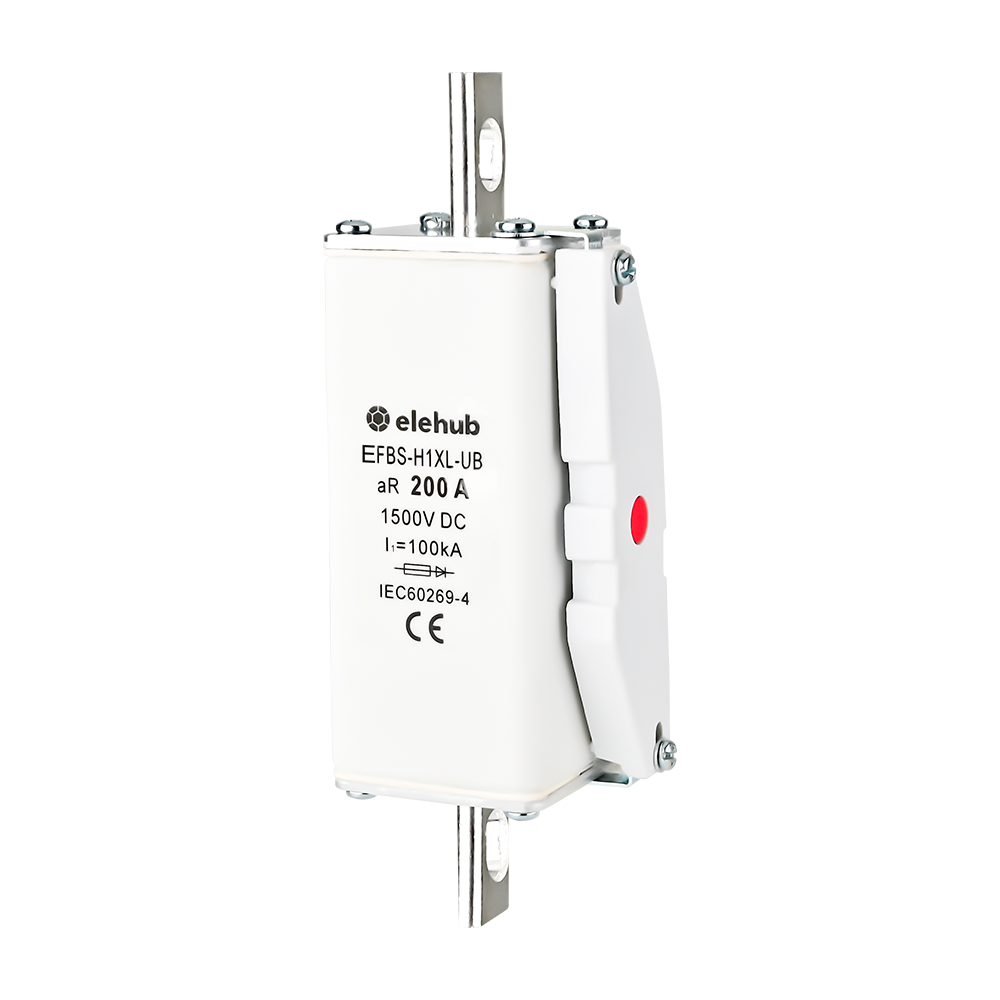
ESS Fuses
ESS fuses provide overcurrent and short-circuit protection for battery energy storage systems and renewable energy infrastructure. They help protect batteries, inverters, and other critical equipment from electrical faults and excessive current conditions.
ESS fuses from ELEHUB support 160A–800A current ratings and up to 1500VDC with 50kA–100kA breaking capacity. Designed as aR fast-acting protection, they ensure rapid overcurrent interruption and safe ESS operation.

Circuit Breakers
Circuit breakers are used for system isolation, fault protection, and safe maintenance operations in energy storage systems. They automatically interrupt abnormal current conditions to prevent equipment damage and electrical hazards. Their fast interruption capability supports stable and reliable ESS operation.
ELEHUB provides different circuit breaker solutions for energy storage systems:
- Air Circuit Breakers (ACBs): Used in high-current large-scale systems requiring flexible protection and reliable control in ESS applications.
- Molded Case Circuit Breakers (MCCBs): Provide dependable overload and short-circuit protection for medium-power energy storage and distribution systems.
- Hydraulic-Magnetic Circuit Breakers (HMCBs): Offer precise trip characteristics and stable performance across temperature variations in ESS environments.

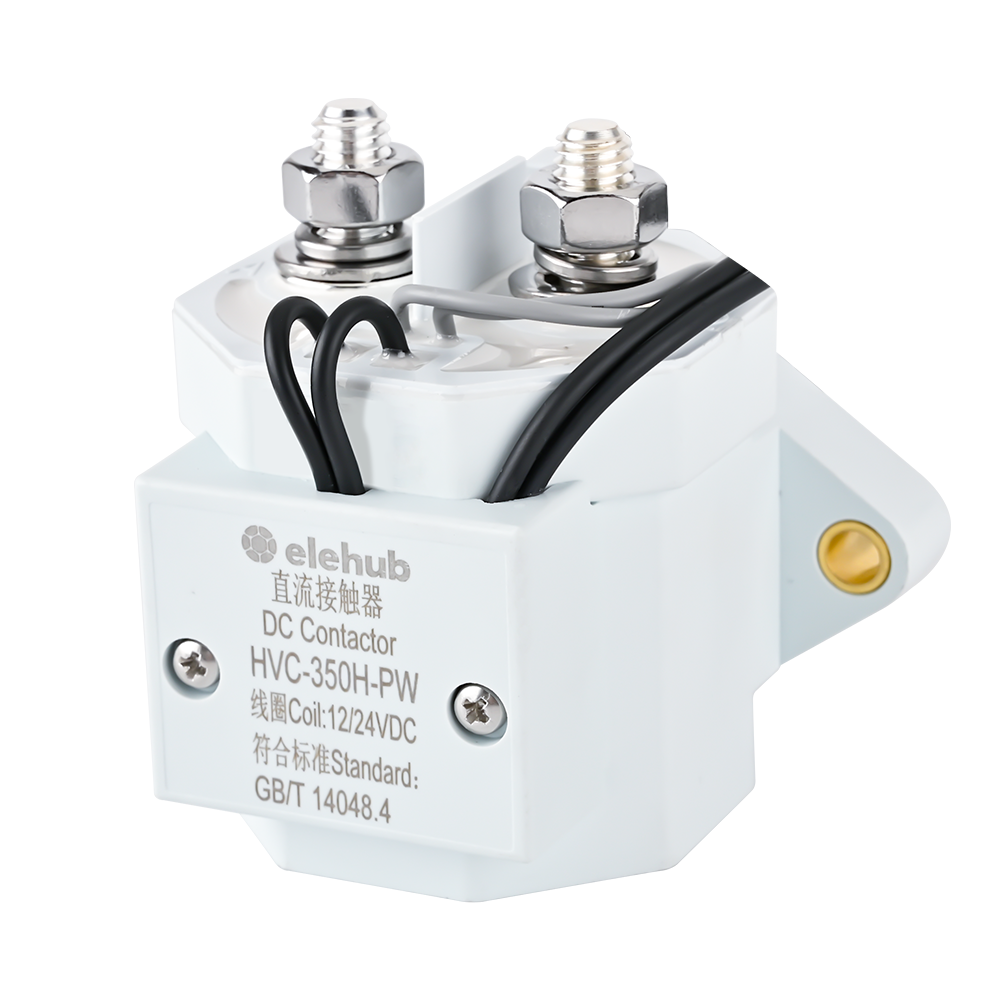
High-Voltage DC Contactors
High-voltage DC contactors enable safe switching and power control in high-voltage battery energy storage applications. They are designed to handle frequent switching operations and high inrush currents in ESS and EV systems. Reliable contactor performance helps improve system safety, automation, and operational efficiency.
ELEHUB HVDC contactors support 1000V–1500V DC systems with current ratings up to 800A, ensuring stable and reliable performance in demanding energy storage and electric vehicle applications.

Disconnector Switch
DC disconnect switches provide manual isolation for maintenance and emergency shutdown in energy storage systems. They ensure complete electrical separation of circuits, enabling safe servicing of ESS components. Their robust mechanical design supports reliable operation under high-voltage DC conditions.
ELEHUB DC disconnect switches are designed for high-voltage DC applications up to 1500V, offering safe disconnection, strong arc suppression capability, and reliable long-term performance in demanding energy storage environments.

Emerging Trends and Future Outlook in Energy Storage
Hybrid Energy Storage Solutions
Modern energy systems are increasingly moving toward hybrid energy storage architectures that combine multiple technologies rather than relying on a single solution. This is because no single storage technology can simultaneously optimize power, energy capacity, cost, response speed, and storage duration.
Hybrid systems integrate different technologies across time scales to achieve system-level optimization:
| Storage Layer | Technologies | Primary Function | Typical Applications |
| Fast Response | Supercapacitors, Flywheels, Batteries | Provides instant power support for grid stability | Frequency regulation, voltage stabilization, transient power support, UPS systems |
| Medium Balancing | Battery Energy Storage Systems (BESS) | Balances daily energy demand and supply fluctuations | Peak shaving, load shifting, renewable smoothing, microgrids, EV charging support |
| Long-Duration | Pumped Hydro Storage (PHS), Compressed Air Energy Storage (CAES), Gravity Storage | Stores and dispatches bulk energy over extended periods | Grid balancing, renewable firming, black start capability, transmission support |
| Seasonal Storage | Hydrogen, Power-to-X systems | Enables long-term and seasonal energy shifting across sectors | Seasonal renewable balancing, industrial feedstock, cross-sector energy integration (power, heat, transport) |
This multi-layer architecture allows each technology to operate within its optimal performance window, improving overall system efficiency, reducing costs, and increasing grid resilience.
No single energy storage technology can optimize power, energy, cost, and duration simultaneously.
Long-Duration Energy Storage (LDES)
Long-duration energy storage is gaining importance to balance increasing renewable penetration, while hydrogen and Power-to-X technologies are emerging for seasonal and cross-sector energy use.
Advances in Storage Materials and Technologies
Advances in solid-state batteries, new electrode materials, and thermal media are improving efficiency, safety, and energy density.
Digitalization and Smart Energy Management
At the same time, AI-driven energy management and smart grids are optimizing storage dispatch, improving real-time system coordination and operational efficiency.
Cost Trends and Commercial Outlook
Battery costs continue to decline, while hydrogen and long-duration storage technologies are expected to become cost-competitive after 2030.
Conclusion
Energy storage technologies are not interchangeable—they are engineering solutions tailored to specific temporal, spatial, and economic requirements:
- Batteries → fast and medium-duration storage
- Mechanical & thermal systems → large-scale long-duration storage
- Hydrogen & chemical storage → seasonal energy balancing
A combination of multiple technologies is essential for building a stable, efficient, and fully renewable energy system.
FAQs
Which energy storage technology is most efficient?
Lithium-ion batteries and supercapacitors currently offer the highest round-trip efficiencies, often exceeding 90%.
What is the best energy storage method for renewable energy?
Battery storage and pumped hydro are currently the most widely used solutions for renewable integration.
What is long-duration energy storage?
Long-duration energy storage (LDES) refers to systems capable of delivering electricity for several hours, days, or even months.
Is hydrogen suitable for energy storage?
Yes. Hydrogen is highly suitable for seasonal and long-duration storage applications, especially for renewable energy systems.