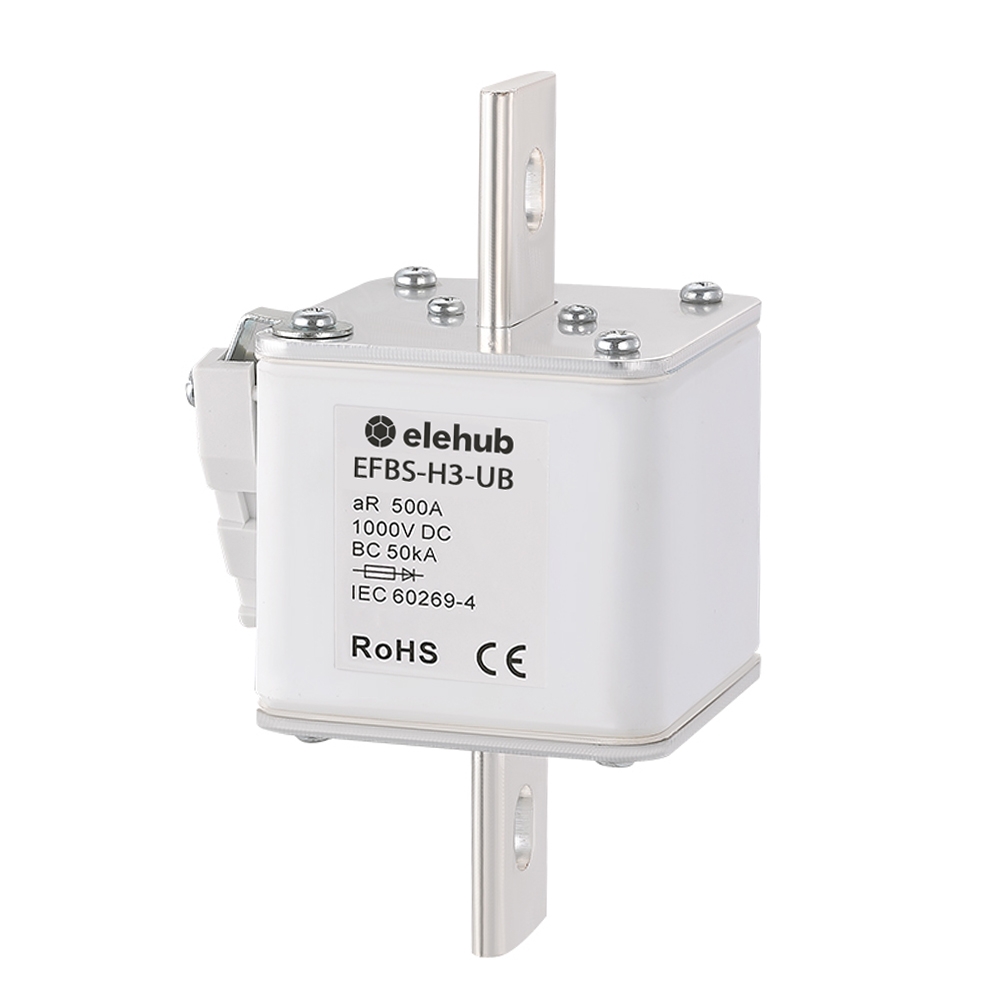
If you’re asking, “Do electric cars have fuses?” the answer is a definitive yes. Unlike gas guzzlers, EVs lean on intricate electrical networks where a single glitch could spark chaos—or a fire.
In this deep dive, let’s unpack everything about EV fuses.
What Fuses Do in Electric Vehicles

What is a fuse? Fuses are the electrical bodyguards—small devices that sacrifice themselves to save the system. Made of a metal strip (typically copper or silver) inside a heat-resistant housing, they self-destruct with excessive current, breaking the circuit before wires get hot or components melt. In electric vehicles, this isn’t just a good idea—it’s necessary.
EVs employ high-voltage systems, typically 400V to 1000V, charging lithium-ion battery packs with enough energy to take you 300 miles on a charge. A short circuit here isn’t a dim bulb—it’s a potential fire.
Consider the dangers: a Tesla Model S battery pack holds 85 kWh of energy—the value of 300,000 AA batteries. Without fuses, a failure could cascade, destroying the $10,000 battery or worse.
Consider fuses to be the protectors of an EV’s electrical system, stepping in during overcharges, shorts, or even a fender-bender that ripples wires. From your daily commute to a charging pit stop, they’re the reason your EV stays safe and sane.
EV Fuses vs. Gas Car Fuses: Key Differences

Fuses look the same, but different types of fuses have different features. EV and gas car fuses exist on planets with different gravitational pulls. Here’s the scoop:
- Voltage: Gas cars employ 12V-48V systems—a car battery in your headlamp or radio. Their fuses need to withstand 10-50 amps tops. EVs? They’re working with 500Vdc to 1000Vdc, with fuses rated 100-600 amps to match battery-to-motor currents. That’s likening a garden hose to a fire hydrant.
- Materials: Typical fuses utilize plastic enclosures and uncoated alloys, sufficient for minimal heat. EV fuses call for melamine-laminated glass fiber or ceramic that can survive 600°C heat spikes from a 500A surge. Why? A battery short can equal 10,000 watts in the blink of an eye.
- Applications: On a gas vehicle, a 15A fuse might save your wipers. In an EV, there’s a 300A fuse guarding the battery pack and a 100A fuse guarding the motor controller. Put a Ford F-150 starter fuse (30A) up against a Rivian R1T battery fuse (400A)—the EV is handling ten times as much power.
This is not just engineering trivia. EVs ditch combustion for electricity, so their fuses are stronger, smarter, and built for extremes.
Here is an interesting fact: an EV fuse can cost $50-$200, whereas a gas vehicle fuse is often less than $5—a testament to the heavy lifting they perform.
Where Are Fuses in Electric Cars?
EV fuse boxes aren’t just hiding in a tidy little package—those are deliberately positioned to protect the vehicle’s electric ecosystem.

You can find them here:
- Battery Pack: The big kahuna—usually a 300A-600A fuse—is found near the battery terminals, usually under the floor or hood (e.g., Tesla Model 3’s penthouse fuse under the back seat). It’s the first stop for powering from the pack.
- Power Inverter: This enclosure converts DC battery juice to AC motor magic—its 100A-200A fuse is within reach, sometimes stashed inside a high-voltage compartment.
- Charging Port: A 50A-150A fuse guards the onboard charger, stashed near the port or under rear panels (e.g., Nissan Leaf’s charge fuse near the trunk).
- Auxiliary Systems: The 12V battery—yes, EVs have one for lights and displays—is utilized to energize smaller 10A-50A fuses in a typical fuse box, typically under the hood or dash.
Real-world peek: Underneath a secured lid in a Hyundai Ioniq 5 are the master battery fuse and side-mounted aux fuses, driver under a plastic shield. However, it’s a challenge to find them.
There are locked-out high-voltage fuses—to which 10mm screws and warning signs should come to mind—because 800V doesn’t fit on a do-it-yourself box.
A repair manual may be, “Warning: High Voltage—Certified Service Only.” And rightfully so: the professionals wear insulated gloves and apply 1000V-rated tools.
Types of EV Fuses & Their Applications
EV fuses aren’t generic. They have a specific type of work. Here are some common types of EV fuses.
1. Battery Fuses: High-current type (200A-600A at 1000Vdc), this fast-acting fuse protects a battery pack short or crash.

2. Auxiliary Fuses: Smaller (10A-50A at 12V-48V), these time-delay fuses handle surges in lights, HVAC, or the infotainment. A 20A fuse might save a Ford Mustang Mach-E’s touchscreen from a glitch.

3. Charger Fuses: Rated 50A-150A, these live in the EV Supply Equipment (EVSE) or onboard charger, preventing overloads during a 50kW DC fast charge. They protect Level 2 home EV chargers from melting.

Applications are specific: a battery fuse stops a wiring fault from burning $15,000 in lithium cells. A motor fuse keeps a 300-horsepower drivetrain smooth. Charger fuses ensure that 480V public station doesn’t zap your system. Further, newer EV fuses can detect and interrupt fault currents in microseconds.
Common EV Fuse Issues and Solutions
Short Circuits: Wet wiring (e.g., flood-damaged EV) or a pinched cable from a crash.
Overloading: Towing a trailer at max capacity or fast-charging a cold battery (e.g., 150kW on a Bolt). Fuses pop to save the day.
Wear: After 5-10 years, heat cycles weaken metal. This is rare, but real.
Solutions: Test with a multimeter (0 ohms means blown). Replace with an OEM fuse.
How to prevent these issues? Avoid aftermarket junk—cheap fuses fail fast. Stats: 10% of EV repairs tie to electrical faults, fuses often the fix (NHTSA data). Keep a spare 12V fuse kit ($15) in your trunk.
The Evolution of EV Fuses
Fuses aren’t static—they’re evolving with EVs’ electric revolution. Smart fuses, with sensors, monitor current and temp, texting a car’s computer (or app) before failing. Self-resetting fuses heal after a surge, slashing shop visits.
Seen in prototypes, they’re inching toward production.
Sustainability is also a new way, too. Recyclable ceramics and lead-free alloys cut environmental impact—key as EVs aim carbon-neutral. In the future? Smarter, greener, and tougher—fuses as high-tech as the cars they protect.
EV fuses are tougher than gas car fuses, scattered across high-tech systems, and evolving with smart tech. Curious about more EV fuses? ELEHUB provides trusted-quality EV fuses and other DC electrical components. Check the EFB1000 500ADC 1000V Fast Acting Fuse and other EV fuses!
FAQs About EV Fuses
Do all electric cars have fuses?
Yes. Every EV uses fuses to guard circuits. No exceptions.
How often do EV fuses need replacing?
Rarely, most last a decade unless zapped by shorts or crashes. High-voltage fuses might hit 100,000 miles unscathed.
Are EV fuses expensive?
Generally, low-voltage EV fuses: $5-$20 (e.g., 20A for lights). High-voltage ones: $50-$200 (e.g., 400A battery fuse), plus $100-$300 labor.
Can I use a regular car fuse in an electric vehicle?
No. EV fuses handle much higher voltage and current. Using a standard 12V car fuse in a high-voltage EV system is dangerous and can lead to system failure or even fire.
What happens if the main battery fuse blows while driving?
Your EV will shut down immediately or switch to a limp mode. Critical systems lose power to prevent further damage, towing and a professional replacement are required.
Do EV fuses affect vehicle warranties?
Absolutely! Using the wrong fuse rating or non-OEM parts can void your powertrain or battery warranty. Always follow manufacturer specs and certified service recommendations.