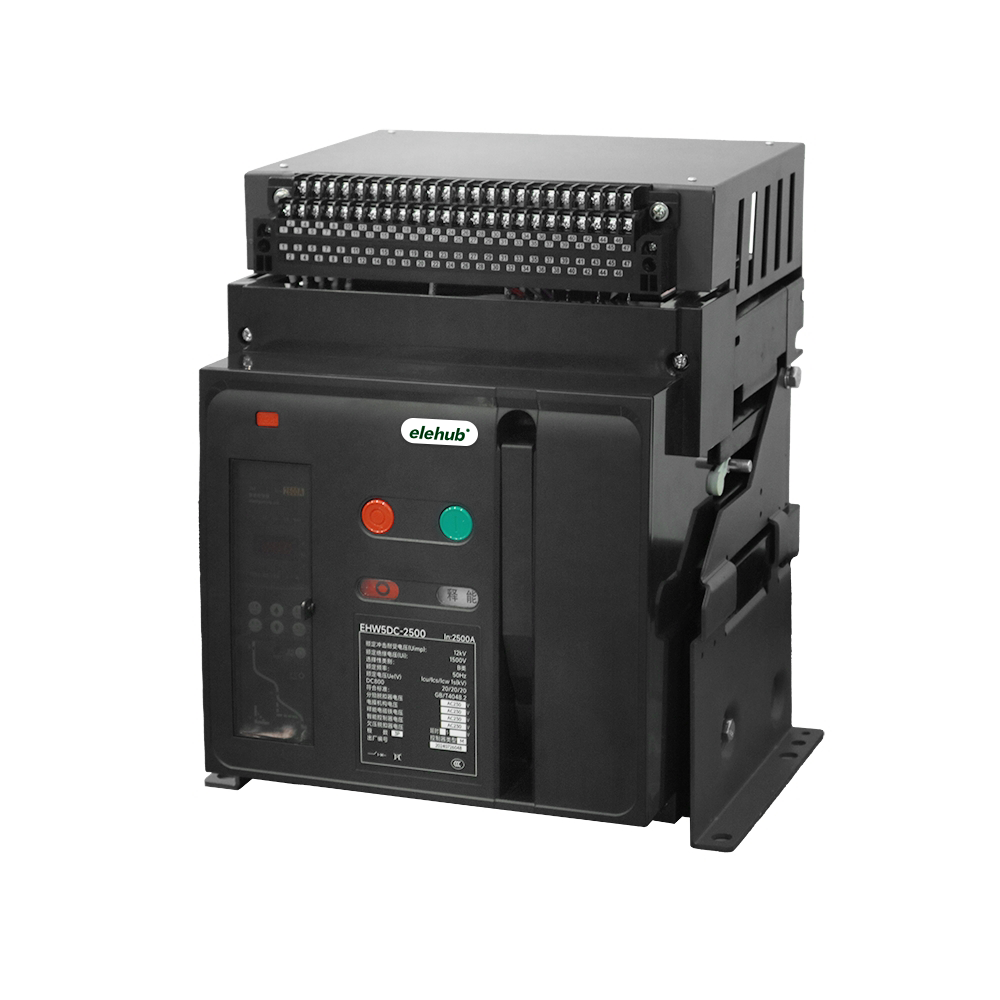
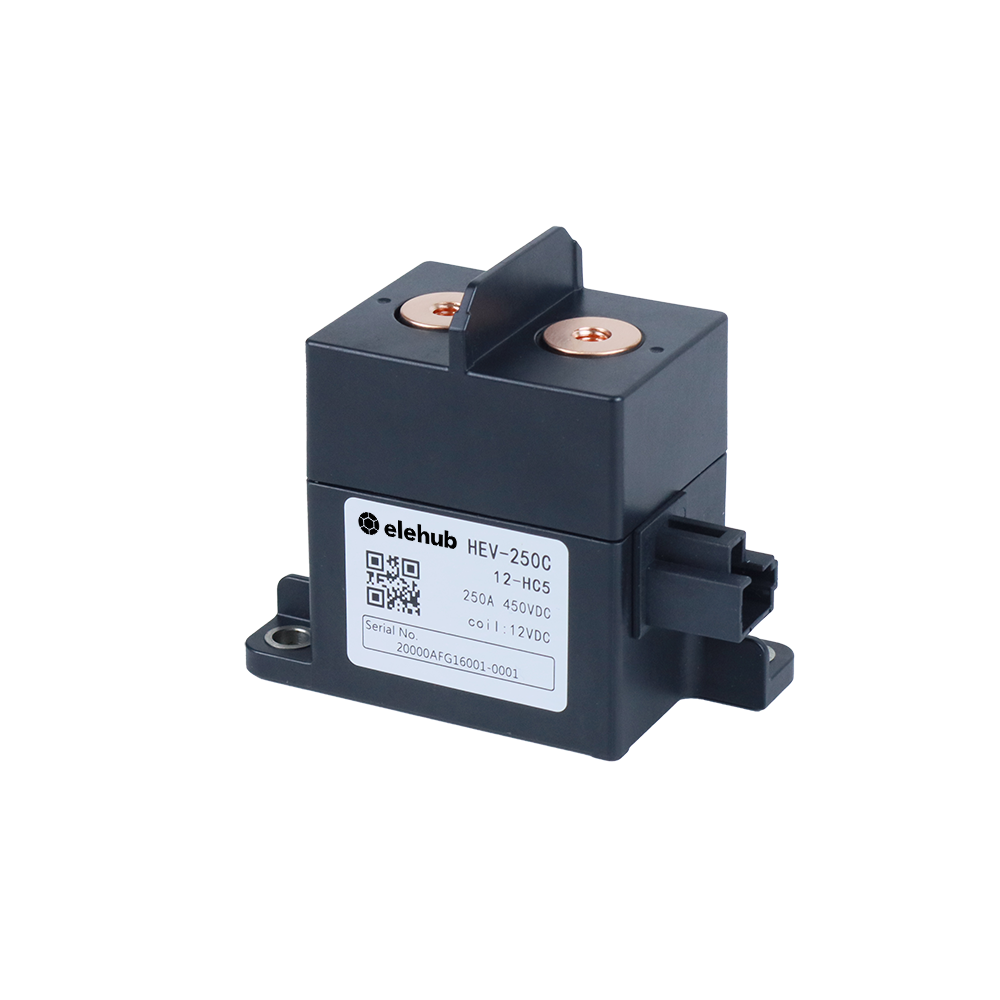
DC contactors play an important role in applications that range from electric vehicles to industrial machinery. Often hidden, they are pivotal in providing dependable switching, control, and safety in DC circuits.
In this guide, we will be learning what DC contactors are, how they are different from AC contactors, their types, and their key applications. By the end of this article, you will have a thorough understanding of DC contactors and the considerations you need to make in choosing them.
What Are DC Contactors?

A DC contactor is an electrically controlled switch for handling and managing high current loads in direct current applications. It works by using an electromagnetic coil to pull contacts together, closing the circuit for current flow and opening it when de-energized to interrupt and protect the circuit.
Since DC power does not cross zero like AC power, DC arcs can be more difficult to extinguish when contacts separate. This implies that the DC contactors must be built with heavier and more elaborate arc-quenching structures.
DC contactors are often used in:
- Operating a large DC load on or off
- Braking or reversal purposes related to DC motors
- Protection against overloads or short circuits
Because DC power is increasingly prevalent in applications such as renewable energy systems, electric vehicles, and energy storage, the importance of DC contactors has soared.
Contemporary DC contactors generally come with some advanced features, such as:
- Coil economizers that reduce coil power consumption after the contactor has been energized
- Magnetic blowouts to direct and extinguish the arc formed during switching
- Overload and voltage-surge protection to protect connected equipment
DC contactors are designed and manufactured to rigorous industry standards that ensure long life, safety, and high performance across a wide range of operating conditions.
How Do DC Contactors Differ from AC Contactors?
While the principle of switching is the same, there are significant differences between DC and AC contactors. Each has a different structure according to the characteristics of DC and AC.
| AC Contactors | DC Contactors | |
| Construction | Laminated iron cores | Solid iron or soft steel cores |
| Contact Gaps | Larger contact gaps | Smaller contact gaps |
| Arc Suppression | Utilize grid arc extinguishing devices | Magnetic arc extinguishing mechanisms |
| Coil Design | Thicker, cylindrical coils with shading coils | Thinner coils with more wire turns |
| Operating Speed | Slower switching speeds | Faster switching speeds (up to 1,200 times per hour) |
| Inrush Current Handling | High inrush currents are typical in AC applications | Lower inrush current ratings |
| Voltage Ratings | Support higher voltage ratings (often up to 1000V) | Operate at lower voltage ratings |
| Current Ratings | Higher current capacities | Lower current ratings |
| Load Types | Handling inductive loads | Resistive loads and applications requiring precise control |
| Operating Environment | Environments with fluctuating loads and varying temperatures | Stable power supplies and often harsher environmental conditions |
| Applications | Industrial machinery
HVAC systems Large lighting installations Motor control systems |
Electric Vehicles (EVs)
Renewable energy systems (solar PV) Battery management systems Telecom equipment |
Read further in our blog: What’s the Difference Between AC and DC Contactors? about the difference between AC and DC contactors.
Types of DC Contactors
DC contactors include several types that can meet every level of voltage, current rating, and other demands on their controls.
High Voltage DC Contactor

High-voltage DC contactors are designed to handle voltages in the hundreds or even thousands of volts. These are highly essential in electric vehicles and EV charging stations, renewable energy systems like solar arrays, and some industrial applications where operating voltages are high.
HVDC contactors can be made from epoxy or ceramic materials, both providing durable insulation and effective arc suppression for safe operation at high voltages. Specialized materials and designs ensure safe and efficient arc extinguishing because any contact separation at high DC voltages can create powerful arcs.
Features:
- Special arc quenching structures
- Insulation for high voltage conditions
- Compliance with strict industry standards
Low-Voltage DC Contactor
A low-voltage DC contactor is for applications below a certain voltage threshold—often used in control circuits, small motor drives, and other low-voltage machinery. They are more compact and less costly than high-voltage options, making them suitable for a range of devices, such as forklifts, golf carts, and small automated equipment. Check out a complete comparison article on Low-Voltage vs. High-Voltage Contactors.
DC Reversing Contactor
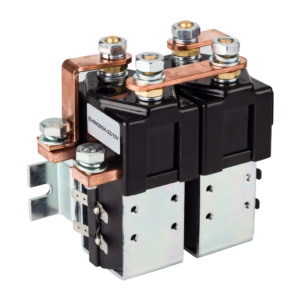
A DC reversing contactor allows you to reverse the current flow in a DC motor to switch its rotation direction. They are essentially two contactors combined in one housing or arranged to achieve reversing functionality.
Such contactors are particularly valuable in golf carts and material handling equipment, where forward and reverse operation of a DC motor is crucial.
Features:
- Dual contactor design for polarity reversal
- Applied to applications needing or requiring bi-directional motor control
- Interlocked to avoid simultaneous operations
Universal DC Contactors

Universal DC contactors are such a kind of contactors developed for more than one voltage range, or with bigger variations in the operational conditions. A universal DC contactor uses less SKU, enabling the system integrator or the equipment manufacturer to decrease inventory complications and improve supply chain economics.
Features:
- Versatility at various voltage and current ratings
- Simplified inventory for the manufacturers
- Useful in modular and scalable system designs
Electromagnetic DC Contactors
Electromagnetic DC contactors use a coil that, upon energization, develops a magnetic field to draw the movable contacts into connection with the fixed contacts. These represent the classic design and enjoy high popularity owing to their robustness and simplicity of operation.
Solid-State DC Contactors
Unlike the contactors for electromagnetic contact, solid-state DC contactors achieve switching through semiconductors. Without moving parts, these contactors can switch silently and tend to be immune to mechanical wear. The solid-state DC contactor is common in applications with fast switching, minimum maintenance requirements, or an absence of chatter about mechanical relays.
DC Contactors Key Applications
DC contactors see a wide range of applications across industries. In many ways, their reliability and toughness determine the efficiency and safety of a system.
Electric Vehicles (EVs)
DC contactors are widely used for battery management and power control in electric vehicles. Given that EV battery packs can reach several hundred volts, high-voltage DC contactors are essential. They help isolate the battery and motor circuits during charging, driving, or fault conditions.

Solar PV Systems
In solar installations, DC contactors are applied in array switching, combiner boxes, and for the isolation of solar panels during maintenance or when protection of the system is needed.
Energy Storage Systems (ESS)
Due to the increased usage of batteries in grid-level energy storage and backup systems, DC contactors manage the charging-discharging cycle of the batteries. They help in managing the interconnection between the battery modules and the power grid or load, improving operational safety by avoiding possible overcurrents in operation.
EV Charging Stations
DC contactors in EV charging stations help with the switching of high-voltage DC loads, ensuring fast circuit isolation during faults and handling different power requirements on multiple charging ports. These rugged devices provide fast and reliable disconnection upon overload or short circuit conditions, enhancing system safety while maintaining efficient operation.
How to Choose the Right DC Contactor Supplier
Choosing the right DC contactor is only part of the work. Finding a dependable supplier who offers the necessary product range, support, and reliability is vital for long-term success.
Product Quality and Compliance
Look for DC contactor suppliers whose products comply with international standards where applicable. High-quality contactors are more reliable and offer a longer service life.
Range of Product Options
A supplier who can provide a wide range of DC contactors, for example, covering several voltages, current ratings, and operating conditions, simplifies the sourcing process. You can streamline projects by dealing with a single supplier for multiple applications.
Reliability
Reliability is not just about the product design. It is of paramount importance that inquiries into the supplier’s reputation, quality control processes, and past performance in the industry are made. A reliable supplier decreases the chances of system failures and expensive downtime.
Customer Support
After-sales and technical support cannot be compromised, especially for technical parts like DC contactors. The supplier should show proper installation instructions, problem-solving support, and speed in replying to questions.
Lead Times
Delays in the receipt of the needed components can cause whole projects to be postponed. Ensure that a supplier is in a position to meet your timeline and has robust supply chain options to reduce occurrences of stock-out situations.
Pricing
As important as price is, it should not always be used as the sole deciding factor. Balance the product price with quality, support, and lead times for the best value when choosing a supplier.
Closing Thoughts
DC contactors form the backbone of many applications, ranging from electric cars to solar installations and industrial automation, all using DC power. Since DC arcs can be more challenging to handle compared to AC arcs, it is paramount to utilize contactors offering robust arc-quenching solutions and meeting rigid safety standards.
Of importance will be ensuring that the selected supplier can meet your needs. Material quality, design reliability, technical support, and lead times can greatly affect the project’s success and cost of operation in the long term. In real work, investing in high-quality DC contactors and a reliable supplier essentially protects the performance and dependability of your whole system.
Elehub: Your Reliable DC Contactor Supplier
In sourcing DC contactors, Elehub has grown to be a trusted partner in the industry. We have specialized in providing a wide range of products for high-voltage systems.

- Wide Product Range: We offer different types of DC contactors, including high voltage DC contactors, DC reversing contactors, and universal DC contactors.
- Rigorous Quality Control: Our products meet international standards in manufacturing processes and product inspection, such as UL and TUV.
- Expert Technical Support: Our engineers provide comprehensive advice on contactor selection, installation, and troubleshooting, helping you optimize performance and address issues quickly.
- Competitive Lead Times: We enjoy a robust supply chain and strategic inventory management to minimize delays, allowing you to keep your projects on schedule.
- Cost-Effective Solutions: While focusing on high quality, we also offer competitive pricing structures, balancing affordability with performance.
Whether it be for electric vehicles, renewable energy systems, or industrial automation, Elehub has everything from our product portfolio to dedicated customer support.
FAQ
Can I use an AC contactor in a DC circuit?
Although it may be theoretically possible in extremely low-voltage or low-current DC applications, it is generally not recommended. AC contactors are designed for handling the alternating current arc, whereas in DC applications, there would be a continuous arc that will accelerate contact wear and perhaps even cause system failures.
How is a relay different from a DC contactor?
A relay would be designed for switching lower currents, whereas a DC contactor handles higher currents and voltages. Further, the arc-extinguishing features in contactors are more robust and feature in heavy-duty applications. Check out our detailed comparison guide: Difference between Relay and Contactor.
How to choose the correct DC contactor for my application?
Consider the key parameters: voltage rating, current rating, coil voltage, operational environment (temperature, humidity, vibrations), and required certifications. The intended application will also order specialized design requirements.
Read more about this question in our blog: How to Choose the Right DC Contactor for Different Applications.
Do DC contactors require maintenance?
Periodic inspections are recommended. Check for signs of wear on the contacts, and any accumulation of dust or debris that may affect DC contactor performance.
Can one DC contactor handle both low-voltage and high-voltage applications?
Typically, you need different contactors for high- and low-voltage tasks. However, certain universal DC contactors offer a broad operating range. Always consult the DC contactor manufacturers’ datasheet or technical support to ensure compatibility.