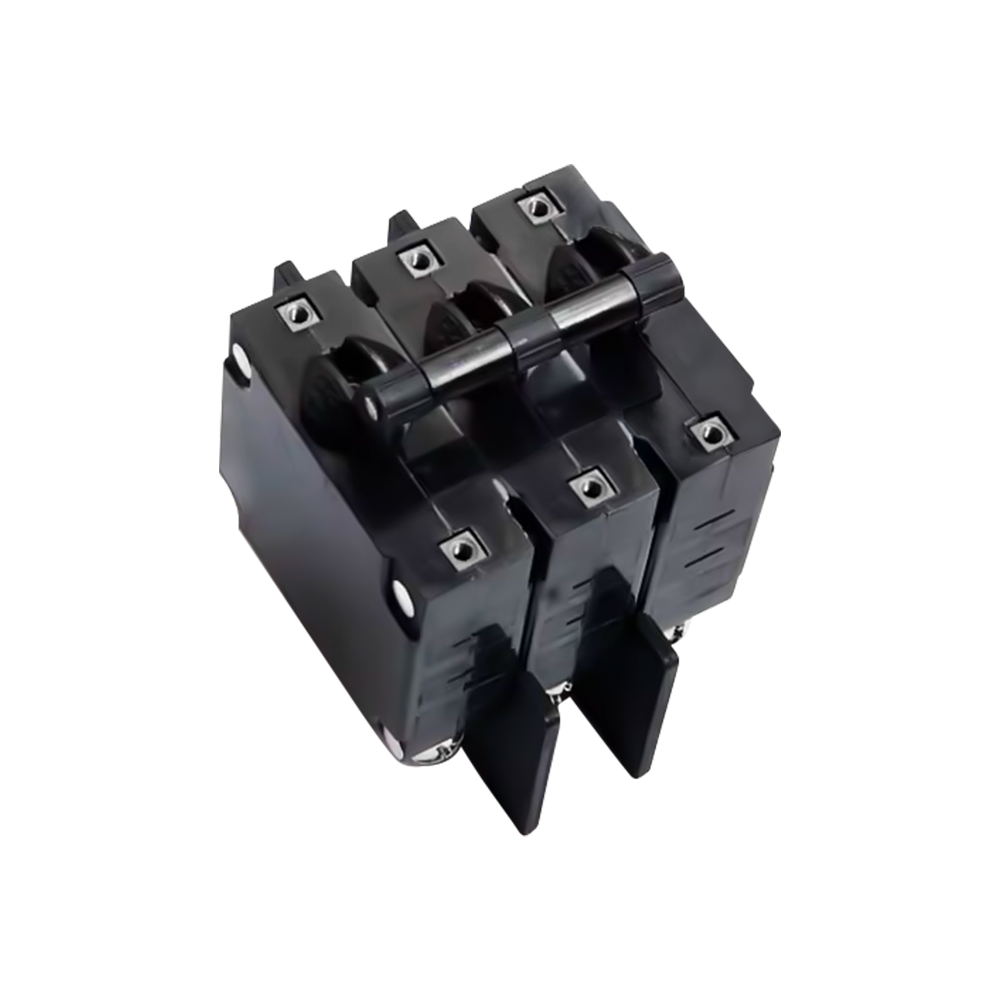
Direct current systems are widely used today. Solar power plants, energy storage systems, electric vehicles, and telecom networks all rely on DC power. To protect these systems, circuit breakers are essential. One important topic that many engineers and installers overlook is DC circuit breaker polarity.
DC behaves differently from AC. Because of this, polarity becomes very important in DC protection devices. Selecting the wrong type can lead to safety risks, equipment damage, or system failure.
This guide explains circuit breaker polarity in simple words, the difference between polarized and non-polarized DC circuit breakers, why polarity matters, and how to choose the right solution for solar, energy storage, EV charging, telecom, and industrial applications.
Meaning of DC Circuit Breaker Polarity
To fully understand what is a circuit breaker, it’s important to explore how it functions in different systems, including DC applications. DC circuit breaker polarity refers to the direction in which current flows through a DC breaker. In a DC system, current flows in only one direction. This is different from AC, where the current changes direction many times per second.

Some DC circuit breakers are designed to work only when connected in a specific direction. These are called polarized breakers. Others can work in either direction. These are known as non-polarized breakers.
Polarity matters because DC arcs are harder to stop than AC arcs. If the breaker is installed incorrectly, it may fail to interrupt the current safely. This can cause overheating, fire, or permanent damage.
Understanding DC circuit breaker polarity is critical for safe system design.
Does Polarity Matter in DC Circuit Breakers (And Why?)
Yes, polarity matters in DC systems.
Polarity is critical because DC arcs behave differently from AC arcs. In DC systems, arcs do not naturally cross zero. This makes it harder to extinguish. The breaker must force the arc into arc chutes or splitter plates.
If the circuit breaker polarity is wrong, the arc may move toward sensitive components. This increases heat and contact erosion. Over time, the breaker may fail to interrupt faults.
Correct DC circuit breaker polarity ensures:
- Safe arc extinction
- Reliable fault interruption
- Longer equipment life
- Reduced fire risk
This is why polarity awareness is essential in DC protection.
What Is a Polarized DC Circuit Breaker?
A polarized DC circuit breaker is designed to operate correctly only when connected with the correct positive and negative terminals. These breakers usually have clear markings such as “+” and “–”.
Inside a polarized DC breaker, arc-extinguishing components are positioned in a fixed direction. They guide the electric arc away from the contacts during interruption. If the current flows in the wrong direction, the arc may not be controlled properly.

Advantages of Polarized DC Breakers
Polarized DC breakers have several benefits in controlled systems:
- Provide very effective arc control when installed correctly, which improves safety and lifespan
- Smaller and more cost-effective for fixed installations
- Suitable for systems where the current direction never changes
In many traditional DC systems, polarized breakers perform very well.
Limitations of Polarized DC Circuit Breakers
Despite their advantages, polarized breakers also have limitations:
- Must be wired carefully. Incorrect wiring can cause failure
- Not suitable for systems with bidirectional current flow
- Maintenance requires trained personnel to avoid polarity errors
Because of these limits, they are less flexible in modern DC applications.
Applications of Polarized DC Circuit Breakers
Polarized breakers are commonly used where the current direction is fixed:
- Simple DC power supplies
- Older solar installations with unidirectional flow
- Certain industrial control circuits
In these cases, DC circuit breaker polarity can be managed safely with proper installation.
What Is a Non-Polarized DC Circuit Breaker?
A non-polarized DC breaker is designed to operate correctly regardless of current direction. It does not require specific positive or negative wiring. Internally, the arc extinguishing system is symmetrical. This allows the breaker to interrupt current flowing in either direction. This design greatly improves installation flexibility and safety. Modern DC systems increasingly use non-polarized designs.

Advantages of Non-Polarized DC Circuit Breakers
Non-polarized breakers offer many important benefits:
- Allow flexible installation without worrying about polarity
- Improve safety by reducing wiring errors
- Support bidirectional current flow
- Ideal for modern renewable and energy storage systems.
Because of these features, the DC circuit breaker polarity becomes less restrictive.
Limitations of Non-Polarized DC Circuit Breakers
Non-polarized breakers also have some drawbacks:
- Typically feature a more complex internal design
- May be slightly more expensive than polarized types
- Often larger in size due to advanced arc suppression mechanisms
However, the benefits often outweigh these limitations.
Applications of Non-Polarized DC Circuit Breakers
Non-polarized breakers are widely used today:
- Photovoltaic systems
- Battery energy storage systems
- EV charging stations
- Telecom and industrial DC panels
In these systems, the current direction may change. A non-polarized DC breaker ensures safe protection at all times.
Key Differences: Polarized vs Non-Polarized DC Circuit Breakers
Understanding the difference between the two types helps in proper selection.

| Aspect | Polarized DC Circuit Breaker | Non-Polarized DC Circuit Breaker |
| Current Direction | Operates in only one fixed direction | Operates in both directions |
| Wiring Requirements | Requires strict polarity during installation | Polarity-independent, reduces wiring risk |
| Applicable Systems | Fixed, stable DC systems | Dynamic or bidirectional DC systems |
| Typical Applications | Simple DC power supplies, older solar PV systems, basic industrial control circuits | EV charging systems, energy storage systems (ESS), modern solar and hybrid systems |
| Arc Suppression | Effective when correctly wired | Effective in all current directions |
| Design Complexity | Simpler internal structure | More advanced arc control design |
| Physical Size | Generally smaller and more compact | Often larger due to enhanced arc suppression |
| Cost | Usually more cost-effective | Slightly higher cost |
| Maintenance | Requires trained personnel to avoid polarity errors | Easier maintenance with lower risk of wiring mistakes |
| Flexibility | Limited flexibility | High flexibility for future system changes |
| Best Selection Tip | Choose when current flow is guaranteed to be unidirectional and cost/space are priorities | Choose when current direction may change or system safety and flexibility are critical |
When comparing DC breaker polarity, non-polarized solutions offer greater flexibility for modern applications.
How to Choose the Right DC Circuit Breaker
Selecting the correct DC circuit breaker is critical for system safety, reliability, and long-term performance. Unlike AC breakers, DC breakers must handle continuous current and challenging arc-extinguishing conditions. Below are the key factors to consider.
Consider current and voltage ratings
Always start by matching the breaker’s rated current and voltage to your system requirements. The breaker must handle normal operating current as well as potential overloads without nuisance tripping. Underrated breakers can overheat or fail, while overrated ones may not provide adequate protection.
Understand current flow direction
Understand how current flows in your system. If the current flows in one fixed direction, a polarized breaker may work. If the current direction can change, a non-polarized solution is safer.
Evaluate system voltage and fault levels
High-voltage DC systems and high short-circuit levels require strong arc-extinguishing capability. In these conditions, non-polarized designs typically provide better fault interruption reliability.
Consider the installation environment
In complex systems, reducing wiring errors is essential. Non-polarized DC circuit breakers simplify installation and help minimize human error related to polarity.
Plan for modern, dynamic applications
Energy storage systems, EV charging infrastructure, and hybrid power systems involve bidirectional current flow. Proper DC breaker polarity handling is essential to protect both equipment and personnel.
DC Circuit Breaker Polarity in Different Applications
As modern energy systems increasingly involve bidirectional power flow, selecting the correct DC circuit breaker polarity becomes essential. Below, we explore how polarity considerations differ across common DC applications.
Solar Photovoltaic Systems
Solar photovoltaic systems are one of the most common DC applications today. Solar panels generate DC power, which is then combined and routed to inverters. In traditional PV systems, current flow is usually unidirectional. However, modern systems with storage can reverse current flow.
In PV combiner boxes and DC distribution panels, DC circuit breaker polarity must be carefully considered. If a polarized breaker is used, installers must strictly follow wiring markings. Any mistake can lead to poor arc suppression. This increases fire risk.
Non-polarized breakers are now widely used in solar systems. They allow flexible wiring and safer installation. They also support systems where energy flows back from batteries to panels or inverters. For solar applications, using a non-polarized DC breaker improves safety and reduces maintenance issues.

Energy Storage Systems (ESS)
Energy storage systems rely heavily on bidirectional current flow. Batteries charge and discharge continuously. This makes circuit breaker polarity extremely important.
In ESS, current can flow from the grid to the battery and back to the load. A polarized breaker is not ideal in such conditions. If installed incorrectly, it may fail under faulty conditions. This can damage batteries and connected equipment.
Non-polarized breakers are the preferred choice for ESS. They handle current flow in both directions safely. They also simplify system design and installation. When dealing with high DC voltages and large battery banks, correct DC circuit breaker polarity management ensures stable and safe operation.
Electric Vehicles and EV Charging Stations
Electric vehicles use DC power at different stages. EV charging stations often include DC fast charging systems. These systems operate at high voltage and current levels. Safety is critical in these environments.
EV charging infrastructure involves power conversion and energy flow in multiple directions. Regenerative braking and grid interaction increase system complexity. In such cases, polarized breakers can limit flexibility.
A non-polarized DC breaker is well-suited for EV charging systems. It allows safe interruption of faults regardless of current direction. It also reduces installation errors and improves overall system reliability. Correct DC breaker polarity selection helps protect users and charging equipment.

Industrial and Telecom Systems
Industrial and telecom systems depend on stable DC power. Control panels, communication equipment, and automation systems require reliable protection. These systems often operate continuously and cannot tolerate downtime.
In telecom systems, battery backup is common. During a power failure, current flows from batteries to loads. When power returns, current flows back to recharge batteries. This bidirectional behavior makes the DC circuit breaker polarity a key consideration.
Non-polarized breakers provide reliable protection in these environments. They support continuous operation and reduce maintenance risks. In industrial automation, where multiple DC sources may exist, correct circuit breaker polarity ensures long-term system stability.

Types of Polarized & Non-polarized Circuit Breakers in ELEHUB
ELEHUB offers both polarized and non-polarized DC circuit breakers designed for modern DC protection needs, supporting voltages up to 1200V and a wide range of current ratings.

|
Model
|
EHB6-63DC
|
EHB6-125DC
|
|
Rated Voltage
|
Up to 1200V
|
Up to 1200V
|
|
Rated Current
|
6A; 10A; 16A; 20A; 25A; 32A; 40A; 50A; 63A;
|
80A; 100A; 125A;
|
|
Breaking Capacity
|
10kA
|
10kA
|
|
Number of Poles
|
1P, 2P, 3P, 4P
|
1P, 2P, 3P, 4P
|
|
Wiring
|
Non-polarized and polarized both available
|
Non-polarized and polarized both available
|


These breakers are suitable for solar combiner boxes, ESS battery racks, EV charging cabinets, and industrial DC panels.
Conclusion
DC power systems are growing fast across many industries. Solar energy, energy storage, electric vehicles, and telecom networks all depend on reliable DC protection. In these systems, DC circuit breaker polarity is not a minor detail. It directly affects safety, fault interruption, and system lifespan. Unlike AC, DC current does not change direction naturally, which makes arc control more difficult. If polarity is ignored or handled incorrectly, a circuit breaker may fail when it is needed the most.
A correct understanding of circuit breaker polarity helps prevent overheating, contact damage, and fire risks. It also ensures that the breaker can interrupt faults quickly and safely. Whether the system is small or large, proper polarity consideration improves overall system stability.
FAQs
Are circuit breakers directional?
Most AC circuit breakers are not directional, but many DC and specialized breakers are polarized. Always check markings like LINE and LOAD or the datasheet before installation to ensure safety and proper operation.
What is DC circuit breaker polarity?
DC circuit breaker polarity defines the required direction of current flow through a DC breaker. Some breakers must be wired in a specific direction, while others work in both directions.
What happens if the DC breaker polarity is wrong?
Incorrect polarity can prevent proper arc extinction. This may cause overheating, contact damage, or breaker failure during faults.
What is a non-polarized DC breaker?
A non-polarized DC breaker works safely regardless of current direction. It allows flexible installation and supports bidirectional power flow.
Where are non-polarized DC breakers commonly used?
They are widely used in solar systems, energy storage systems, EV charging stations, and telecom power systems.
How do I choose the right DC circuit breaker?
Consider voltage rating, current rating, short-circuit capacity, and current flow direction. For modern systems, non-polarized designs are usually the safest choice.
Are DC circuit breakers different from AC circuit breakers?
Yes, DC circuit breakers are different from AC breakers. DC current does not pass through zero, so the arc is harder to stop. Because of this, DC breakers have special arc extinguishing designs. Using an AC breaker in a DC system is unsafe.
Can a non-polarized DC breaker replace a polarized one?
In most modern systems, yes. A non-polarized DC breaker can safely replace a polarized breaker if the voltage and current ratings match. It also improves safety by removing polarity wiring concerns.
Is polarity important for low-voltage DC systems?
Yes, polarity is important even in low-voltage DC systems. Incorrect polarity can still cause arc issues, contact wear, and long-term reliability problems. Correct DC circuit breaker polarity ensures safe operation at all voltage levels.
Do non-polarized DC breakers need special maintenance?
No special maintenance is required. They are designed for long service life. Regular inspection for overheating, loose connections, and mechanical wear is usually sufficient.
Why are non-polarized DC breakers preferred in renewable energy systems?
Renewable energy systems often involve bidirectional power flow. Batteries charge and discharge, and the power direction can change. A non-polarized DC breaker handles these conditions safely and reduces installation errors.
Related Post:
Do Circuit Breakers Work in Both Directions? AC vs DC Breaker Direction Explained