DC arc flash is a critical safety concern in modern electrical systems, particularly with the rise of direct current (DC) applications in electric vehicles (EVs), solar photovoltaic (PV) systems, battery energy storage systems (BESS), and data centers. DC arc flash involves unique challenges due to its continuous energy release. It is essential to understand its hazards, analysis, and mitigation for us.
What is DC Arc Flash? Why It Matters?
A DC arc flash occurs when a short circuit or fault in a DC electrical system creates an uncontrolled release of energy in the form of heat, light, and pressure.
This phenomenon can generate temperatures exceeding 35,000°F, molten metal, and explosive pressure waves, posing severe risks to workers and equipment. Unlike AC systems, where arcs may self-extinguish due to zero-crossing, DC arcing are sustained, increasing their potential for damage.
The growing adoption of DC systems in renewable energy, EVs, and high-tech industries has heightened the need for DC arc flash assessment. Applications like 1500V PV arrays, EV charging stations, and BESS introduce higher voltages and fault currents, amplifying arc flash risks.
What Causes DC Arc Flash?

Source: https://www.ea-guide.com/guides/dc-arc-flash-guide
DC arc flash events are triggered by some common reasons:
- Equipment failure: Damaged cables, connectors, or insulation.
- Human error: Improper maintenance or incorrect tool use.
- Environmental factors: Dust, moisture, or corrosion causing faults.
- Loose connections: Leading to arcing faults in high-current DC systems.
Compared to AC arc flash, DC arcs are harder to extinguish due to the absence of zero-crossing, requiring specialized mitigation techniques. For a deeper comparison, see the AC vs DC arc flash section below.
Physics of DC Arc Flash
DC arc flash produces:
- Thermal energy: Intense heat causes burns or equipment damage.
- Pressure waves: Explosive forces ejecting debris.
- Light and radiation: UV and infrared emissions harming eyes and skin.
- Molten metal: Splashing from melted conductors.
Unlike AC arcs, which fluctuate, DC arcing maintain a steady plasma, often resulting in longer exposure times. This difference impacts DC arc flash and injury severity and DC arc flash boundary calculations.
DC Arc Flash Risks: Where They May Happen?
DC arc flash risks are prevalent in:
- Solar PV systems: High-voltage arrays (1000V–1500V).
- EV charging stations: DC fast chargers with high fault currents.
- Battery Energy Storage Systems (BESS): Large-scale lithium-ion battery banks.
- Data centers: DC microgrids for efficient power distribution.
- Industrial applications: DC motors and rectifiers.
Types of DC Arc Flash Injuries
DC arc flash incidents can cause:
- Thermal burns: Second- or third-degree burns from radiant heat.
- Blast injuries: Concussions or trauma from pressure waves.
- Electrical shock: In hybrid AC/DC systems with mixed currents.
- Eye damage: From intense UV light exposure.
AC vs DC Arc Flash: Key Differences

- Arc Behavior: AC arcs extinguish at zero-crossing (every 8.3ms at 60Hz); DC arcs are continuous.
- Energy Release: AC arcs have higher peak energy; DC arcing have lower peaks but longer duration.
- Calculation Methods: AC uses IEEE 1584; DC relies on NFPA 70E Annex D.8 or empirical models.
Safety Implications
- PPE: Arc in DC may require arc-rated clothing with higher cal/cm² ratings due to sustained exposure.
- Boundaries: DC arc flash boundaries are often larger due to continuous arcs.
- Mitigation: DC systems need fast-acting fuses or DC-specific circuit breakers.
Applications
- AC: Traditional power grids, industrial motors, HVAC systems.
- DC: Renewable energy, EVs, data centers, and battery systems.
Regulatory Standards
Key standards about DC arc flash are the following. Compliance with these standards ensures worker safety and regulatory adherence.
- NFPA 70E (2024): Provides guidelines for DC arc flash risk assessment and PPE selection.
- IEEE 1584: Emerging updates for DC arc flash calculations.
- OSHA 1910.269: Mandates arc flash protection in workplaces.
DC Arc Flash Analysis and Calculations

Source: https://hyteps.com/simulations/arc-flash-calculations/
DC arc flash analysis involves calculating:
- Incident energy: Heat energy (cal/cm²) at a given distance.
- Arc flash boundary: Safe distance to avoid second-degree burns.
- PPE requirements: Arc-rated clothing to match incident energy.
This process ensures compliance with NFPA 70E and protects workers during maintenance or operation.
DC Arc Flash Calculation Methods
Several methods are used for DC arc flash analysis:
- NFPA 70E Annex D.8
- Stokes/Oppenlander Equation
- Wilkins Model
- Software Tools
Example Calculation: For a 1000V DC battery bank with a 10kA fault current and 0.1s clearing time:
- Calculate incident energy using NFPA 70E Annex D.8.
- Determine DC arc flash boundary (e.g., 4 feet for 1.2 cal/cm²).
- Select PPE (e.g., 8 cal/cm² arc-rated suit).
DC Arc Flash Boundary
The DC arc flash boundary is the distance from an arc source where incident energy equals 1.2 cal/cm² (threshold for second-degree burns). It’s calculated using incident energy and depends on:
- Fault current.
- Clearing time.
- System voltage.
Practical Tip: Label boundaries on equipment (e.g., “Arc Flash Boundary: 5 ft”) to ensure workers maintain safe distances.
Conducting a DC Arc Flash Assessment

Source: https://www.creativesafetysupply.com/qa/arc-flash/how-to-determine-arc-flash-boundaries
A DC arc flash assessment evaluates risks and implements safety measures. Follow these steps:
- System Modeling: Map DC circuits, including voltage, fault currents, and equipment specs.
- Data Collection: Gather parameters like short-circuit current and clearing times.
- Incident Energy Calculation: Use NFPA 70E, Wilkins, or software tools.
- Boundary Determination: Calculate the DC arc flash boundary for each piece of equipment.
- PPE Selection: Match arc-rated clothing to incident energy levels.
- Labeling: Apply NFPA 70E-compliant arc flash warning labels.
Mitigation Strategies and Electrical Equipment
Mitigating DC arc flash risks involves:
- Engineering controls: Reducing fault currents and arc energy.
- PPE: Protecting workers from thermal and blast hazards.
- Safe work practices: Training and lockout/tagout (LOTO) procedures.
Types of Electrical Equipment in Mitigation
Electrical equipment plays a critical role in reducing arc flash energy. Look at the equipment:
Fuses

Fast acting fuses interrupt fault currents within milliseconds, reducing arc energy.
- Types: High-speed fuses for PV systems, EV chargers, and BESS.
- Benefits: Lower incident energy and smaller DC arc flash boundaries.
Switches

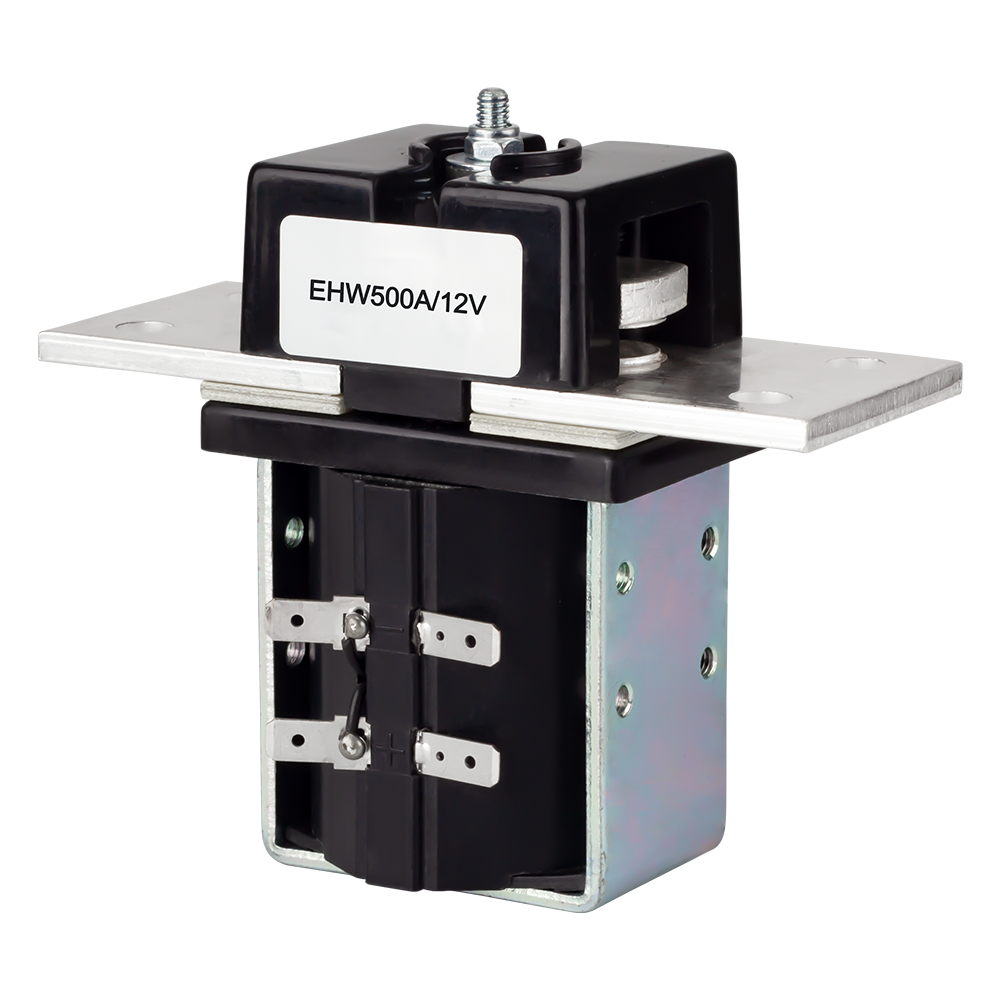
DC isolator switches isolate DC circuits to prevent arc initiation during maintenance.
- Features: Arc-resistant designs for high-voltage DC systems (e.g., 1000V+).
- Application: Used in BESS and data centers for safe de-energization.
Circuit Breakers

DC circuit breakers extinguish arcs without zero-crossing using magnetic or thermal trip mechanisms. They feature adjustable trip settings to minimize arc flash energy.
Other Equipment
- Arc-Resistant Switchgear: Contains arcs to protect workers.
- Remote Racking Devices: Allow operators to engage breakers from outside the DC arc flash boundary.
Engineering Controls
- Current-Limiting Devices: Reduce fault current magnitude.
- Insulation Enhancements: Prevent unintended arcs with robust cable insulation.
- Grounding Strategies: Minimize stray currents in DC systems.
PPE and Safe Work Practices
- Arc-Rated Clothing: Select PPE with cal/cm² ratings matching incident energy (e.g., 8 cal/cm² for 6 cal/cm² systems).
- Training: Educate workers on DC arc flash risks and mitigation.
- Lockout/Tagout (LOTO): Ensure systems are de-energized before maintenance.
DC Arc Fault Protection Technologies
DC arc fault protection focuses on early detection and rapid interruption of dangerous arcing conditions in DC systems, where arcs do not naturally self-extinguish due to the absence of current zero-crossing.
These protection systems are commonly designed in accordance with UL 1699B, particularly for photovoltaic and high-voltage DC applications.
Modern DC arc fault protection relies on advanced detection techniques such as high-frequency current signature analysis, waveform pattern recognition, and rapid shutdown coordination.
Key protection technologies include:
- Arc Fault Circuit Interrupters (AFCIs) for continuous arc monitoring
- Fast-acting DC circuit breakers and fuses for rapid fault interruption
- Rapid shutdown systems in PV and EV applications
- System-level coordination between inverters, batteries, and protection devices
DC arc faults are especially critical in solar PV arrays, battery energy storage systems (BESS), and EV high-voltage platforms, where sustained arcs can quickly escalate into fire hazards.
Overall, DC arc fault protection acts as a preventive and real-time safety layer, complementing arc flash mitigation by reducing arc duration, limiting fault energy, and enabling faster system isolation.
Final Thoughts
DC arc flash is a growing concern as DC systems become integral to renewable energy, EVs, and data centers.
By understanding its causes, conducting thorough DC arc flash analysis, and implementing mitigation strategies like fuses, circuit breakers, and PPE, organizations can protect workers and comply with standards.
FAQ About DC Arc Flash
What is a DC arc flash?
A DC arc flash is an uncontrolled release of thermal energy, pressure, and light caused by a fault in a direct current (DC) electrical system. It poses serious risks such as burns, blast injuries, and equipment damage due to its continuous, non-extinguishing arc behavior.
How is DC arc flash different from AC arc flash?
DC arc flash is continuous because DC current does not have a zero-crossing point like AC. As a result, DC arcs sustain longer, cause deeper burns, require larger arc flash boundaries, and may need higher-rated personal protective equipment (PPE).
What are the 4 damaging effects of an arc flash?
1. Thermal Burns
Arc flashes can generate temperatures over 35,000°F, causing severe second- or third-degree burns instantly upon exposure.
2. Blast Pressure Waves
The sudden expansion of air and vaporized metal creates a violent pressure wave, which can cause concussions, lung injuries, or even throw workers across a room.
3. Molten Metal Splash
Conductors and nearby metal components can melt and spray molten metal, leading to deep burns and damage to eyes and skin.
4. Intense Light and Radiation Exposure
The flash produces intense ultraviolet (UV) and infrared (IR) radiation, which can cause permanent eye damage (such as retinal burns) and skin injuries similar to severe sunburn.
What are the causes of arc flash?
DC arc flashes are typically triggered by:
- Equipment failure (e.g., damaged cables or connectors)
- Human error during maintenance
- Environmental factors like dust or moisture
- Loose electrical connections are causing faults
What is the effective arc flash protection for data center?
Arc flash protection in data centers relies on fast fault clearing devices, selective coordination, arc detection relays, and current-limiting breakers. System design reduces fault energy, while PPE provides last-resort protection. Regular maintenance and labeling ensure safe operation and reduced incident energy exposure.