Data centers deliver power to digital services such as video streaming and cloud computing, all of which require a constant and uninterrupted power supply. Data center energy storage plays a critical role in ensuring operational continuity. Older data center systems relied heavily on backup power from diesel generators and lead-acid batteries. Today, advanced battery energy storage systems provide reliable power to data centers and help maintain a continuous supply for critical operating equipment.
In this tutorial, we will explore how BESS works in data centers, compare battery technologies, and explore real-world applications, benefits, and future trends.
What is a Data Center?
A data center is a large computer facility or room that houses and manages hardware devices. Data centers are generally divided into two categories: main operating devices and supporting devices.

Main devices perform computing and communication operations. These include computing systems and storage devices, while communication devices include switches, firewalls, and routers.
Supporting devices maintain the operation of the main equipment. These include the primary power source, power distribution systems, cooling systems, protection and control circuits, and other auxiliary systems.
What is a BESS?
A Battery Energy Storage System (BESS) is a group of rechargeable batteries combined with inverters, control software, and safety systems that store electricity and release it when needed. In data centers, BESS provides instant backup power, stabilizes voltage and frequency, and supports renewable energy integration.

A rechargeable battery bank used in a data center
By Jelson25 – Own work, CC BY 3.0
https://commons.wikimedia.org/w/index.php?curid=7458278
Battery energy storage systems provide a continuous power supply by reducing dependence on fuel-based generators. BESS systems can also be integrated with renewable energy sources.
These systems are widely used in industries and data centers to ensure uninterrupted power and support decarbonization efforts.
BESS can provide backup power ranging from 15 minutes to several hours, depending on the data center’s demand.
BESS does not replace generators or uninterruptible power supply (UPS) systems; instead, it complements them by addressing their limitations during power outages.
Growing Energy Challenges in Data Centers
Data centers are designed to provide continuous data streaming, digital management, and online services, all of which require high energy demand that often exceeds what the grid can supply quickly. This high energy demand creates economic challenges that are difficult to manage using conventional systems alone. Some key energy challenges faced by data centers are outlined below:
High Power Requirements
Data center energy demand is increasing rapidly. According to various reports, AI-driven data center workloads could increase power consumption by about 150 percent by 2030. This growing demand is driving changes in data center design and pushing the limits of existing power sources and infrastructure.

Estimates of global data center energy consumption from 2023 to 2030
Source: Uptime Intelligence
AI and high-demand machine learning applications increase power density, with single racks consuming significantly higher wattage and requiring advanced cooling methods. Many older data centers are not designed to handle these higher loads, making energy supply and demand management more difficult.
Power Quality Issues
Grid power often includes voltage fluctuations, frequency variations, and harmonic distortions that can disrupt data center operations and damage sensitive equipment. Even minor power quality issues can trigger server reboots and UPS alarms, leading to unplanned downtime.
Such downtime can be extremely costly. According to reports, approximately two-thirds of data center outages result in losses exceeding $100,000.
Limited Backup Power
Traditionally, data centers rely on UPS systems and diesel generators for backup power. UPS systems typically provide only five to ten minutes of runtime, while diesel generators supply power during extended outages.

A large UPS (Uninterruptible Power Supply) is being installed in a data center
By Cgxke – Own work, Public Domain
https://commons.wikimedia.org/w/index.php?curid=5722183
However, generators are expensive to operate, require fuel storage, produce noise, and are not always reliable during startup. They also require regular testing and maintenance.
For longer outages, these solutions are less effective, and increasingly strict emissions regulations further limit the use of diesel generators.
High Energy Costs
Data centers also face high energy costs due to demand charges, which are based on the highest fifteen-minute power usage recorded in a billing period. These demand charges significantly increase overall energy expenses and place additional strain on data center budgets.
👉 Further Reading:
How to Ensure Optimal Energy Efficiency in a Data Center: PUE, Power Consumption & Best Practices
BESS vs Diesel Generators
The table below compares BESS and diesel generators across key operational metrics relevant to modern data centers:
|
Technical Features
|
BESS (Battery Energy Storage System)
|
Diesel Generators
|
|
Startup Time
|
Instantaneous
|
Several minutes
|
|
Power Output Stability
|
Smooth, constant supply
|
Fluctuates during the start
|
|
Energy Storage process
|
Chemical/electrical
|
Mechanical
|
|
Efficiency
|
High efficiency
|
Lower efficiency
|
|
Operational Noise
|
Silent operation
|
Loud mechanical noise
|
|
Backup Duration
|
Limited by battery capacity
|
Can run indefinitely with fuel
|
|
Energy Source
|
Stored electricity
|
Diesel fuel
|
|
Maintenance
|
Low maintenance
|
High; frequent servicing required
|
|
Scalability
|
Easily scalable over time
|
Limited by number of generators
|
|
Emissions
|
Zero on-site emissions
|
High emissions
|
Which is better?
BESS is the better choice for modern data centers when fast response, power quality, energy efficiency, and sustainability are priorities. BESS delivers instant backup power, operates silently, requires minimal maintenance, and supports renewable energy integration—making it ideal for short- to medium-duration outages and peak shaving.
However, diesel generators still play a role in extended, multi-hour or multi-day outages. As a result, most data centers adopt a hybrid approach, using BESS for immediate power continuity and diesel generators as long-duration backup.
In summary, BESS is superior for reliability, efficiency, and sustainability, while diesel generators remain a secondary solution for long-duration backup scenarios.
Explain the Role of Energy Storage in Data Center Operations

Reduces Cost
There are several methods used to reduce data center energy expenses without affecting performance. Smart energy management techniques help lower operating costs effectively.
Peak Shaving
By storing energy during off-peak hours when electricity rates are low, a BESS supplies power to data center loads during peak hours. According to data from the National Renewable Energy Laboratory, peak shaving can reduce data center electricity bills by up to 30 percent. This results in annual savings of millions of dollars for large facilities.
Reduced Use of Diesel Generators
Conventional diesel generators consume expensive fuel for backup power, costing approximately one dollar per kilowatt-hour. In contrast, a BESS can supply one kilowatt-hour for around ten cents. Using battery storage significantly reduces fuel-related expenses.
Reliable Power Support from BESS
During grid failures, power interruptions increase downtime costs. Battery energy storage systems provide a continuous and stable power supply, helping data centers remain operational.
Zero Downtime
Battery energy storage offers instant backup power, preventing costly outages. According to the Uptime Institute, downtime costs range from $100,000 to $500,000 per hour. A BESS significantly reduces this risk.
Reduced Dependence on the Grid
When grid outages occur, battery energy storage continues to supply power. For example, during a major outage in 2023, Google’s Belgium data center used battery storage to keep all systems online, saving more than two million dollars in potential losses.
The diagram below illustrates a typical off-grid data center power architecture, where renewable energy sources, battery energy storage, diesel generators, and UPS systems operate together to deliver resilient, continuous power to mission-critical IT infrastructure.

Source: flexgen.com
A More Reliable Option Than Diesel
Diesel generators require high maintenance, generate noise, and operate at around 95 percent efficiency. Battery energy storage systems, by comparison, offer up to 99.9 percent reliability with no noise or emissions.
Renewable Energy Supported

Renewable energy generated during the day or night is stored in the BESS, even when sunlight is unavailable or wind speeds are low. For example, Apple’s Environmental Progress Report states that Apple’s Nevada data center uses 80 percent solar energy supported by battery storage.
Although renewable sources fluctuate, battery energy storage systems maintain up to 90 percent power uniformity, ensuring a steady and efficient energy supply for data centers.
Amazon also operates its data centers using 100 percent renewable energy integration supported by BESS.

Reduced Environmental Impact
Battery energy storage systems do not rely on fossil fuels, reducing emissions by approximately 60 percent compared to conventional grid power. This significantly improves data center sustainability.
Environmentally friendly data centers attract more investors and clients. For example, Meta’s Sweden data center uses battery storage and has reduced CO₂ emissions by more than 100,000 tons.
Advanced Batteries
Modern data centers now use advanced and cost-effective battery technologies for energy storage, such as:
Lithium-ion batteries, which offer a cost-effective solution for battery storage systems. New battery packs provide double the power in half the space compared to older models, improving data center reliability.
Solid-state batteries are expected to double energy capacity by 2027, while Tesla’s Megapack delivers up to 3 MWh per unit for hyperscale data center applications.
Optimal Location for Energy Storage Systems in Data Center Infrastructure
There isn’t a single “best” spot for energy storage in data center infrastructure—the optimal location depends on what role the system is meant to play (UPS replacement, grid services, renewable smoothing, AI load buffering, etc.). In practice, the strongest designs use a layered placement strategy.
Below is a clear, decision-driven breakdown used in modern data centers:
| ESS Location | Physical Placement | Primary Role | Key Advantages | Main Limitations | Best Use Cases |
| Front-of-the-Meter (FTM) | Utility side, before main service entrance | Peak shaving, grid services | Sees full facility load; enables market participation; utility-friendly | No protection against internal failures; not a UPS | Demand charge reduction, grid support, utility-constrained regions |
| Behind-the-Meter (Facility-Level BESS) | Between utility connection and UPS/switchgear | Core microgrid energy management | Balances resilience + economics; supports islanding and renewables; buffers AI spikes | Higher integration complexity; advanced controls required | AI data centers, hyperscale, renewable-integrated microgrids |
| UPS-Integrated Storage | Within UPS rooms or cabinets | Instant ride-through, power quality | Millisecond response; proven architecture; direct IT load protection | Limited runtime; higher $/kWh | Mission-critical uptime, Tier III/Tier IV facilities |
| Row-Level / Rack-Level Storage | Near IT racks or busway | Local load smoothing | Handles extreme transient loads; enables higher rack density | Cost, thermal challenges, early adoption stage | High-density AI/ML clusters (50–100 kW+ racks) |
| Outdoor Containerized BESS | Dedicated energy yard or campus perimeter | Scalable long-duration storage | Modular, safer fire zoning, minimal white-space impact | Weather exposure; site planning needed | Large campuses, rapid expansion, diesel reduction strategies |
Types of Energy Storage Used in Data Centers
There are different batteries used in data centers for storage systems:
| Battery Type | Adoption in Data Centers | Cycle Life | Typical SOC Range | Comparison with Other Technologies | Key Features | Main Limitations |
| Valve-Regulated Lead-Acid (VRLA) | Up to 20% | 300–800 cycles | Discharged to ~70% | Older technology, still in use | Low upfront cost, mature and well-understood technology | Frequent replacement, high lifecycle cost, requires ventilation due to hydrogen gas release |
| Lithium Iron Phosphate (LFP) | Up to 70% | 5,000–6,000 cycles | Discharged to ~20% | Best replacement for lead-acid batteries | High safety, long cycle life, higher energy density than lead-acid, widely used in servers | Lower recycling efficiency, higher cost due to non-metallic materials |
| Lithium Nickel Manganese Cobalt (NMC) | Up to 25% | ~4,000 cycles | Discharged to ~20% | Alternative to LFP in space-limited applications | High energy density, compact size | Higher heat generation, requires cooling, faster degradation |
| Sodium-Ion | Projected ~30% by 2030 | ~5,000 cycles | 10–90% SOC | Emerging alternative to lithium-based batteries | Low material cost, environmentally friendly, stable chemistry, low thermal runaway risk | Lower energy density, larger and heavier cells |
| Redox Flow | <2% | Up to 5,000 cycles | 0–100% SOC | Lifecycle competitor to LFP when installation cost is low | Very long life, easy recycling, highly scalable energy capacity | Complex system design, high upfront cost, low energy density |
| Nickel-Zinc | <1% | 500–250,000 cycles (DOD dependent) | Discharged to ~30% | Higher density than conventional batteries | Stable chemistry, recyclable materials, long service life | Relatively new technology with limited adoption |
| Solid-State | Limited adoption | 8,000–10,000 cycles | Up to 80% SOC in ~10 minutes | Advanced alternative to LFP | Non-flammable solid electrolyte, high energy density, long lifespan | High cost, complex manufacturing, specialized equipment required |
How to Choose the Right BESS for a Data Center
Selecting the right Battery Energy Storage System (BESS) is essential for ensuring reliable operation, cost efficiency, and long-term scalability in data center environments. The following factors should be carefully evaluated during system design and deployment:
Required Backup Duration
Determine whether the BESS is intended for short-term ride-through and peak shaving or for longer backup periods during extended grid outages. Capacity should match the data center’s critical load and uptime requirements.
Power Density and Rack-level Deployment
High power density batteries enable compact, rack-level or containerized installations, which are especially important for space-constrained data centers and high-density AI workloads.
Battery Chemistry
LFP batteries offer high safety and long cycle life, NMC provides higher energy density for space-limited applications, and sodium-ion batteries are emerging as a cost-effective and environmentally friendly alternative.
Integration with UPS and Generators
The BESS should seamlessly integrate with existing UPS systems and backup generators to provide instant power during outages and smooth transitions for long-duration backup.
Compliance with Standards
Ensure the system complies with applicable safety, performance, and fire protection standards such as UL, IEC, and NFPA. Compliance reduces operational risk, supports regulatory approval, and enhances overall system reliability.
Lifecycle Cost vs. Upfront Cost
Evaluate the total cost of ownership, including installation, maintenance, replacement cycles, and efficiency gains, rather than focusing solely on initial investment.
By aligning these factors with operational goals and future growth plans, data center operators can deploy a BESS that delivers reliable power, lower energy costs, and long-term sustainability.
Key Components of a Data Center Energy Storage System
There are different components that exist in the energy storage system of data centers that perform power delivery functions.

Source: Battery Energy Storage Systems and Technologies: A Review
Battery Packs
Battery pack: the main component of an energy storage system that uses lithium-ion chemistry, with cells connected in a grouped pack form.
Battery Management System
This system provides safe operation of the energy storage system and performs charging voltage and temperature monitoring, along with control of overheating and overcharging conditions.
Power Conversion System
The power conversion system includes different components, such as an inverter that transforms DC power from batteries into AC power for operating data center modules.
Cooling System
This system maintains the temperature of the energy storage system by preventing overheating, which helps extend system lifespan and maintain overall performance.
UPS & Generator Integration
For a continuous power supply, battery storage systems operate with UPS units and backup generators, providing instant power to the system before the generator starts.
Monitoring & Control
The system enables real-time performance monitoring and control, which helps maintain continuous operation and allows timely maintenance when needed.
Power Distribution
Components such as switchgear and transfer switches manage power flow and maintain a continuous power supply from storage systems to data center devices.
Communication System
For proper operation monitoring, the energy storage system communicates with the PCS, grid operators, and the battery management system.
Types of ELEHUB Components Used in Data Center Energy Storage System
All components of the battery storage system work together to maintain the power supply during outages and manage fluctuations that occur in renewable energy systems. The reliable operation of data centers depends not only on battery chemistry but also on monitoring, power control, and electrical protection systems.

DC power systems play a critical role in these operations. ELEHUB provides a comprehensive range of components designed specifically for BESS applications in data centers, including:
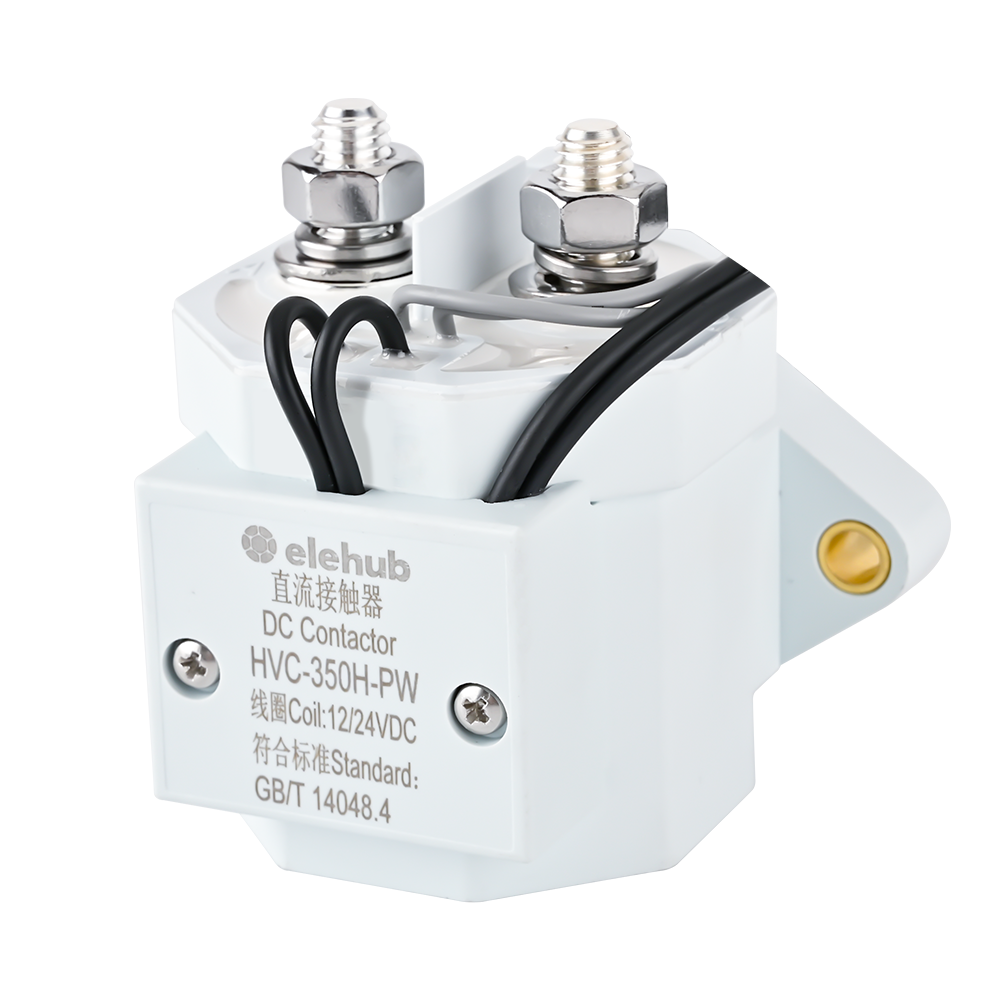
- High-voltage DC contactors: Provide safe isolation and reliable switching of battery systems during normal operation and fault conditions.
- DC fuses: Provide fast-acting protection against short circuits and overcurrent conditions, minimizing fire risk and protecting critical BESS components.
- Hydraulic-magnetic circuit breakers: Offer precise and repeatable overcurrent protection, with strong resistance to inrush currents and stable performance across temperature variations.
- DC shunts: Enable accurate current measurement, support real-time monitoring and control, and help maintain overall battery health.
- Surge protection devices (SPDs): Safeguard sensitive BESS components from transient overvoltage events and electrical surges.
All these solutions offered by ELEHUB ensure the safe use of BESS in data centers by following international standards, enabling reliable operation, and extending equipment service life.
Applications of BESS in Data Centers
Now battery energy storage systems work as building blocks of data centers for continuous supply, and their common uses are as:
Power Quality Maintenance
Power coming from the grid faces voltage surges, sags, harmonics, and frequency changes. These factors can cause device shutdowns and affect the operation of sensitive system components.
The battery energy storage system resolves these issues with the help of a power conversion system. When outages occur, it responds in a very short time to provide voltage stability and frequency regulation. It delivers constant power to data centers by reducing voltage and frequency variations. This feature minimizes downtime and protects sensitive system parts, such as hardware, from faults.
Longer Backup Power
UPS systems provide immediate power, and similarly, BESS delivers power to data centers. However, UPS systems have a short runtime, whereas BESS provides longer-duration power, ranging from minutes to hours depending on capacity.
These features also make BESS a replacement for diesel generators, reducing fuel costs, minimizing emissions, and lowering maintenance requirements.
Load Management
BESS minimizes operational costs by managing load spikes and high-demand charges. If the load varies abruptly, BESS releases energy instantly to balance the load. This keeps grid power stable and minimizes peak charge increases.
Utility base charges are high for each month based on 15-minute peak intervals, but peak shaving with a BESS system helps reduce these fees.
Peak shaving and load management not only reduce costs but also increase overall system efficiency, since BESS charges during off-peak hours and discharges during peak hours to create a more efficient system.
Operational Benefits of Energy Storage in Data Centers
BESS systems not only provide backup power but also offer operational, financial, and environmental benefits for data centers. Some operational benefits of energy storage in data centers are detailed explained below.
Operational Features
BESS enables high-reliability and resilient data center operations. Through grid power conditioning and surge management, it ensures the safe operation of storage systems, servers, and networking equipment, helping to avoid shutdowns. This results in fewer alarm triggers and reduces false transfers to generators.
Main Operational Benefits Include:
Grid-Stable Operation
Batteries balance supply and demand, minimize frequency and voltage variations, and support stable grid operation.
Flexible Operations
They enable flexible system operation by rapidly shifting power and providing greater control over energy management.
Reduced Carbon Emissions
By minimizing the use of fuel-operated plants, BESS supports cleaner energy systems and a safer environment.
Electrification Compatibility
Batteries play an important role in transportation electrification, heating, and the transition of industries from fuel-based systems to battery-based solutions.
Microgrids
Through modular designs, batteries enable self-sustaining microgrids, particularly suitable for remote locations.
Safety, Reliability, & Compliance
- Reliable and safe operation is critical for data center energy storage systems. These systems comply with international standards such as IEEE, IEC, UL, and NFPA.
- Proper monitoring, effective thermal management, and fire suppression methods are essential to prevent overheating.
- Regular inspection, testing, and maintenance help extend system life and ensure long-term reliable operation.
Future Trends in Data Center Energy Storage
Technological Growth
Advanced technologies such as solid-state batteries provide safe operation with high energy density, a longer working life, and reduced system cost.
AI-Based Optimization
Artificial intelligence is also integrated with energy systems to provide accurate monitoring, proper maintenance, and continuous operation.
Sustainable
To create systems with less environmental impact, industries use battery recycling, which also makes energy storage a more cost-effective option.
Regulations
Different countries are urging industries to follow battery management systems to protect the environment from hazardous materials, while also introducing regulations and incentives.
Emerging Markets Introduction
Since battery management systems are easily available, new companies prefer these systems because they are an economical option.
Conclusion
Battery Energy Storage Systems (BESS) are a critical backbone for modern data centers, enabling continuous, reliable, and high-performance digital operations.
By leveraging BESS, data centers can reduce energy costs, minimize downtime through peak shaving and load balancing, extend backup duration, and seamlessly integrate renewable energy sources, all while supporting long-term sustainability goals.
The reliable operation of BESS depends on advanced DC electrical components, monitoring systems, and protective devices to ensure safe switching, accurate current measurement, and surge protection. Proper integration of these systems guarantees resilient power delivery for even the most demanding workloads.
With ELEHUB’s portfolio of high-quality DC contactors, fuses, circuit breakers, shunts, and surge protection devices, data center operators gain trusted, standards-compliant solutions that enhance system reliability, maximize uptime, and support scalable energy storage for hyperscale and edge deployments.
🔍 FAQs
How does BESS differ from traditional UPS systems in data centers?
Conventional UPS systems deliver power for short durations, whereas BESS provides longer energy storage and is also compatible with renewable energy sources.
Can BESS fully replace diesel generators in data centers?
No. BESS minimizes generator runtime and manages power for short- to medium-duration outages, but some data centers still use diesel generators for extended outages. Hybrid systems combining BESS, generators, and renewables are commonly employed.
What factors should data centers consider when deploying BESS?
Main factors include required duration and capacity, safety and thermal management, integration with UPS and generators, and the overall system cost.
Can BESS integrate with renewable energy sources like solar and wind?
The battery energy storage system has features for getting energy from wind turbines and solar panels and using it when required for a continuous supply for data storage centers.
How does BESS improve data center efficiency?
It comes with different features like managing load variations. Peak shaving diesel generator operations help maintain energy use and minimize working system cost.
What safety measures are included in BESS for data centers?
The BESS system has a heat-managing monitoring system, fuses, surge protection devices, and a hydraulic magnetic breaker to control overheating, overcurrent, and short circuit operations.
How long can BESS provide backup power for data centers?
A battery energy storage system delivers power from minutes to many hours, depending on the capacity of the system, which can manage short- to mid-level outages effectively.
Does BESS require regular maintenance?
Yes, the battery system needed maintenance, but less than diesel generators, proper inspection, monitoring, and battery working condition monitoring for longer operation.