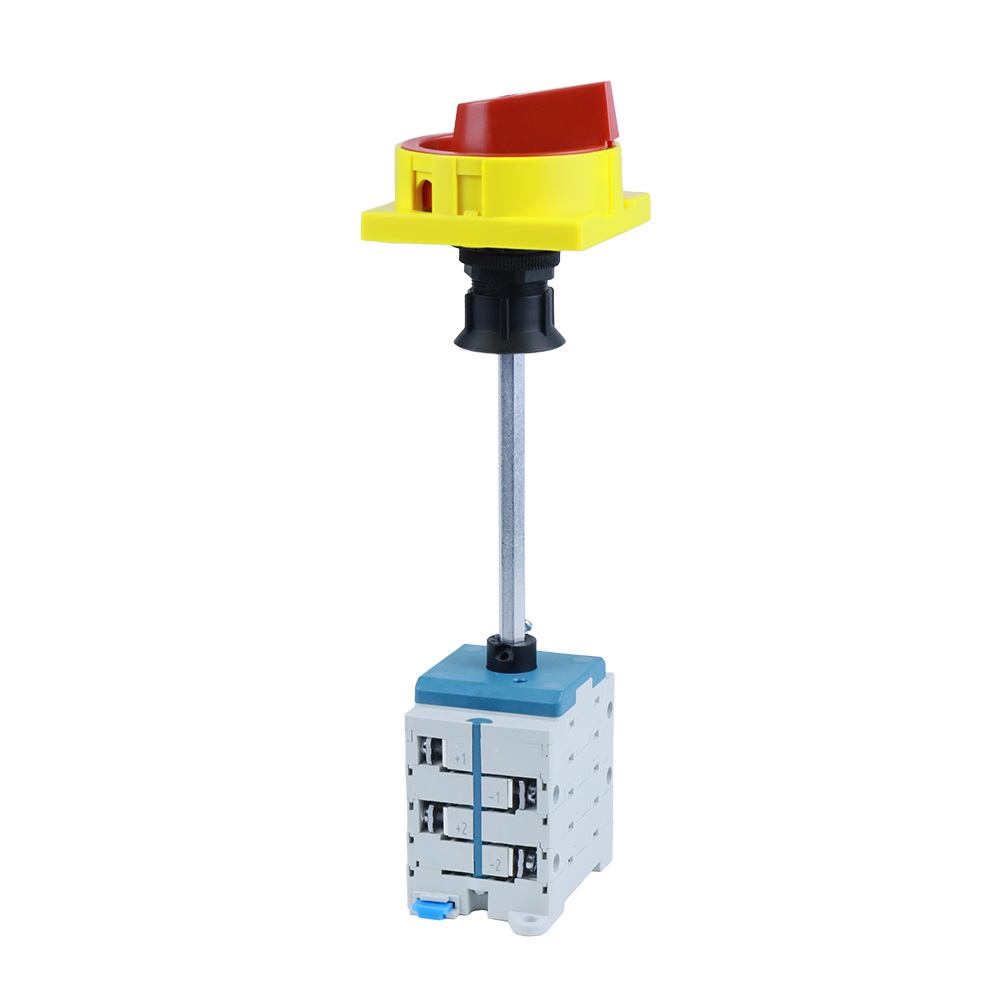
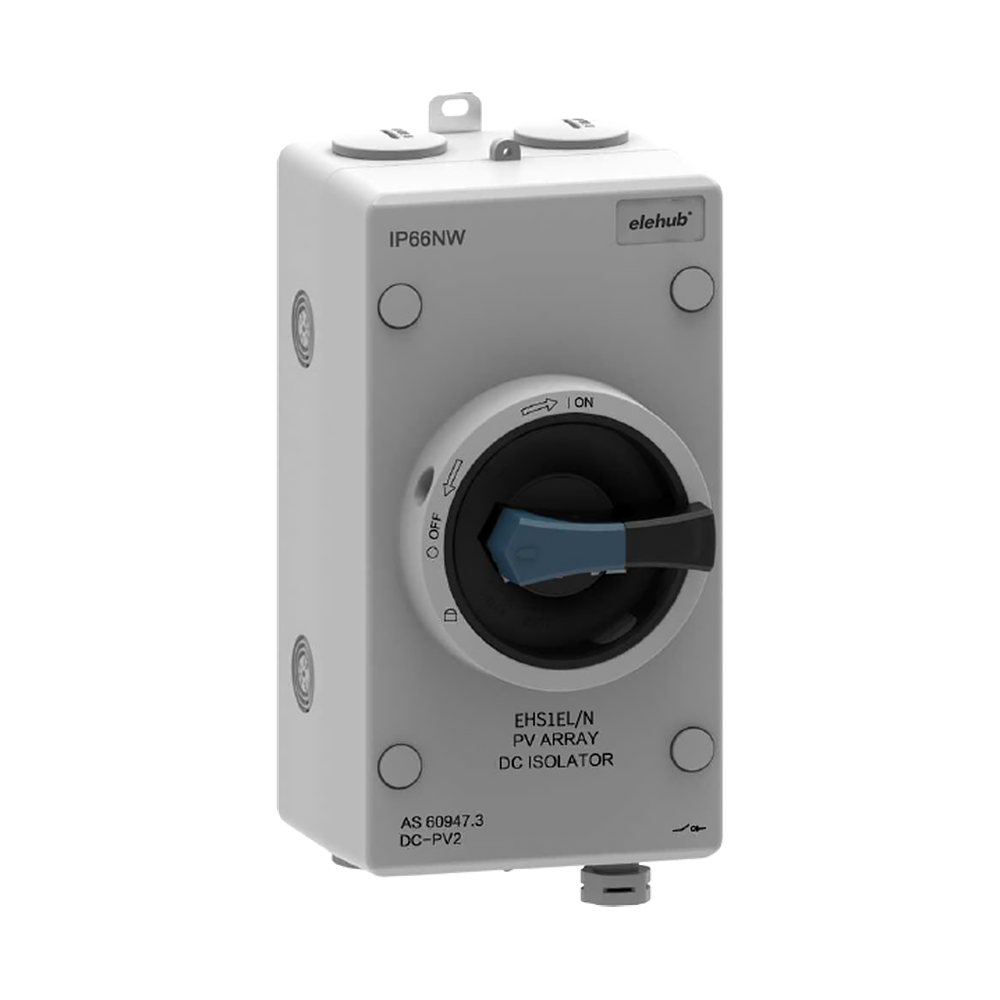
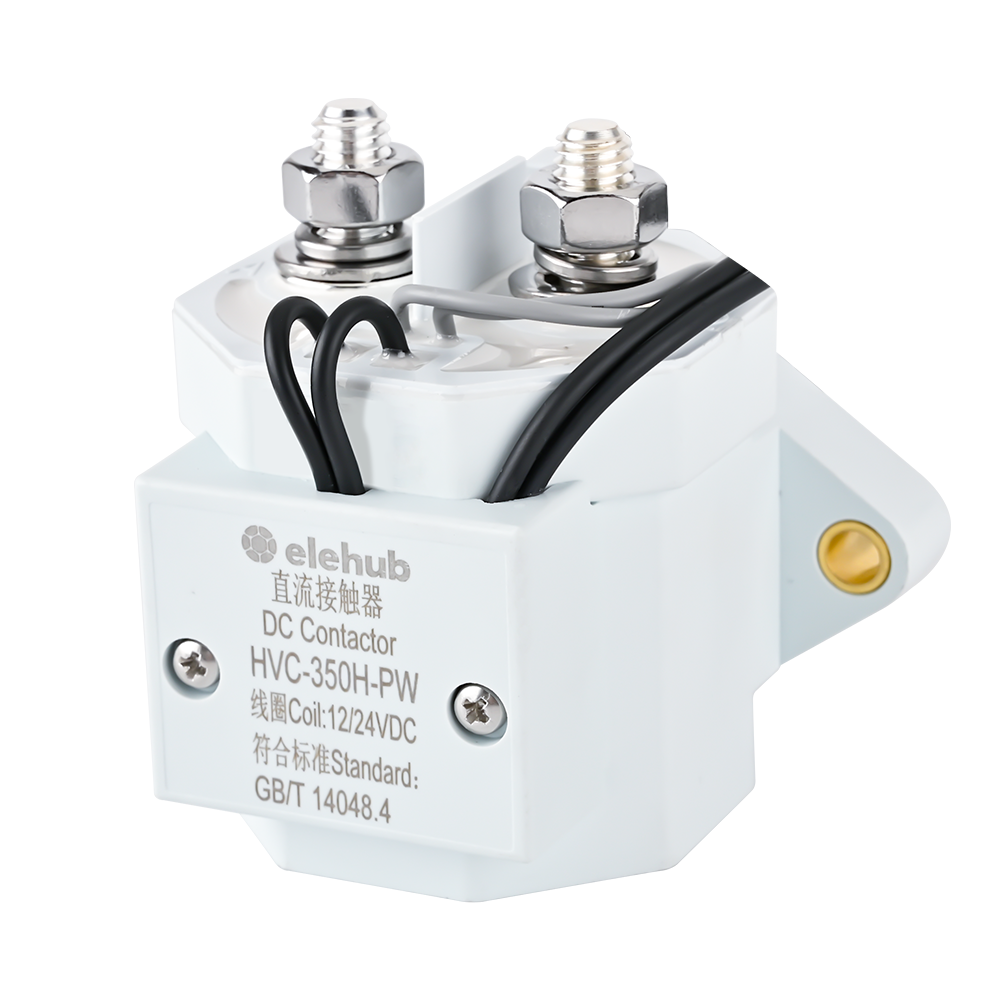
How to choose the right DC contactor determines the efficiency, safety, and performance of the electrical system. Starting from EVs to solar energy systems, down to energy storage systems, the proper contactor is synonymous with great operation reliability and long life. Go with us now to explore tips for choosing DC contactors, especially in different applications, focusing on critical factors that will affect your choice.
What is a DC Contactor?

A DC contactor is an electric switch in a circuit to regulate the direct current flow. Similar to a relay, it operates to open or close a circuit under load. In a contactor, as an electric current flows through the contactor coil, it develops a magnetic field that, due to the construction of the contactor, moves the contacts to open or close. Different from an AC contactor for alternating current circuits, DC contactors serve specific problems through a DC drive system.
In DC applications, the flow of electricity remains constant. Therefore, there are no natural zero-crossing points that can break the circuit. This results in arcing upon opening of contacts. The DC contactor, on the other hand, is designed and developed with an arc suppression technique to handle the stress.
To learn more about DC contactors, you can read our blog:
DC Contactors in Electrical Systems
The DC contactor has become a crucial component in most electrical systems, particularly in high-voltage DC applications. The main functions of contactors are to turn the circuit on and off, but they also help protect circuits against damage from overcurrent or short circuits.
In EV charging stations, for example, DC contactors help control the current flow to EV chargers, guaranteeing safe operation and protection of the charging infrastructure. They are also in solar power systems to disconnect the solar panels from the grid or energy storage batteries during maintenance.
Key Factors to Consider When Choosing DC Contactors

Voltage Rating
The voltage rating of the DC contactor is one of the most important factors in the selection of the right component for your system. The circuit operating voltage should not compromise either the safety or functionality of the contactor. This rating normally comes in volts and may differ widely depending on the application.
In EV charging stations, voltages can be from 48V up to 800V or more, while for solar power systems, the voltages can range from 12V to 1000V or even higher. A contactor with a voltage rating that is either too low or too high will lead to inefficiency, failure, or safety hazards.
Always select a contactor rated for the maximum voltage to be encountered in the system. The nominal operating voltage may be exceeded for short periods due to surge voltages.
Current Rating
Current rating is the maximum electrical current the contactor can carry without overheating or sustaining permanent damage. This is usually in amperes and one of the most important specifications while choosing a contactor.
In choosing a DC contactor, one has to consider the continuous operating current (the amount of current in normal operation) and the inrush current (the surge of current when the circuit first closed.) The contactor must be able to handle both without experiencing premature failure.
Take an application as an example, energy storage systems tend to involve high currents in either charge or discharge cycles. Therefore, most such systems involve inrush currents for temporary periods in excess of the normal rating. In managing such short bursts without damage to components, there is a need for a contactor with a high inrush rating.
Arc Suppression
Arcing is one of the peculiarities in DC circuits. When a contactor opens an arc can take place at the contacts. Since in AC circuits, current flow naturally falls to zero during the alternating cycle, this condition does not give any problem. However, under DC circuit load, opening the contactor does not have stopped flow that may cause arc formation between contacts.
Arcing can seriously damage a contactor, resulting in complete failure or a lifetime reduction. Most DC contactors have arc suppression built into them. This may be the magnetic arc blowout technique that employs a magnetic field to extinguish an arc fast.
When selecting a contactor, ensure the contactor uses appropriate arc suppression, especially for large-power DC systems, such as energy storage or EVs.
Reliability & Life Cycle
Long-term reliability and endurance are related to the number of switching cycles the contactor can sustain. Therefore, special importance is attached to high cyclic operation for highly demanding applications in EV charging stations or photovoltaic systems with frequent on/off switching. A contactor rated to handle high cycle life is better prepared for applications that would see multiple switches each day.
Durability can be affected by such factors as the contactor materials, contactor design, and the operating environment. In outdoor solar power systems, the contactors must be weatherproof or corrosion-resistant because high or low temperatures and humidity affect their performance.
How to Match Contactors to Applications
Choosing the right DC contactor for an application, alignment in the specifications of the contactor with unique demands for the particular use case is important. The proper selection of the contactor will ensure optimum performance, reliability, and safety for any residential, industrial, or automotive application.
Residential Applications
In home-based systems, the DC contactor has to switch lower currents and voltages but provide adequate durability for higher numbers of switching operations. In such applications, it becomes vital that the contactor can handle standard inrush the instantaneous surge of current when devices power up. Furthermore, residential applications are often calling for compact and less expensive contactors that have to meet the local regulatory standards with safety in mind.
Industrial and Commercial Applications
Industrial usage for battery storage systems or large-scale energy management systems needs the DC contactor to deal with much higher currents and voltages. In such situations, it will be paramount to choose higher power-rated contactors with improved durability to sustain frequent switching cycles and more demanding operations.
Besides fulfilling the demands for stricter safety regulations, industrial contactors should also include advanced arc suppression mechanisms that can handle high inrush currents.
In industrial automation or robotics, the choice of DC contactors in applications should consider the operation frequency as much as voltage and current ratings. It must be capable of rapid turn-on/turn-off operations to deal with high currents.
Switching Frequency
The operating frequency affects quite significantly the lifespan and the performance of such contactors. Applications with a high switching frequency will have a greater requirement for strength and provide more cycle life in a contactor. Frequent switching would cause contacts to wear, with occasional pitting due to erosion by electrical arcing or even complete failure in case the contactor was not designed to switch on such a load.
Energy storage systems involve frequent charge and discharge cycles, so contactors rated for high switching cycles are required. These applications require a contactor capable of carrying high currents with high-frequency operations without degradation in lifespan.
Regulatory Standards
Complying with international standards simply means that your DC contactor will be safe, efficient, and reliable. EN 60947 may be the most commonly referenced standard in Europe for the minimum required safety and performance characteristics expected of all electrical devices used in industrial control.
In the selection of contactors, check that they conform to local and international standards: EN 60947-4-1 for contactors in control circuits, IEC 60947-1 (General rules, construction, and testing of low voltage switchgear), and UL 508 (Industrial control equipment for the U.S.).
Apart from ensuring the safety and performance of an installation, such standards provide for compatibility between equipment and include all necessary certifications to install or operate in higher level authorities.
How to Choose the Right DC Contactors for EV Charging Stations

High Voltage DC Circuits
Most EV charging stations use high-voltage DC circuits in the range of 48V to 800V or even higher for rapid charging systems. DC contactors from high voltage DC contactor suppliers should not fail in operation at such high voltages in these systems. The contactor voltage rating needs to be sufficient and above during operation to support surges and transient voltage spikes, which are common in high-power applications.
Since the charging station involves DC power, which does not alternate like AC, switching under load can cause arcing at the contacts. DC contactors for charging stations must be capable of handling the electrical arc that occurs during the opening or closing of the circuit.
Arcing in DC circuits is harder to suppress compared to AC circuits since the continuous flow of current does not naturally drop to zero. Therefore, the contactors should have suitable arc-quenching circuits to ensure an arc is extinguished quickly to prevent damage.
Switching Under Load
Contactors in EV charging stations are subjected to frequent switching operations because of the frequent connection and disconnect of vehicles from the charging system. Such frequent on/off switching cycles can cause wear on the contactor. The EV charging contactor design should be able to switch under load without affecting its life or the system’s safety. It provides an environment with high mechanical and electrical endurance to the contactors.
Safety Features
Overcurrent protection is necessary. The charging station can safely disconnect from the grid during fault conditions to avoid equipment damage or electrical fire hazards. The surge suppression feature protects the sensitive components in the charging system against transient spikes during the switching operation. It should also be specified with disconnecting mechanisms to provide complete isolation from the battery to the vehicle. This ensures the least possibility of faults and safety is most maintained.
How to Choose DC Contactors for Electric Vehicles (EVs)

Current Control and Protection
The EV batteries go through a series of charge and discharge cycles that may result in considerable stress on electrical components. The contactor must handle high currents in these processes: inrush currents, the initial surge of current when charging starts, continuous operating currents, and steady-state currents during the charge cycle.
The contactors include overcurrent protection to guarantee protection for the vehicle battery and charging system from overly high currents. Moreover, protection against short circuits is required to prevent hazardous electrical faults in extreme situations.
Compact Size and Durability
EVs are space-compact, and their electrical systems, especially the battery management systems (BMS), require compact components. The contactor in EV battery systems should be compact enough to fit confined spaces. While maintaining a small size, the contactor must also be durable, and capable of withstanding high mechanical and electrical stresses over an extended operational lifespan.
The design of an EV contactor needs to be balanced between compactness and reliability: small enough and lightweight but robust enough to handle the electrical demands and last vehicle’s life.
Thermal Management
The high currents in EV battery systems generate heat that must be effectively managed to ensure optimal operation. Thermal management in DC contactors is important because excessive heat can damage the contactor and other components. Make sure a contactor for EVs has adequate heat dissipation capability. Features such as high thermal conductivity materials, internal heat sinks, or ventilated designs can help manage the heat produced during heavy charge/discharge cycles.
Arc Management
In EV powertrains, contactors are subjected to frequent switching operations, more so in the charging and discharging cycles. This current in a cycle causes an arc during the opening of contacts, which leads to degradation of performance for contactors with time. For protection against damage, arc suppression mechanisms are necessary. These include, but are not limited to, using arc-resistant material for contacts and methods to reduce the intensity and duration of arcs during a switching event.
How to Choose DC Contactors for PV Solar Systems

Solar System Voltage Requirements
The voltage range can vary depending on the system’s size and the configuration of the photovoltaic (PV) panels and inverters. Typically, the voltage range for solar power systems falls between 12V and 1000V DC, with large-scale commercial solar installations potentially exceeding this range. The DC contactors in these systems must be qualified to handle the voltage levels. They are in the right range and can survive surges during system operation or faults.
Disconnecting Features
One of the key features for which DC contactors are put into place in solar systems is to provide efficient disconnecting features. These contactors must safely isolate the solar panels or the inverters from the grid during maintenance and under fault conditions.
Reliable disconnection makes sure, upon service and under the eventual occurrence of emergencies, that the systems will be securely de-energized when an override operation is undertaken. Contactor design needs to implement an operator access disconnection or provide automatic failure detection to better achieve safety with convenience regarding easy maintenance tasks.
Environmental Resistance
As solar power systems are installed outdoors, a DC contactor should be able to operate under harsh conditions: UV rays, temperature fluctuations, moisture, dust, and wind.
Generally speaking, IP ratings such as IP65 and above are preferable in outdoor applications to avoid setting the contactors to malfunction or creating unsafe conditions.
Efficient Current Switching
A solar power system normally operates with variable DC currents, depending on the amount of sunlight and the load applied to the system. The DC contactor should be able to bear these fluctuations without much wear and tear that may affect its performance.
Selecting a contactor with the proper current rating and efficient switching characteristics helps prolong the system’s longevity. This means that the contactor can handle peak currents from solar panels and inverters for smooth running while minimizing arcing or wear and tear.
How to Choose DC Contactors for Energy Storage Systems (ESS)

Energy Storage Voltage and Current Requirements
The ESS is generally integrated with a solar power system. Sometimes, a standalone battery setup normally works within the voltage range of 48V to 1500V DC. These systems store energy for later use, such as during nighttime from solar energy storage or nighttime in larger systems for grid stabilization. ESS applications must be able to operate DC contactors capable of withstanding those voltages and the associated current.
A selection of DC contactors for ESS design has to be done based on the understanding of the system voltage rating and current profile. Most ESS designs have their current varying with charge/discharge cycles, conditions of load, and state of charge. Thus, choosing a contactor with an appropriately rated current must be performed to avoid excessive wear or failure in high currents.
Efficiency and Longevity
ESS applications often involve a number of contactor switching, since the system charges and discharges energy at different rates. The contactor should be of low power loss and a high number of operational cycles. As its failure may lead to a complete shutdown of the energy storage system, durability and reliability are important.
Apart from high-quality materials that use silver alloy contacts, some include arc suppression technologies that also enhance the contactor’s performance in relation to efficiency and lifetime. On the other hand, low-drop voltage contactors minimize losses especially when dealing with low-powered batteries.
Safety Standards
The DC contactor in ESS applications should be designed according to severe safety criteria, such as overcurrent protection, overvoltage protection, and fault isolation.
Furthermore, they should bear short-circuit conditions without failure. Ensuring that the contactor meets international electrical safety standards helps prevent accidents and maintains the operation within a safe limit.
Apart from overcurrent protection, the application will also require a disconnection mechanism for faults and maintenance that would disconnect the battery or storage components from the system.
Battery Management Systems (BMS) Integration
Most of the modern ESS are managed by Battery Management Systems (BMS). The BMS controls several parameters such as voltage, temperature, and charge state of the battery. A well-chosen DC contactor has to be matched with the BMS for proper integration and successful functionality.
The BMS usually sends a signal for the opening or closing of the contactor, depending on the state of the battery or storage system. In this respect, seamless integration between the contactor and BMS will allow for better management of energy flow, charging/discharging cycles, and efficiency of the whole system.
Closing Words
Selecting the right DC contactor for a particular application is a complex process with many factors to consider. We’ve talked about voltage ratings, current loads, conditions of use, and switching frequency. From EV charging stations and electric vehicles to solar systems and energy storage solutions, each has unique requirements that should be carefully considered for reliability, efficiency, and safety.
You would need to understand what the application calls for exactly and match that with the appropriate specifications of the DC contactor to ensure long-term performance and safety in your electrical systems.
In a nutshell, you always have to consider voltage range, current rating, environmental conditions, and safety standards for the selection of a perfect contactor in any project.
About ELEHUB
ELEHUB is one of the major suppliers of advanced electrical solutions for electric vehicles, solar energy, energy storage systems, and other industries. Having been a DC electrical components manufacturer in the industry for many years, ELEHUB has built a reputation as a valued partner for companies and organizations seeking reliable, high-performance solutions to power system needs.
At ELEHUB, we work hard to offer high-performance and innovative solutions concerning the needs of individual applications. Our portfolio comprises high voltage DC contactors, circuit breakers, and DC protective switches, among other devices, with superior quality and reliability standards to ensure optimum performance even under demanding conditions.
FAQ
How to know what size contactor I need?
- Voltage Rating: The voltage rating of the contactor should be compatible with the system’s maximum voltage.
- Current Rating: The rated current of the contactor must be in a position to take the continuous current and peak/inrush currents of the system.
- Inrush Current: Consider surge currents at turn-on, which may be larger than steady-state currents.
- Duty Cycle: Choose a contactor for the operational frequency. If the switching is to be done frequently, a contactor with a high durability rating for long-term performance is ideal.
How do DC contactors interact with the BMS in Energy Storage Systems?
In ESS, DC contactors operate in close conjunction with the BMS, safely controlling the flow of electricity during charge and discharge cycles. The contactor serves as a safety switch, disconnecting batteries under fault conditions from the system or when maintenance must be performed. Compatibility between a contactor and the BMS is critical for seamless integration, proper voltage control, and operating safety.
How often should DC contactors be replaced or serviced?
The lifespan of DC contactors depends on a variety of factors, such as the number of switching cycles, the current load, and ambient conditions. In higher pulsed applications, EV charging stations or ESS systems are foreseen to require more frequent inspections or replacement.
Possible signs of wear on the contactor include increased resistance, contact arcing, or failure of opening and closing. Regular maintenance checks are recommended to ensure the contactor is in ideal working condition.
Can DC contactors be used for both high and low voltage systems?
Yes, DC contactors are available in a very wide range of voltage ratings for both low voltage and high voltage applications.
Generally, EV charging stations require contactors that can support voltages in the range of 48V to 800V, while contactors used in solar power systems and energy storage need to support voltages in the range from 12V to 1500V and upwards. The voltage rating of a contactor always needs to be higher than the operating voltage in your system for safety and optimal performance.