Safety is vital for industrial and home appliances, and fuses play a crucial role in this regard. Fuses help to bridge current overload, protecting devices from damage. Since they were patented in the 1890s, fuses have preserved the lifespan of many industrial and residential electrical appliances. But how do fuses offer protection? – by simply sacrificing themselves. And are fuses directional?
If you want to buy components for DC electrical systems, such as solar arrays, battery banks, or electric vehicles, understanding the operating principles of fuses is vital. One common question that arises is “Do fuses have a direction?” or, better put, does it matter which way a fuse goes in? The answers to these questions have implications for the performance and safety of appliances.
Read on as we dive into the working principle of fuses and the implications of fuse direction in AC and DC systems. Let’s go!

Source: gettyimages
What Are Fuses and How Do They Work?
What is a fuse? Fuses are protective electrical components that break a circuit when there is overcurrent. The most common appearance of a fuse is either as a thin wire or metal strip in a compartment. This wire or strip breaks the circuit by melting when excessive current runs through it.
The melting action, although seemingly simple, helps protect equipment and appliances from damage caused by overheating, fire, or operational failure. You can’t reuse a fuse once it melts; it must be replaced for the appliance to return to normal function.
There are different types of fuses based on functionality and mode of action. One common classification of fuses is by how rapidly they respond to overcurrent conditions.
Fast-blow fuses melt almost instantly and are ideal for sensitive electronics. They are used especially in home appliances that can be easily damaged by the slightest current spikes. However, slow-blow fuses can tolerate short bursts of high current, like those during motor startups, without cutting. (Learn more about Time Delay vs Fast Acting Fuse)
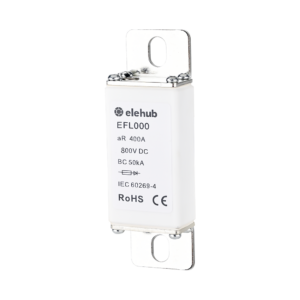
There are also several physical formats of fuses, including but not limited to:
- Cartridge fuses: Cylindrical and often used in industrial applications.
- Blade fuses: Common in automotive and low-voltage DC systems.
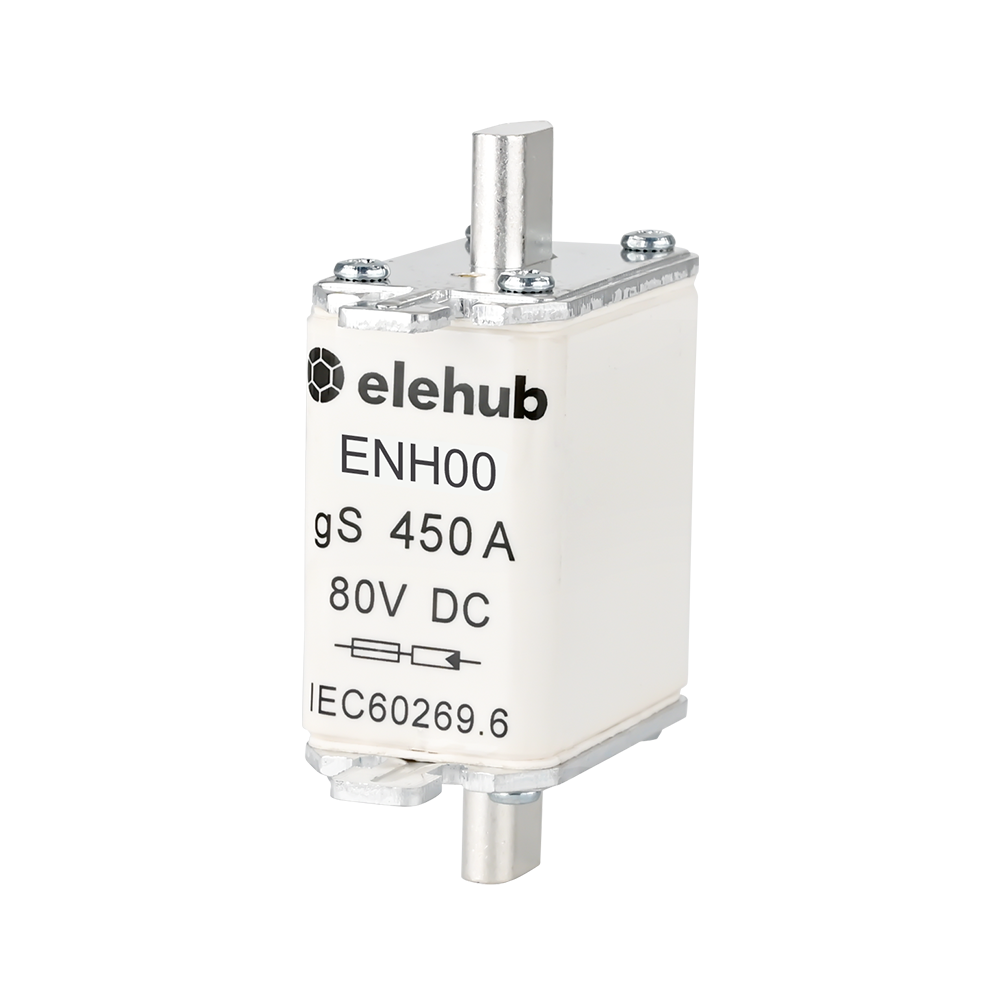
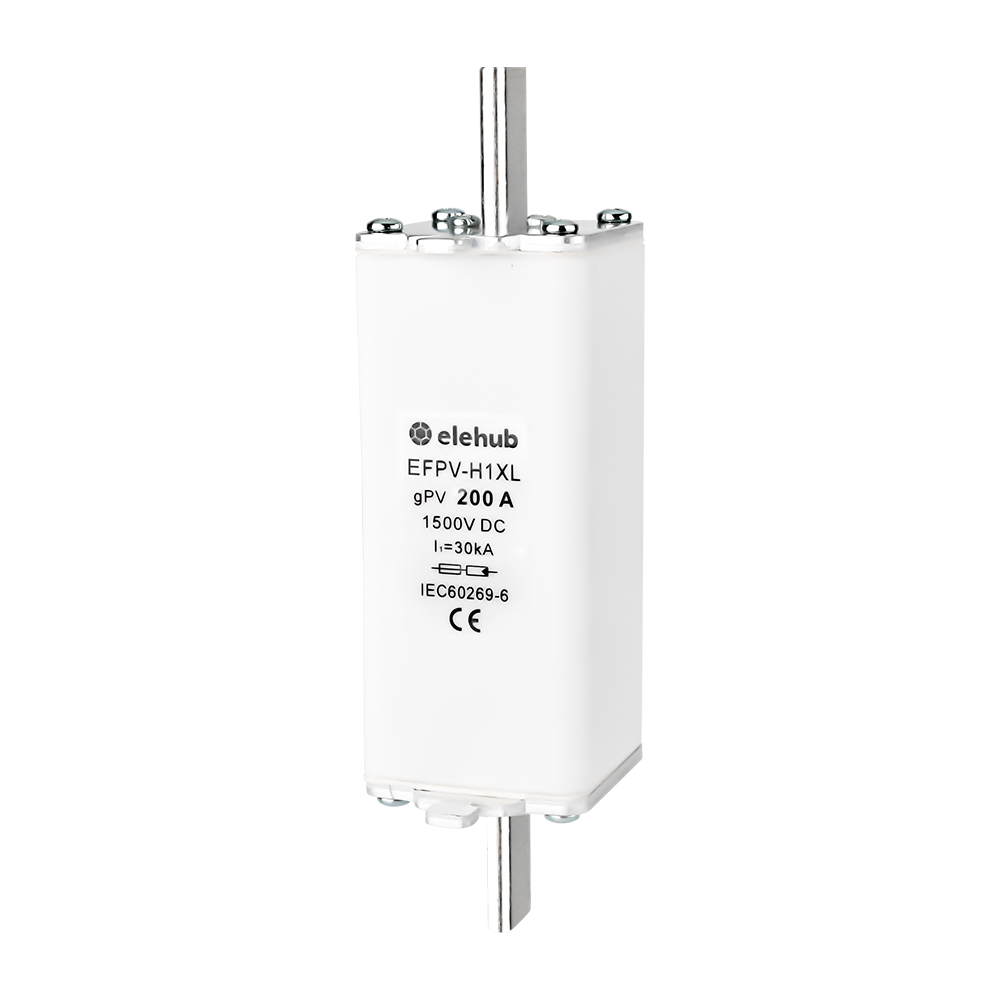
- Bolt-down fuses: for industrial and battery storage use.
- Resettable fuses: used in computer motherboards and aerospace applications.
A key distinction in fuse selection lies between AC-rated and DC-rated fuses. Many fuses can operate in both types of systems. However, DC-rated fuses must be capable of extinguishing a continuous arc. This is far more challenging in DC systems due to the lack of a natural zero-crossing in current flow.
Other fuse classifications are based on:
- Breaking capacity: (e.g, low breaking capacity and high breaking capacity)
- Voltage rating: (e.g, plug, low voltage, high voltage, current limiting, etc.)
Choosing the correct type ensures reliable performance, safety, and prolongs system life.
Are Fuses Directional? The Technical Truth
When considering fuse installation, many professionals ask whether it matters which end is connected to the source and which to the load. The answer depends on the type of fuse and the system in which it’s used. Let’s break it down.
Standard Fuses

Source: Pixabay
Does fuse have polarity? Standard fuses in many DC and AC circuits are non-directional. That is, you can install them in any orientation without compromising function. The fuse element (wire or strip) is symmetrical.
Thus, it can cut off the current from any direction. This is evident in AC systems where the current alternates about 60 times per second.
In such AC setups, polarity considerations aren’t necessary because the current flows in both directions.
Also, in many low-voltage DC applications, such as automotive or basic battery-powered circuits, standard blade or cartridge fuses remain non-directional. Generally, when current and voltage are within typical bounds, you can install the fuse in either direction.
Exceptions

Some DC applications require direction consideration. Such an exception is evident in systems involving high voltage or high current, such as solar arrays, electric vehicles, or industrial battery banks.
In these cases, manufacturers may design the fuse element asymmetrically to improve arc quenching. When a fuse breaks in a high-voltage DC environment, it must extinguish a continuous arc. As a result, certain DC-rated fuses include polarity features to help contain this arc in a specific direction.
These fuses have “Line” and “Load” terminals or arrows indicating the preferred direction of current flow. Installing such fuses wrongly can compromise their breaking capacity and delay disconnection during a fault.
Direction also matters with polarised fuse holders or fuse blocks, especially in systems with circuit monitoring or fault indication features. The wrong polarity could lead to incorrect signaling or disabled monitoring.
For these reasons, buyers of DC equipment should be cautious when dealing with:
- High-voltage solar inverters and combiner boxes
- EV battery protection systems
- DC UPS or telecom backup infrastructure
- Industrial DC motor controls
Whenever the manufacturer notes directions, follow them strictly to maintain performance and safety.
Why Are Fuses Not Directional?
The vast majority of fuses, especially those used in standard electrical systems, are designed to be non-directional. Here are the key reasons:
Symmetry in Fuse Design

Most standard fuses are physically symmetrical, meaning their element and terminals are identical on both ends. Whether a fuse is cylindrical or blade-style, the current passes through the same fusible link regardless of orientation.
This symmetry ensures that the fuse responds uniformly to overcurrent from either side of the circuit. It also simplifies installation and reduces the risk of wiring errors.
AC Characteristics
In alternating current (AC) systems, direction becomes essentially irrelevant. This is because AC reverses direction several times per second. Since current flows in both directions during normal operation, the fuse experiences bidirectional stress by design.
A directional fuse would not be functional in such systems because it cannot favour one direction over the other. Therefore, AC-rated fuses are inherently non-directional and symmetrical, capable of breaking current flow no matter which way it’s travelling at the time of fault.
DC Considerations
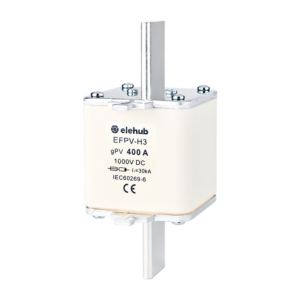
In low-voltage DC systems, where current flows consistently in a single direction, the symmetrical design of a fuse still enables it to operate effectively. The heating effect that causes the fuse to melt depends on the magnitude of the current, not its direction.
While standard DC fuses are also generally non-directional, specialised DC fuses with arc suppression mechanisms may introduce directional considerations.
In typical applications, such as automotive wiring or battery backups, this direction-neutral behaviour is a benefit, enabling quick replacements without considering orientation.
Does Fuse Orientation Matter in Uses?

For most electrical applications, fuse orientation during installation is not critical. However, certain best practices and safety considerations make orientation worth understanding. This is especially useful in DC systems, high-voltage circuits, and fuse holders with integrated indicators.
In general-purpose circuits, especially those using non-directional fuses, orientation doesn’t affect functionality. A standard fuse will operate the same whether the power source is connected to the top or bottom terminal. This is largely due to the symmetrical construction of the fuse element.
However, some fuse holders and circuit designs label terminals as “Line” (source) and “Load” (output). In these cases, it’s good practice to install the fuse so that the power enters through the Line side and exits through the Load side. This maintains consistency with diagnostic tools, indicator LEDs, or remote fuse status monitoring.
Fuse Orientation and Safety
While the fuse itself may not be harmed by reverse orientation, improper installation can lead to safety risks in specific scenarios:
1. Live terminals: If the power source is connected to the wrong side, the fuse’s “downstream” end may remain energised even after it blows. This poses a shock hazard for maintenance personnel.
2. Fuse blocks with indicators: Some advanced fuse holders include blown-fuse indicators or current sensors that are direction-sensitive. Incorrect orientation can result in false readings or no indication at all during a fault.
3. Compliance and standards: In certain industries, such as telecommunications, solar, or marine applications, maintaining standard fuse orientation is a requirement for regulatory compliance and safety documentation.
Ultimately, while most fuses are non-directional, correct orientation improves consistency and safety, especially in systems where fuse behaviour is tied to other monitoring equipment.
Wrapping Up
Fuses play a vital role in electrical safety, but their directionality is often misunderstood, especially in DC applications. This raises the question: Are fuses directional? This article has shown that standard fuses are non-directional, thanks to their symmetrical design and the characteristics of AC setups.
However, some specialised DC systems demand attention to orientation due to arc suppression requirements and system monitoring.
When sourcing components for DC electrical equipment, understanding when fuse direction matters can be the difference between safe operation and potential system failure.
FAQs
Are car fuses directional?
Most car fuses are non-directional and work in either direction because they simply melt when excessive current flows. However, some advanced automotive fuse modules with electronics or indicators may have polarity requirements.
Are thermal fuses directional?
Most thermal fuses are non-directional and can be installed in either direction. They operate by opening the circuit when a preset temperature is reached, and their function does not depend on current flow direction or polarity.
Does a fuse have a positive and negative?
Standard fuses do not have a positive or negative side. They are non-polarized devices and can usually be installed in either direction because they simply interrupt current when it exceeds the rated limit.
However, some specialized DC fuses or fused electronic modules may include polarity markings due to internal arc-control or electronic components.