The Basics of Air Circuit Breakers
An air circuit breaker is an electromechanical device that switches off electrical current automatically upon sensing irregularities. They contrast with oil circuit breakers (OCBs) that use a flammable oil, or vacuum circuit breakers (VCBs) that rely on a vacuum chamber.
These circuit breakers use air under atmospheric pressure as the arc-medium of extinguishment. This makes them safer, environmentally friendly, and also suitable for low-to-medium voltage levels.
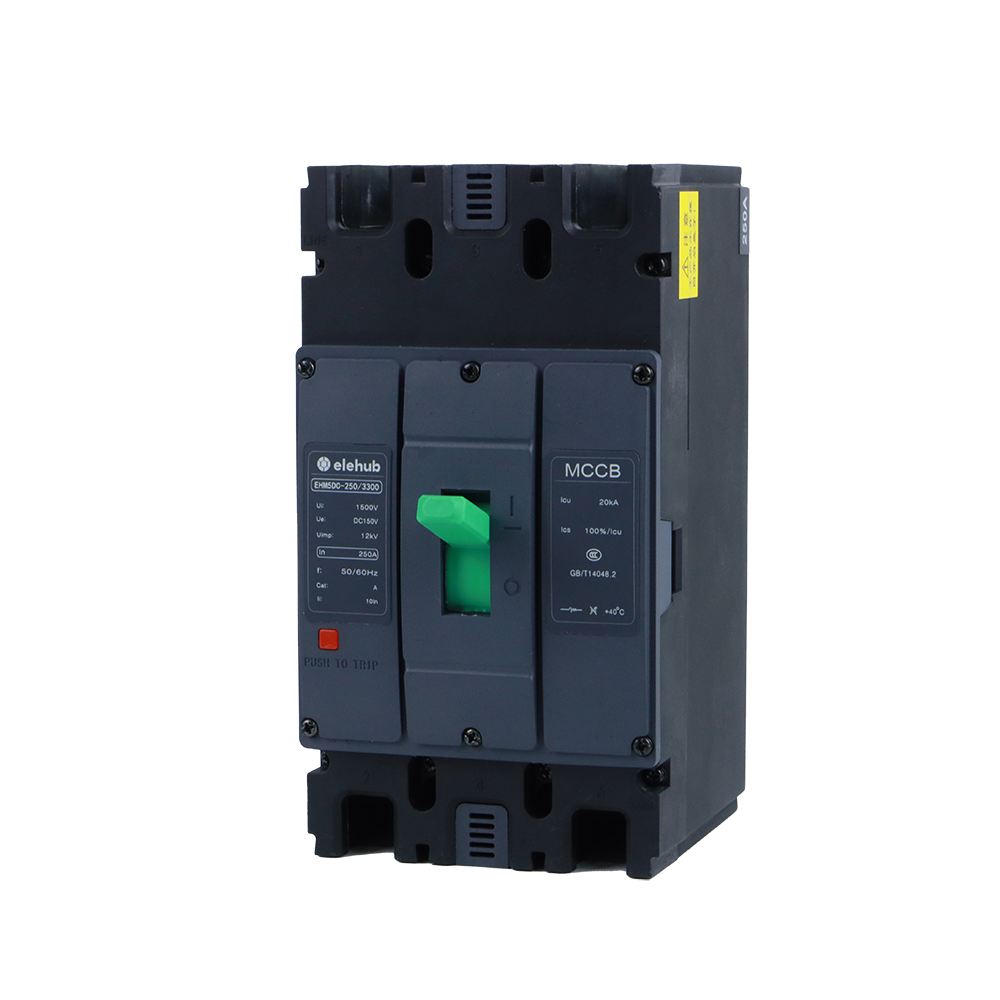
How do ACBs compare with other options? In contrast to molded case circuit breakers (MCCBs), which top out at about 2,500A and take up less space, ACBs perform better with high currents and repeated cycling.
They are the choice for industrial and commercial power panels. VCBs, however, predominate in high-voltage applications (over 1kV) but have no switching flexibility to speak of compared to ACBs.
Within each ACB, here are the main components:
- Main Contacts: Copper or silver alloy, carrying the load current in normal conditions, with low resistance and heat generation.
- Arcing Contacts: Tungsten or similar hard materials, which take the shock of arc creation upon opening of the breaker and safeguard the main contacts.
- Arc Chute: A stack of insulating plates breaking up and extinguishing the arc, typically ceramic or composite for high-temperature resistance.
- Trip Unit: The ACB mind—thermal for slow overloads, magnetic for instantaneous short circuits, or microprocessor-based for precise, programmable protection.
Air Circuit Breaker Working Principle: How Do They Work

Source: Air Break Circuit Breaker (ACB)
The ingenuity of an ACB lies in the way it tames electrical arcs—those radiant causeways of ionized air produced when contacts under load are broken. This is how it does so in-depth:
- Normal Operation: Current flows harmoniously between close main contacts to power motors, lights, or machinery.
- Fault Detection: The trouble is detected by the trip unit—say, a thermal-magnetic combination. A 20% slow overload trips the thermal element (a bimetallic strip that curves when heated), and a 10x short circuit trips the magnetic coil straight away.
- Arc Generation: When contacts do part, an arc is formed because of the high voltage across the gap—a tiny lightning bolt, with temperatures of 6,000°C.
- Arc Quenching: The arc chute asserts control. Insulating plates stretch the arc into a zigzag path, and air rapidly cools it. The arc’s energy is released in microseconds, and it dies.
- Circuit Isolation: The breaker opens, isolating the fault—the current is stopped, and the system is safe now.
The physics is interesting: Air’s dielectric strength (its insulating value) recovers as the arc dissipates heat, helped by the chute design. Advanced ACBs can use blowout coils to magnetically accelerate the process.
For instance, in a 5,000A Air Chute ACB, the arc might reach over 30 cm before vanishing—all within less than 50 milliseconds. Trip units have also become more sophisticated: Modern electronic ones can program trip curves for each load, such as protecting a sensitive server rack against a high-torque pump.
Different Types of Air Circuit Breakers
ACB circuit breakers come in different types according to voltage, current, and applications.
Plain Break Air Circuit Breaker
The first ACB, a low-tech style in which the arc quenets itself across a big gap in air. It is low voltage (<600V) and current (<1,000A) rated for older, small systems. It is low phantom cost because of its simplicity, but it can’t handle high-fault currents, as the arc relies on distance and air convection only.
Magnetic Blowout Air Circuit Breaker
This type adds a magnetic spin: Permanent magnets or coils generate a field that speeds up the arc into the chute. 1,000–3,000A rated and <1,000V, it’s an industrial plant mid-range option—like a textile mill with dozens of motors. The magnetic assistance boosts interrupting capacity, but the extra components add complexity and cost slightly.
Draw-out Air Circuit Breaker
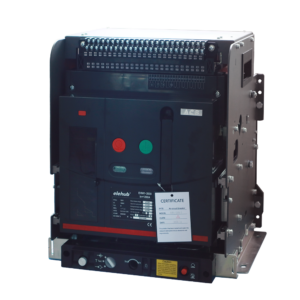
This design is supported by a withdrawable frame. The technicians can pull it out and remove it without de-energizing the equipment—ideal for mission-critical installations like a data center with 5,000A loads.
It is rated 800–10,000A. This flexibility comes at a cost: It’s bigger and more expensive than fixed designs.
Fixed Air Circuit Breaker
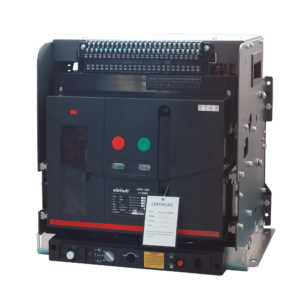
Stationary brother, it’s permanently held in place for long-term application. Small and cheap (800–5,000A, <1,000V), it’s great for stable installations—like a residential building. Its maintenance is tougher, with downtime required, but its simplicity is perfect for cost-conscious projects.
Air Chute Air Circuit Breaker
The modern standard utilizes an advanced technology arc chute with multiple plates to split the arc into sections, rapidly cooling them.
Handling 800–10,000A at <1,000V, it’s the workhorse of business power panels—like a shopping mall distribution board. Its efficiency and reliability result in it being a favorite, with a balance of performance and functionality.
Air Blast Air Circuit Breaker
A retrograde step to high-voltage times, it discharges compressed air (20 bar maximum) to extinguish arcs in circuits of greater than 1,000V with fault levels of up to 100kA. Once ubiquitous, now a rarity due to its size, its jet-engine-level noise, and maintenance. But a beast for vintage grids handling enormous faults.
| Type | Voltage Range | Current Rating | Interrupting Capacity | Pros | Cons | Best For |
| Plain Break | <600V | <1,000A | Low (~10kA) | Simple, low cost | Limited capacity | Small systems |
| Magnetic Blowout | <1,000V | 1,000–3,000A | Medium (~25kA) | Higher capacity | Complex design | Industrial setups |
| Air Chute | <1,000V | 800–10,000A | High (~50kA) | Efficient, versatile | Moderate cost | Commercial panels |
| Draw-out | <1,000V | 800–10,000A | High (~50kA) | Easy maintenance | Large, expensive | Data centers |
| Fixed | <1,000V | 800–5,000A | Medium (~40kA) | Compact, affordable | Hard to service | Residential use |
| Air Blast | >1,000V | Up to 100kA | Very High (~100kA) | High fault capacity | Bulky, outdated | Legacy substations |
Key Functions and Advanced Features
There are three main functions of ACBs:
- Overload Protection: A thermal trip device senses prolonged overcurrents (e.g., a motor drawing 120% rated load for 10 minutes) and trips the breaker to prevent wire destruction.
- Short-Circuit Protection: A magnetic or electronic device acts within milliseconds on currents 5–10 times usual (e.g., a 20,000A fault on a 2,000A line), stopping ruinous failures.
- Fault Isolation: Fully opening isolates the faulty section with the rest of the grid remaining alive.
Advanced ACBs go one step further. They can achieve more functions:
- Trip Settings Adjustment: Electronic components enable you to adjust thresholds (e.g., 800A–1,200A) for specific loads.
- Remote Control: Smart ACBs are SCADA-compatible, allowing operators to remotely trip or reset them from a control room.
- Smart Grid: Some models store fault information (e.g., peak current, trip time) for predictive maintenance.
| ACB Key Functions | Advanced ACB Features |
| Overload Protection | Trip Settings Adjustment |
| Short-Circuit Protection | Remote Control |
| Fault Isolation | Smart Grid |
Air Circuit Breaker Applications
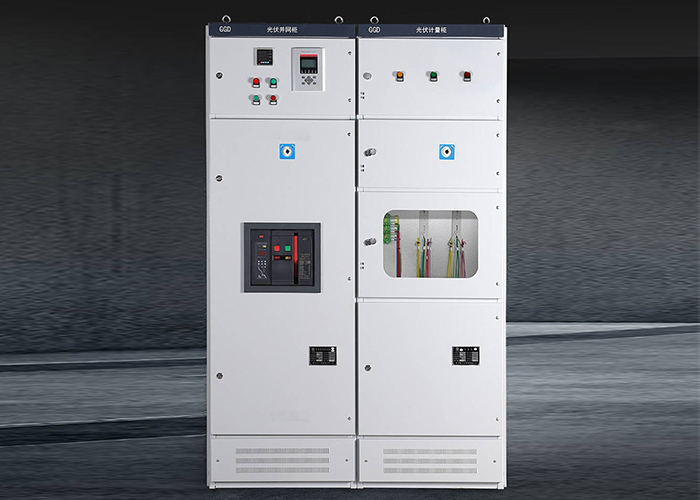
Industrial: In steel mills, 5,000A Air Chute ACBs protect rolling mills from short circuits when they are loaded to the highest capacity. Draw-out ACBs are used by chemical plants to facilitate easy maintenance of reactor circuits. Learn more about the difference between industrial and residential circuit breakers.
Commercial: A 30-story office building can rely on 3,000A Air Chute ACBs to supply power to HVAC and lighting, while a data center uses Draw-out ACBs in server racks needing 99.999% availability.
Power Distribution: Fixed ACBs to feeders are used in substations, while solar farms make use of smart ACBs for controlling variable renewable generation.
Practical Tips for Air Circuit Breakers
Installation Guide
- Fixed ACBs: Mount on a steel frame, busbar connect (e.g., 3-phase 690V), and test insulation resistance (>100MΩ). Test torque on bolts (as per manufacturer guidelines, e.g., 50 Nm).
- Draw-out ACBs: Place the cradle, connect auxiliary contacts, insert the breaker, and secure it. Test racking mechanism for free operation.
Checklist:
1. Properly ground
2. Ensure the same ratings (e.g., 3,000A breaker for 3,000A load)
3. Follow NEC or IEC codes.
Maintenance Tips
Inspect contacts for pitting (replace if >50% worn), clean out arc chutes with compressed air, and trip test units using a current injector (e.g., 1,500A pulse). Draw-out ACBs make this convenient—rack out in 5 minutes. Fixed types need panel shutdown.
Frequency: Annual for dirty sites (e.g., cement plants); every 2 years for clean offices.
Safety Considerations
- Risks: Arc flash can release 19,000°C energy—enough to melt steel.
- Precautions: Wear NFPA 70E-rated PPE (e.g., 40 cal/cm² suit), use lockout-tagout, and keep a 1m exclusion zone during live work.
Why ACB Circuit Breakers Matter in Electrical Systems
From Plain Break simplicity to Draw-out sophistication, ACBs provide unparalleled protection for today’s power-hungry world. They’re dependable, versatile, and essential for safety—factory or smart grid.
Want to learn more? Investigate ACB options with a reputable supplier – ELEHUB, and contact us today.
Air Circuit Breaker FAQs
What is a circuit breaker?
A circuit breaker is an automatic electrical safety device that interrupts current flow during overloads or short circuits, protecting wiring, equipment, and users from damage, fire hazards, and electrical faults. Learn more.
What’s the difference between draw-out and fixed ACBs?
Draw-out ACBs are able to be serviced without de-energizing, while fixed ACBs remain in one location and are cheaper but harder to service.
Do Air Chute ACBs differ from Air Blast ACBs?
Air Chute ACBs use passive chutes in modern miniaturized equipment; Air Blast ACBs utilize forced air with high-voltage obsolete equipment.
Can ACBs be used in residences?
Yes, Fixed ACBs are installed in larger homes, but MCCBs are installed since they are compact and inexpensive.
How does an air circuit breaker work?
When there is a fault, the trip unit acts and opens the contacts. An arc is formed, but it is quenched by air and an arc chute that cools and elongates the arc until it is eliminated, interrupting the circuit.
What is arc quenching in ACBs, and why is it important?
Arc quenching is the method of extinction of the electric arc formed when contacts are opened during a load. ACBs use air and arc chutes to safely dissipate this energy and prevent damage and fire risk.