Ever been curious why your solar panel system’s fuse differs from the one in the household application? The answer lies in a subtle difference: AC vs DC fuses. Fuses operate out of sight to protect circuits from overcurrent. Not all fuses, however, are equal.
Whether installing a battery bank or troubleshooting an appliance, being aware of the difference between AC and DC fuses is vital for safety and operation.
Keep reading. We’ll break the mystery of the technical distinctions, show you how to identify each type, how to use them, and offer tips on selecting the right fuse for different projects.
What Are AC and DC Fuses?
AC fuses are meant for alternating current (AC), wherein the electricity moves back and forth 50 or 60 times per second (50/60 Hz).
In homes, offices, and power systems, AC fuses take advantage of an exclusive advantage: zero-crossing. Two times a cycle, the current reduces to zero, naturally snuffing out any arc present when the fuse has blown. AC fuses become effective and simple—best for common power systems.

DC fuses, however, are specifically meant for direct current (DC), where electricity ambles in a single, steady direction. Think solar panels, electric vehicles, or battery backup.
With no zero-crossing to fall back on, DC fuses have one insidious foe: a steady electrical arc that keeps going when the circuit opens. This calls for a heavier-duty, sophisticated design to keep systems safe.
Mixing these up is expensive. An AC fuse in a DC circuit can buckle from repeated arcs and lead to overheating, equipment failure, or a fire. Or, a DC fuse in an AC installation may be overkill—too expensive and more complex than necessary.
AC vs DC Fuses: What’s the Difference Between AC and DC Fuses
Arc Suppression
Arcs are the hot leftovers of a fuse doing its job—breaking an AC circuit. Zero-crossing is a natural ally for AC fuses, squelching arcs in milliseconds. A bare wire in a ceramic or glass tube typically does the job.
DC fuses, however, struggle with a more difficult battle. In the absence of a natural break in current, arcs may burn hotter and longer.
Voltage and Current Ratings
Voltage ratings are a different tale. AC fuses are generally rated lower (i.e., 250V AC) because of the oscillation of current, which reduces stress.
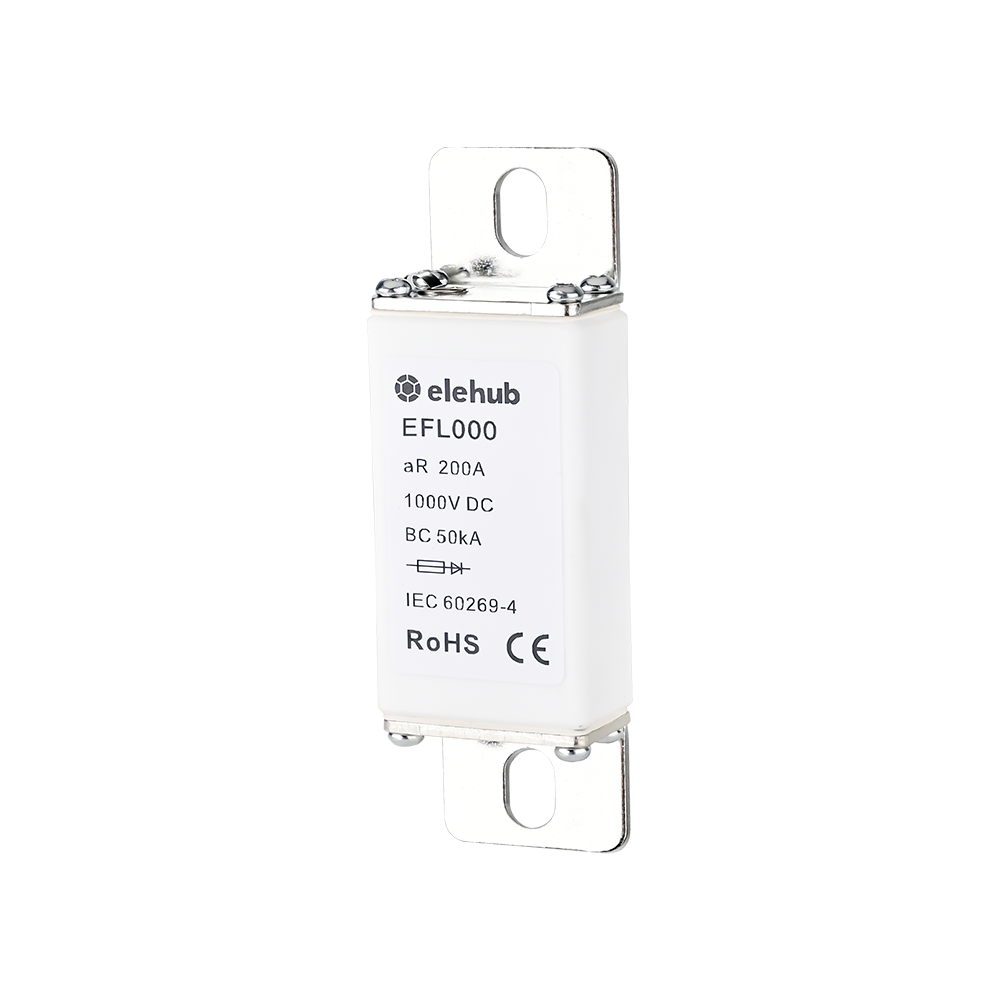
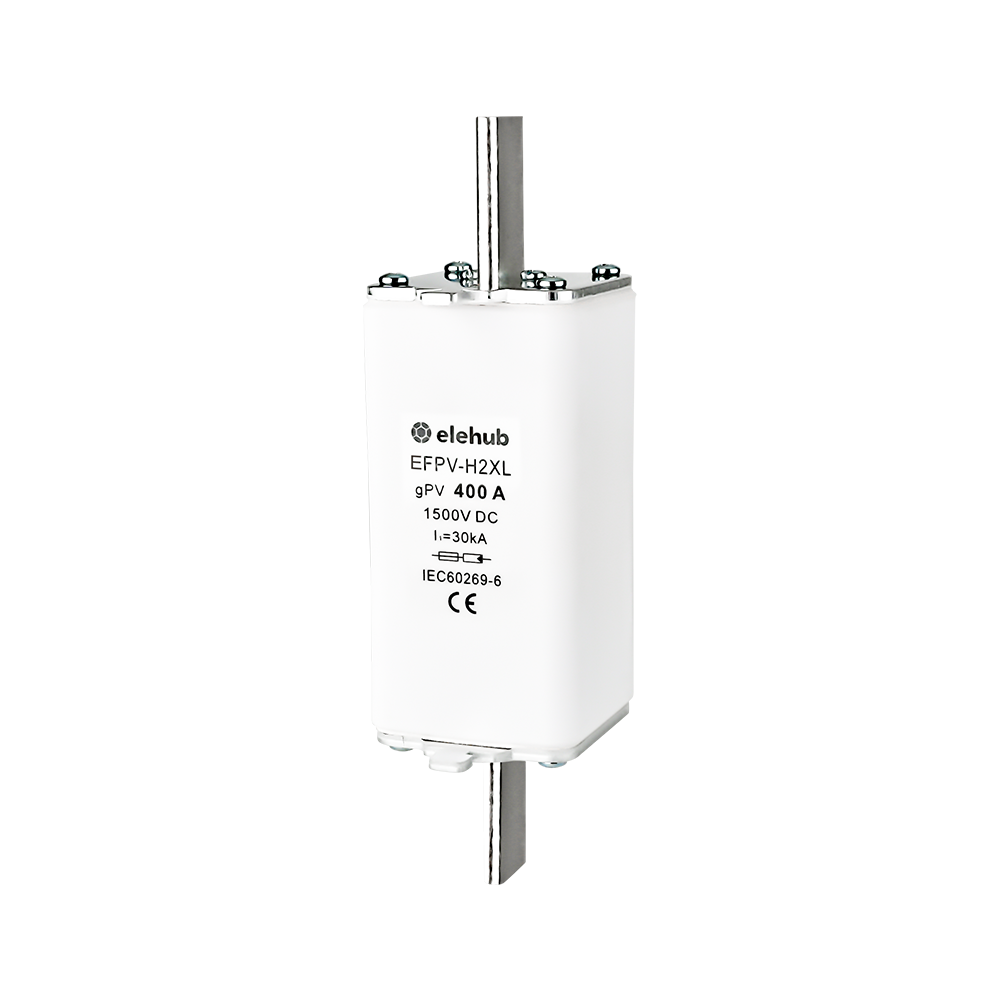
DC fuses, which are meant for constant flow, might have ratings like 600V or 1000V DC—required in high-power systems like solar arrays. Current ratings also vary, with DC fuses having a blow time to cope with constant loads.
Time-Current Characteristics
How fast a fuse blows depends on its environment. AC fuses react quickly to surges, with the aid of zero-crossing. DC fuses, faced with a steady current, may have a flat response curve, intended to avoid nuisance tripping in well-stable DC circuits.
Construction and Materials
Look inside an AC fuse, and you’ll observe glass or ceramic with a simple filament. Some DC fuses use sand-filled designs in their DC fuses for eliminating arcs, but other fuses can use strengthened casings for more ruggedness. Materials matter, and DC fuses show that with more robust constructions.
AC vs DC Fuses: How to Identify
Markings and Labels

Finding the difference starts with the fine print. AC fuses can be labeled with “250V AC” or simply “AC,” while DC fuses from reliable DC fuses manufacturers will usually have “600V DC” or “DC” labels. Some international brands like Littelfuse use transparent codes (e.g., “KLKD” for DC) on their packaging or datasheets.
Physical Characteristics
Size and color may suggest type. DC fuses tend to be larger or thicker because of arc-quenching requirements. Red or black casings are used by some makers, such as Eaton, for DC, but it’s not standard. Look for heavy-duty constructions as a giveaway.
Checking Datasheets
If unsure, delve into the specs. ELEHUB‘s website, for instance, includes interrupting ratings (e.g., 20kA for DC) and uses.
Applications of AC and DC Fuses

AC Fuse Applications
- Household appliances: Washing machines, microwaves, and HVAC equipment.
- Power distribution: Utility grids and breaker panels use them to manage fluctuating loads.
DC Fuse Applications
- Solar systems: Protecting inverters and panels.
- Electric vehicles (EVs): Safeguarding battery packs.
- Battery storage: Residential energy backups or data centers.
- Telecom: DC-powered cell towers use them for uninterrupted service.
- EV charging stations: Managing electricity flow during EV charging, ensures safety, offers overcurrent protection, and enables multiple charging modes.
- Railway systems: Safeguards electrical circuits in trains and other transportation systems, ensuring continuous operation and safety.
- Industrial power distribution: In industrial settings, to protect electrical circuits from overloads, ensuring safe operation in power distribution systems.
AC vs DC Fuse: Comparison Table
| Feature | AC Fuse | DC Fuse |
| Arc Suppression | Zero-crossing aids | Sand-filled to absorb heat and quench arcs |
| Voltage Rating | e.g., 240VAC | e.g., 1500V DC |
| Applications | Household, industrial, power distribution | Batteries, solar power, EV charging, railways |
| Construction | Glass/ceramic | Ceramic or ceramic arc chamber |
| Breaking Capacity | e.g., 100kA | e.g., 50kA |
| Cost | Generally lower | Higher due to complexity |
Choosing the Right Fuse: AC or DC?
Factors to Consider
| Factors | Reasons |
| Circuit Type | AC for grids, DC for batteries. No exceptions. |
| Voltage | A 250V AC fuse fails in a 600V DC line—check system specs. |
| Current Load | A 30A DC fuse suits a solar inverter; A 10A AC fits a lamp. |
| Interrupting Capacity | A 50kA DC fuse handles EV faults; 10kA AC suffices for homes. |
| Environment | Dust, heat, or vibration? Find the type of fuse that can undergo harsh environment. |
Do-Nots
- Mixing Types: An AC fuse in a DC solar circuit can’t quench the arc—expect sparks.
- Undersizing: A 5A fuse in a 20A circuit blows instantly.
- Oversizing: A 50A fuse in a 10A system delays protection, risking damage.
- Ignoring Standards: Skip UL/IEC ratings, and you’re rolling the dice.
The difference between AC and DC fuses is more than a technical footnote—it’s the line between success and failure in electrical systems.
AC fuses harness zero-crossing for simplicity, guarding homes and grids with ease. DC fuses wrestle sustained arcs with rugged ingenuity. Choosing wisely means matching voltage, current, and purpose—mistakes aren’t just costly, they’re dangerous.
About ELEHUB
ELEHUB is one of the major suppliers of advanced electrical solutions for electric vehicles, solar energy, energy storage systems, and other industries.
Having been a DC electrical components manufacturer in the industry for many years, ELEHUB has built a reputation as a valued partner for companies and organizations seeking reliable, high-performance solutions to power system needs.
At ELEHUB, we work hard to offer high-performance and innovative solutions concerning the needs of individual applications. We are one of the top high voltage DC contactor suppliers in China.
Moreover, our portfolio comprises high voltage DC contactors, circuit breakers, and DC protective switches, among other devices, with superior quality and reliability standards to ensure optimum performance even under demanding conditions.
FAQ
What is a Fuse?
A fuse is a safety device that protects electrical circuits by breaking the connection when excessive current flows, preventing damage, overheating, or fire. It must be replaced once blown. Read more in What is a Fuse?
What is the main difference between AC and DC fuses?
AC fuses are designed for use on alternating current systems where the current frequently crosses zero, which helps to quench any arc that is formed when the fuse blows.
DC fuses, however, are designed for use on direct current systems where the current flows constantly in one direction so that any arc that is formed when the fuse opens the circuit is harder to quench.
Why is arc extinguishing harder in DC circuits?
There is no zero crossing—the temporary drop to zero current that happens in AC systems—in DC circuits, making it harder to break the current flow and snuff out any arc that appears in a fault condition. This calls for DC fuses to have more powerful arc-quenching capabilities or greater interrupting ratings.
Can an AC fuse be used in a DC circuit?
Generally, it’s a bad practice to insert an AC fuse into a DC circuit because the AC fuse’s construction and interrupting characteristics may not provide adequate protection under the constant, unidirectional current of DC systems. Always choose a fuse that’s rated specifically for the type of current (AC or DC) in your application.
Do AC and DC fuses differ in standards or ratings?
Yes, the fuses are typically rated and tested under specific standards that govern their usage in AC or DC applications. The manufacturers follow these standards so the fuse will operate safely under the expected conditions of use.